

Fact-Checked
This page has been written, edited, and reviewed by our owner, Doug Taylor, who has 25+ years of legal experience as a former Pima County judge and elected official, and a criminal and DV defense and restraining order lawyer. Our last modified date shows when this page was last reviewed.
Criminal Trespass in Tucson: How Notice and Consent Decide the Case
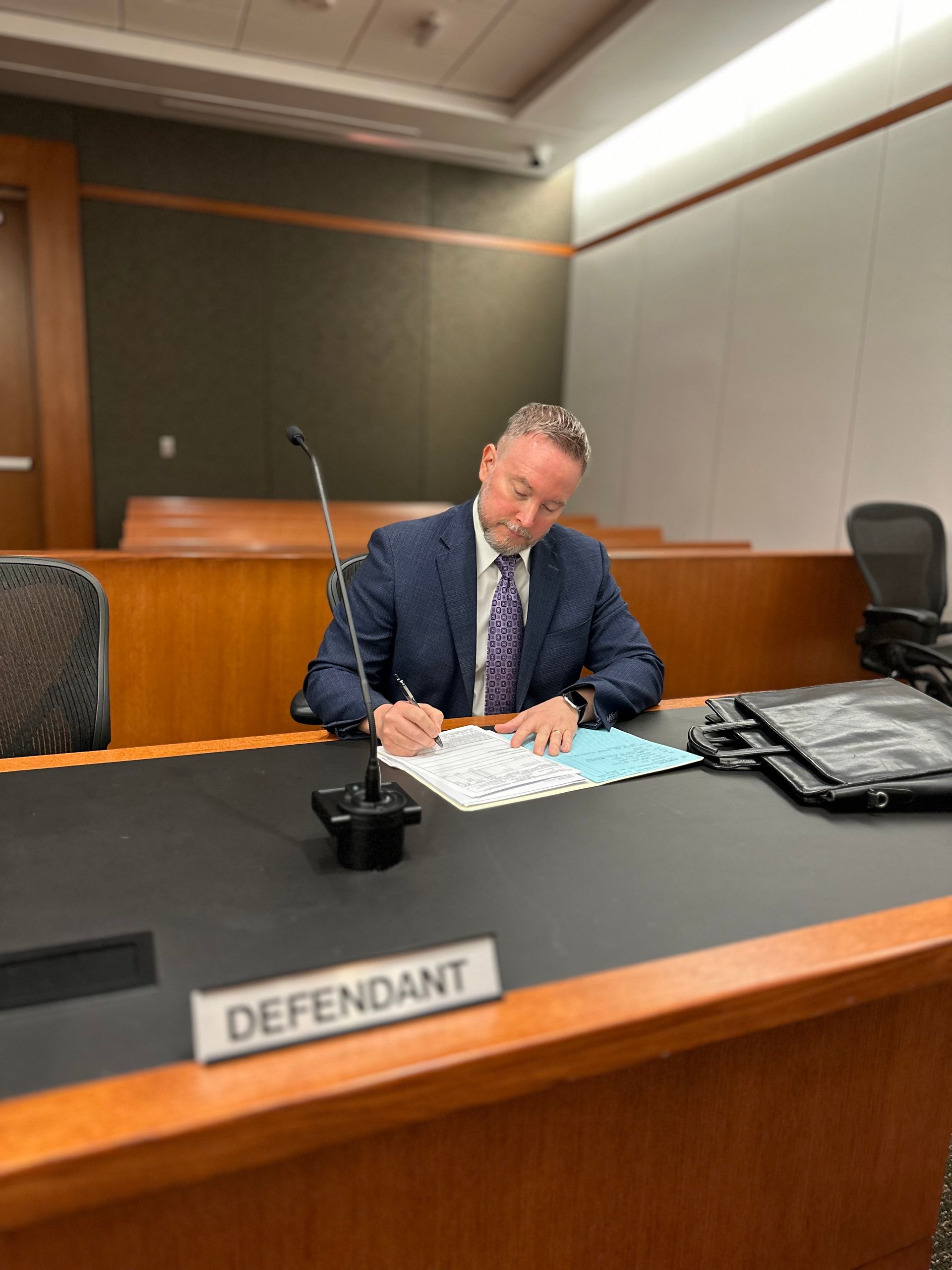
Criminal Trespass in Tucson: Notice, Consent, and Property Type
Why the Signs, Timing, and Location Details Make or Break Your Case
Criminal trespass charges in Arizona often sound straightforward at first. Many people assume the issue is simply whether someone was “on property they shouldn’t have been on.”
In reality, criminal trespass cases are frequently much more nuanced. Questions involving notice, consent, property classification, business hours, fencing, prior permission, and communication between the parties often become central issues in Tucson trespass prosecutions.
Arizona criminal trespass offenses are governed by:
- A.R.S. § 13-1502
- A.R.S. § 13-1503
- A.R.S. § 13-1504
The degree charged can dramatically affect exposure, negotiation leverage, and long-term consequences.
Degrees at a Glance
Third-Degree Criminal Trespass — A.R.S. § 13-1502
Typically involves:
- Remaining after reasonable notice to leave
- Entering fenced property
- Staying after a business closes
- Entering certain railroad or utility property
Often charged as a Class 3 misdemeanor.
Second-Degree Criminal Trespass — A.R.S. § 13-1503
Generally involves:
- Entering or remaining unlawfully in or on a nonresidential structure
- Entering fenced commercial yards or facilities
Typically charged as a Class 2 misdemeanor.
First-Degree Criminal Trespass — A.R.S. § 13-1504
Usually involves:
- Residential structures
- Critical infrastructure
- Certain protected locations
- Entering homes unlawfully
Some subsections may be charged as felonies.
Notice and Consent Are Often the Entire Case
Trespass prosecutions frequently hinge on whether prosecutors can prove the accused knew — or reasonably should have known — they were not allowed to enter or remain.
Even where signage exists, prosecutors must still prove:
- reasonable notice,
- unlawful presence,
- and lack of permission or privilege.
If a manager, employee, resident, owner, or authorized person gave consent — or reasonably appeared to give consent — that may significantly weaken or defeat the charge.
Many trespass cases become factual disputes over:
- whether permission existed,
- whether notice was adequate,
- or whether consent had been revoked clearly enough.
Common Criminal Trespass Scenarios in Tucson
Trespass allegations arise in many different real-world situations.
Examples commonly seen in Tucson-area courts include:
- Remaining at a Business After Closing
- Bars, restaurants, retail stores, and event venues sometimes generate trespass allegations after customers refuse or fail to leave promptly.
Questions often arise involving:
- whether notice was clear,
- whether intoxication played a role,
- or whether staff communicated conflicting instructions.
Returning to an Ex’s Residence
A person may return to a former shared residence believing they still have permission to enter, especially when:
- belongings remain inside,
- they previously lived there,
- or communication between the parties was inconsistent.
These cases frequently overlap with domestic violence allegations or protective orders.
Entering Rural or Posted Land
Southern Arizona contains large rural areas involving:
- ranch land,
- hunting property,
- grazing land,
- and posted desert property.
Disputes sometimes arise over fencing, signage visibility, access roads, or whether boundaries were adequately marked.
Entering Fenced Commercial Property
Commercial yards, warehouses, construction sites, and utility areas may trigger second-degree trespass allegations.
In some cases, prosecutors overcharge situations involving unclear fencing or partially open public access.
Squatting or Sleeping in Vacant Property
Vacant homes and abandoned structures sometimes generate trespass prosecutions involving disputed occupancy or temporary shelter situations.
Property Type Matters Enormously
The State must prove the location fits the degree charged.
That means prosecutors may need to establish whether a property was:
- residential,
- nonresidential,
- fenced,
- commercially restricted,
- or otherwise protected under the specific statute alleged.
Defense analysis often involves:
- photographs,
- maps,
- business records,
- surveillance footage,
- signage visibility,
- and property access patterns.
In many cases, property classification becomes a major issue.
Criminal Trespass Penalties in Arizona
Third-Degree Criminal Trespass (Class 3 Misdemeanor)
Potential penalties may include:
- Up to 30 days in jail
- Up to $500 fine
- Probation
- Additional surcharges and fees
Second-Degree Criminal Trespass (Class 2 Misdemeanor)
Potential penalties may include:
- Up to 4 months in jail
- Up to $750 fine
- Probation
- Court-ordered conditions
First-Degree Criminal Trespass (Class 1 Misdemeanor)
Residential trespass allegations may expose individuals to:
- Up to 6 months in jail
- Up to $2,500 fine
- Significant collateral consequences
Felony Criminal Trespass
Certain aggravated situations may become felony offenses carrying:
- Potential prison exposure
- Felony record consequences
- Probation restrictions
- Long-term employment and firearm implications
When Criminal Trespass Becomes a Domestic Violence Case
Some trespass allegations become much more serious when connected to domestic relationships.
Examples include:
- returning to a former shared residence,
- violating no-contact conditions,
- or entering property after a breakup dispute.
If prosecutors classify the offense as domestic violence-related under A.R.S. § 13-3601, consequences may expand significantly.
Potential complications may include:
- mandatory arrest policies,
- firearm restrictions,
- protective orders,
- counseling requirements,
- and enhanced collateral consequences.
Many people mistakenly believe returning to a residence is lawful because:
- their belongings remain there,
- they once lived there,
- or the other party informally invited them back.
But if court orders or revoked consent exist, serious complications may arise quickly.
Evidence We Focus On in Trespass Defense Cases
Trespass defense often depends heavily on details.
Important evidence may include:
- Video and Timestamps
- Was the area still open to the public?
- Were entrances unlocked?
- Did the accused leave when requested?
Text Messages and Communications
Messages may establish:
- permission,
- business purpose,
- or confusion regarding access rights.
Witness Statements
Security guards, employees, neighbors, and property owners sometimes provide inconsistent accounts.
Property Photos
Signage placement, fencing conditions, and visibility frequently become important.
Lease and Residency Documents
In residential disputes, prior occupancy and access rights may matter significantly.
Former Judge Perspective: What Courts Actually Look For
As a former judge, one recurring issue in trespass cases was whether notice was actually clear enough to support criminal liability. Many trespass prosecutions appear stronger initially than they ultimately are.
Judges often examine:
- whether signage was truly visible,
- whether consent was ambiguous,
- whether the accused left when instructed,
- and whether prosecutors can clearly establish unlawful intent.
In weaker cases, the evidence sometimes shows confusion rather than criminal intent.
For example:
- partially open businesses,
- mixed signals from employees,
- unclear property boundaries,
- or inconsistent testimony regarding permission.
Cases involving former romantic partners also frequently involve emotional complexity and disputed communication histories.
Preparation and evidence analysis matter enormously in these cases.
Examples of Trespass Defense Outcomes
Every case is different, but favorable outcomes often arise when:
- signage was inadequate,
- consent was unclear,
- property classification was questionable,
- or prosecutors cannot establish unlawful intent convincingly.
Examples may include:
- reduction to non-criminal resolutions,
- diversion eligibility,
- dismissal after evidentiary review,
- or negotiated outcomes avoiding permanent criminal consequences.
Frequently Asked Questions
Can I be charged with trespassing at a place I previously lived?
Yes. Prior residency does not automatically create ongoing legal access rights after permission is revoked.
What if there were no signs posted?
Lack of signage may become highly relevant depending on the property type and circumstances.
Can I be arrested for trespassing on a sidewalk?
Generally public sidewalks are different from private restricted property, but circumstances matter.
What if I had permission before?
Prior permission does not necessarily mean ongoing permission exists indefinitely.
What if security told me to leave but I questioned their authority?
That may become a factual issue depending on the circumstances and the person’s actual authority.
Can trespass charges affect housing opportunities?
Potentially, yes. Criminal records may affect housing and employment applications.
What is the difference between civil trespass and criminal trespass?
Civil trespass usually involves private legal disputes, while criminal trespass involves prosecution by the government.
Can I be charged for entering my own property?
Usually ownership rights matter significantly, though court orders or co-occupancy issues may complicate some situations.
Can trespass charges be dismissed?
Some cases are reduced or dismissed depending on consent issues, notice problems, evidentiary weaknesses, or negotiation strategy.
When should I contact a criminal defense attorney?
As early as possible. Early evidence preservation and strategic guidance may matter significantly.
Speak With a Tucson Criminal Trespass Defense Attorney
Criminal trespass cases are often more legally complicated than they initially appear.
Questions involving notice, consent, property classification, and intent can dramatically affect the outcome.
Taylor Law Group, PLLC represents individuals charged with criminal trespass and related offenses throughout Tucson and Southern Arizona.
As a former judge and experienced criminal defense attorney, Douglas W. Taylor, Sr. brings courtroom perspective from both sides of the bench to criminal trespass defense strategy.
Call or text Taylor Law Group, PLLC 24/7 at (520) 440-5635 for a free, confidential consultation.
Learn more about:
Criminal Trespass Defense Representation
Search our site
Categories
FOLLOW US