
Domestic Violence Disorderly Conduct Lawyer
Serving Tucson and Southern Arizona

Domestic violence disorderly conduct charges often arise from arguments that escalated, conflicting accounts of what occurred, or a neighbor’s decision to call the police. No physical injury is required. A person may be arrested based primarily upon statements, perceived threats, disruptive behavior, or allegations that the peace was seriously disturbed.
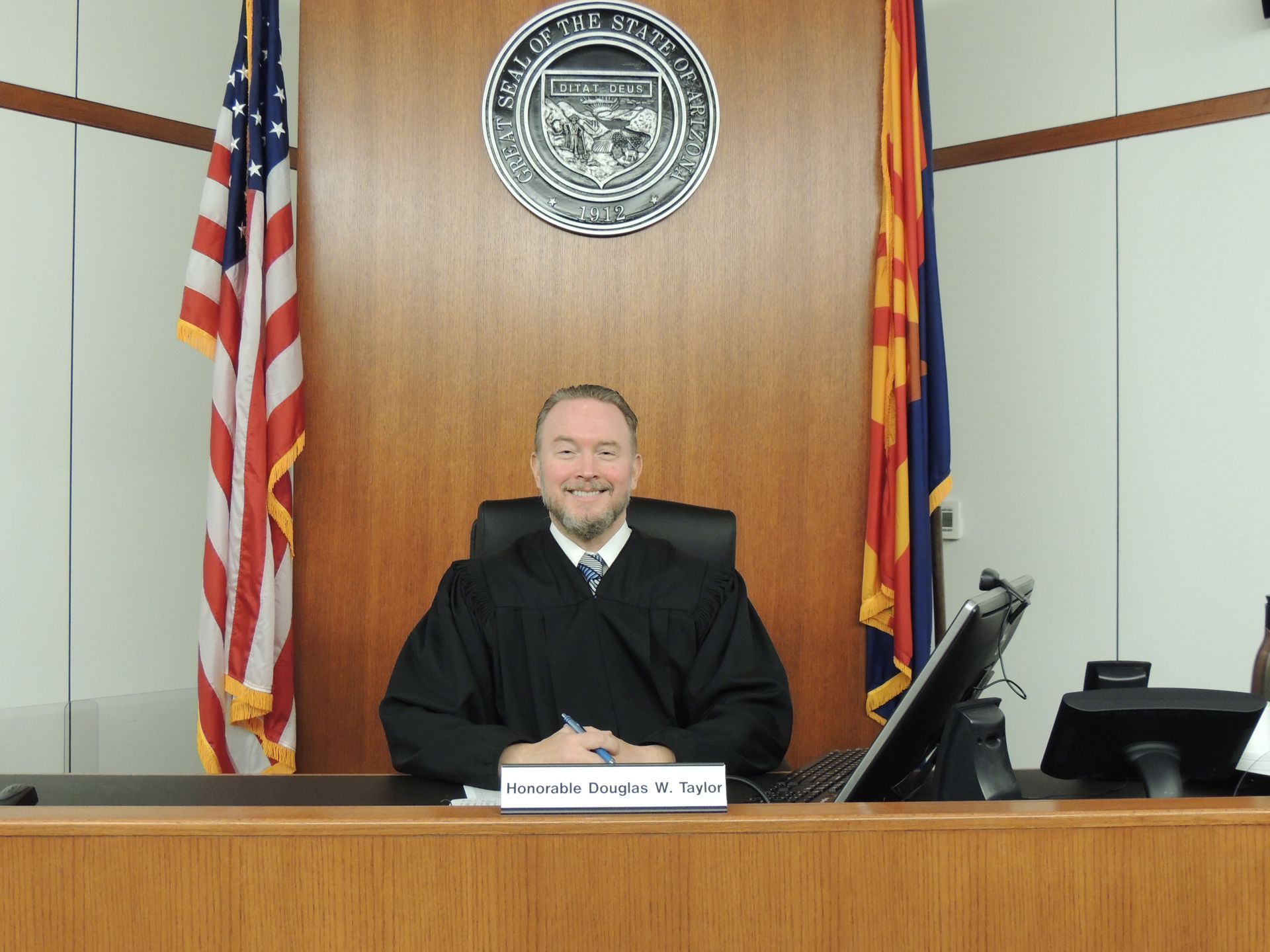
Doug Taylor is a former Pima County judge who has presided over domestic violence matters and now defends people accused of domestic violence offenses throughout Tucson and Southern Arizona. That courtroom experience provides valuable perspective when evaluating witness credibility, police reports, body-camera footage, 911 recordings, and the practical issues that may influence how a case develops.
A domestic violence designation can create consequences far beyond an ordinary disorderly conduct charge. Early representation can help protect your rights, prevent avoidable mistakes, preserve important evidence, and identify the strongest available defense.
Common Situations Leading to DV Disorderly Conduct Charges
Domestic violence disorderly conduct allegations frequently arise from situations involving:
• A loud argument between spouses or partners
• Neighbors calling police after hearing shouting
• Conflicting accounts of a verbal confrontation
• Allegations involving threatening or intimidating behavior
• A dispute during a separation or breakup
• An argument involving shared property or children
• Cross-accusations between both parties
• Conduct allegedly involving a firearm or other weapon
Police officers responding to a domestic disturbance often must make rapid decisions based upon incomplete information.
An arrest does not establish guilt, and the first version of events recorded in a police report is not always the complete or most accurate account.
Domestic Violence
Disorderly Conduct Under Arizona Law
Arizona disorderly conduct is governed by A.R.S. § 13-2904. The statute covers several different forms of alleged behavior, including fighting, seriously disruptive conduct, unreasonable noise, abusive or offensive language likely to provoke an immediate physical response, and certain conduct involving firearms.
Disorderly conduct becomes designated as domestic violence when the alleged conduct involves a qualifying relationship under A.R.S. § 13-3601. Qualifying relationships may include current or former spouses, people who live or previously lived together, individuals who share a child, certain relatives, and people involved in a qualifying romantic or sexual relationship.
Domestic violence is therefore not usually a separate criminal offense. It is a legal designation or "tag" attached to the underlying disorderly conduct charge. That designation may affect release conditions, counseling requirements, firearm rights, employment, professional licensing, and future criminal proceedings.
A heated argument does not automatically amount to criminal disorderly conduct. The State must still prove every required element of the underlying offense beyond a reasonable doubt.
What the State
Must Prove
To obtain a conviction for domestic violence disorderly conduct, the prosecution must prove beyond a reasonable doubt that:
- The defendant knowingly engaged in conduct prohibited by A.R.S. § 13-2904
- The conduct disturbed the peace or quiet of a person, neighborhood, or group, when required by the subsection charged
- The alleged conduct occurred within a qualifying domestic relationship under A.R.S. § 13-3601
The precise elements depend upon which subsection of the disorderly conduct statute is alleged. A case based upon unreasonable noise presents different legal and factual questions than a case involving threatening behavior, fighting, or the display of a firearm.
Many cases turn on context. The court may need to determine what was actually said or done, whether the alleged conduct was knowingly committed, whose peace was disturbed, whether witness accounts are reliable, and whether the evidence supports the particular subsection charged.
Potential
Consequences
Most disorderly conduct charges are classified as class 1 misdemeanors.
A class 1 misdemeanor may expose a defendant to:
• Up to six months in jail
• A fine and surcharges
• Probation
• Court-ordered domestic violence counseling
• Release conditions or no-contact orders
• A criminal record
Disorderly conduct involving the reckless handling, display, or discharge of a deadly weapon or dangerous instrument may be charged as a class 6 felony. A felony allegation creates substantially greater exposure and may affect civil rights, firearm possession, employment, housing, and professional licensing.
Even a misdemeanor domestic violence conviction can have consequences beyond the sentence imposed by the court. Depending upon the circumstances, it may affect firearm rights, background checks, security clearances, immigration matters, parenting disputes, and future domestic violence prosecutions.
The potential consequences make it important to evaluate both the immediate criminal charge and the longer-term effect that a conviction could have upon your life.
Common Defense Strategies
Domestic violence disorderly conduct cases are highly fact-specific. The strongest defense depends upon the subsection charged, the available evidence, the credibility of the witnesses, and the complete context of the incident.
Potential defenses may include:
• The alleged conduct did not satisfy the statutory definition of disorderly conduct
• The defendant did not knowingly disturb anyone’s peace
• The statements or actions were exaggerated or taken out of context
• Witness accounts are inconsistent or unreliable
• The allegation arose from a mutual argument rather than criminal conduct
• The defendant acted in self-defense or defense of another person
• Audio, video, text messages, or other evidence contradict the accusation
• The State cannot prove a qualifying domestic relationship
• Police obtained statements or evidence in violation of constitutional rights
Domestic disputes frequently involve strong emotions and competing accounts.
A careful investigation may reveal missing context, inconsistencies, motives to exaggerate, or objective evidence that changes the apparent meaning of the incident.
COURTROOM REALITY
In domestic violence disorderly conduct cases, the volume of an argument is not the only issue. Judges examine the words allegedly used, the surrounding circumstances, the reactions of the people present, the reliability of the witnesses, and whether the conduct actually meets the statutory definition of a crime.
A police report may make an incident appear straightforward when the evidence is not. Body-camera footage, 911 recordings, text messages, witness inconsistencies, and the physical setting can materially change how the court understands what occurred.
Clear organization and careful presentation of those facts can strongly influence the direction of the case.
Real Example: When an Argument DoesN't Tell the Whole Story
Police respond to a shared residence after a neighbor reports loud arguing. One person claims the other yelled, used offensive language, and disturbed the household. The initial report makes the incident appear to be a straightforward domestic violence disorderly conduct case.
Further review, however, may reveal that both parties were arguing, no threats were made, no physical confrontation occurred, and the complaining witness gave inconsistent accounts. Body-camera footage may show a calmer scene than the written report suggests, while text messages or other evidence may provide important context concerning what happened before police arrived.
The defense must examine more than the accusation itself. The critical questions include whether the defendant knowingly engaged in prohibited conduct, whether anyone’s peace was legally disturbed, whether the evidence supports the precise subsection charged, and whether the State can prove the case beyond a reasonable doubt.
Related Defense Areas
Domestic violence disorderly conduct allegations may overlap with other criminal and protective-order matters.
Related defense areas include:
• Domestic Violence Defense
• Domestic Violence Assault Defense
• Threatening or Intimidating Defense
• Harassment Defense
• Criminal Damage Domestic Violence Defense
• Restraining Orders (Orders of Protection and Injunctions Against Harassment)
• Firearm Rights in Domestic Violence Cases
Each charge should be evaluated individually, but related proceedings may affect release conditions, contact with family members, access to a shared residence, firearm possession, and the overall defense strategy.
Frequently Asked Questions
Is domestic violence disorderly conduct a misdemeanor or felony in Arizona?
Most disorderly conduct charges are class 1 misdemeanors. However, disorderly conduct involving the reckless handling, display, or discharge of a deadly weapon or dangerous instrument may be charged as a class 6 felony. The domestic violence designation is attached when the alleged conduct involves a qualifying relationship under Arizona law.
Can I be charged with domestic violence disorderly conduct without touching anyone?
Yes. Physical contact or injury is not required. A charge may be based upon allegations of seriously disruptive behavior, unreasonable noise, fighting, offensive language likely to provoke an immediate physical response, or certain conduct involving a firearm.
Can a loud argument result in a domestic violence arrest?
Yes. Police may make an arrest after responding to reports of shouting or a disturbance. However, a loud argument does not automatically prove criminal disorderly conduct. The State must establish that the defendant knowingly engaged in conduct prohibited by the statute and prove every other required element.
Whose peace must have been disturbed?
The answer depends upon the subsection charged and the evidence. The alleged victim, another household member, a neighbor, or another person may claim that their peace was disturbed. Whether the evidence legally establishes that element can become a central issue in the defense.
Can the alleged victim have the charges dismissed?
The alleged victim generally does not control whether criminal charges continue. The prosecutor decides whether to dismiss, reduce, negotiate, or prosecute the case. The alleged victim’s wishes may be considered, but they do not automatically determine the outcome.
Should I contact the alleged victim after my arrest?
Generally, no. A court may impose a no-contact order or other release conditions. Direct contact, indirect messages, apologies, or communication through friends and relatives may violate those orders or create additional evidence. Review every release condition carefully and speak with your attorney before attempting contact.
What evidence can help defend a disorderly conduct case?
Potentially useful evidence may include body-camera footage, 911 recordings, surveillance video, photographs, text messages, social-media communications, witness testimony, dispatch records, and evidence concerning the physical setting. Preserving evidence early can be important because recordings and electronic information may later be lost or deleted.
Can domestic violence disorderly conduct charges be dismissed?
They can be dismissed in some cases, but no outcome can be guaranteed. Dismissal may become possible when the evidence is insufficient, witnesses are unreliable, accounts are inconsistent, constitutional violations occurred, or the alleged conduct does not satisfy the statutory elements.
Will a conviction affect my firearm rights?
It may. Firearm restrictions can arise from release conditions, protective orders, felony charges, or certain domestic violence convictions under state or federal law. The consequences depend upon the precise charge, outcome, and individual circumstances.
When should I hire an attorney?
As early as possible. Early representation may help preserve evidence, prevent violations of court orders, address release conditions, identify weaknesses in the prosecution’s case, and avoid decisions that could make the case more difficult to defend.
Speak With a Former Judge About Your Case
A domestic violence disorderly conduct allegation can affect your freedom, reputation, family relationships, employment, and firearm rights. The sooner the evidence and court orders are reviewed, the sooner an informed defense strategy can begin.
Douglas W. Taylor, Sr. is a former Pima County judge with more than 25 years of criminal-law experience. He represents clients charged with domestic violence disorderly conduct in Tucson, Pima County, and throughout Southern Arizona.
Call Taylor Law Group, PLLC at (520) 440-5635 for a free and confidential consultation.