
CRIMINAL DEFENSE LAWYER
TUCSON & SOUTHERN ARIZONA
FORMER PIMA COUNTY JUDGE ON YOUR SIDE
Criminal defense in Tucson and Pima County, with representation throughout Cochise and Santa Cruz Counties.
Criminal Defense in Tucson When Your Future Is at Stake
An arrest, criminal charge, or police investigation can threaten your freedom, employment, professional license, firearm rights, reputation, and family relationships. What you say and do during the earliest stages of the case can significantly affect what happens next.
If law enforcement wants to question you, do not try to talk your way out of the situation. Remain calm, clearly request an attorney, and avoid discussing the allegations with police, witnesses, alleged victims, or anyone other than your lawyer. Preserve potentially important evidence, including text messages, photographs, videos, call records, and witness information.
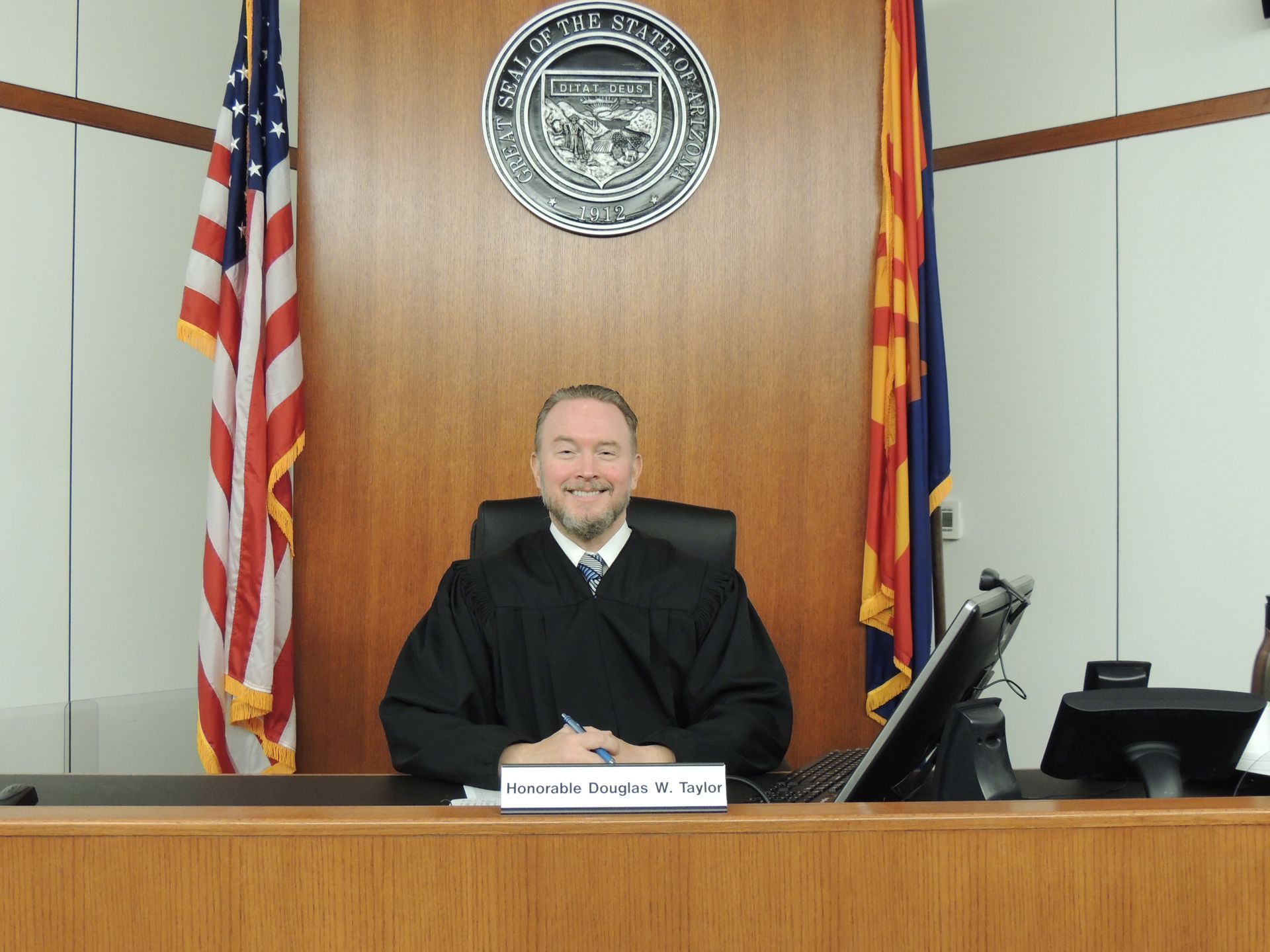
Taylor Law Group defends people accused of misdemeanors and felonies in Tucson, Pima County, and courts throughout Southern Arizona. Douglas W. Taylor, Sr. personally leads the defense, bringing more than 25 years of criminal-law experience and the perspective of a former elected Pima County Judge.
Having evaluated criminal cases from the bench, Doug understands how judges examine probable cause, release conditions, credibility, police reports, constitutional issues, plea agreements, trial evidence, and sentencing arguments. That experience helps the defense identify important problems early and prepare for the issues the court is likely to scrutinize.
Every case requires an individual strategy. The defense may involve challenging the State’s evidence, investigating conflicting accounts, seeking suppression of unlawfully obtained evidence, negotiating a reduction or dismissal, preparing mitigation, or taking the case to trial.


A Tucson Criminal Defense Lawyer Who Knows the Local Courts
Where a criminal case is filed matters. Tucson City Court, Pima County Justice Court, and Pima County Superior Court handle different types of cases, follow different procedures, and address different issues at the earliest stages of a prosecution.
Misdemeanor cases arising within Tucson are frequently handled in Tucson City Court. Other misdemeanor cases may be filed in Pima County Justice Court or another municipal or justice court. Felony cases are generally prosecuted in Pima County Superior Court, where the process may involve an initial appearance, preliminary hearing or grand-jury indictment, arraignment, disclosure, pretrial motions, plea negotiations, and trial.
Douglas W. Taylor, Sr. has practiced criminal law in Southern Arizona for more than 25 years and previously served as an elected Pima County Judge. He understands the local courts from both sides of the bench and personally represents clients facing criminal allegations.
Taylor Law Group’s office is located in downtown Tucson, directly across from Pima County Justice Court and close to Pima County Superior Court and Tucson City Court. Our practice is built around the courts, procedures, prosecutors, and legal issues that affect people accused of crimes in Tucson and Pima County.
Criminal Defense Guided by Judicial Experience
Criminal defense attorneys ordinarily evaluate cases from the advocate’s side of the courtroom. Doug Taylor brings an additional perspective: Doug has also been responsible for evaluating criminal cases from the judicial bench.
As a former Pima County Judge, Doug reviewed probable cause, imposed and modified release conditions, evaluated police reports and witness testimony, considered constitutional arguments, assessed plea agreements, conducted trials, and imposed sentences. That experience provides practical insight into how judges identify weaknesses, resolve conflicting accounts, and determine which facts actually matter.
Judicial experience does not predetermine the result of a case. It does, however, help the defense anticipate the questions a court is likely to ask, recognize credibility problems early, and present the evidence in a focused and persuasive way.
What a Former Judge Examines at the Beginning of a Case
- Whether the police reports are internally consistent
- Whether body-camera footage supports or contradicts the written allegations
- Whether witness accounts have changed or omit important context
- Whether the stop, search, seizure, arrest, or questioning was lawful
- Whether the prosecution can prove every required element of the charge
- Whether release conditions require immediate attention
- Whether favorable evidence needs to be preserved before it disappears
- Whether mitigation or corrective action could improve negotiations or sentencing exposure
Examining these issues early allows the defense to make deliberate decisions instead of merely reacting to the prosecution as the case moves forward.
Courts We Regularly Appear In
Taylor Law Group is based in downtown Tucson and primarily represents clients in Tucson and throughout Pima County. We also accept criminal cases in Cochise County and Santa Cruz County when the matter is a good fit for the firm.
Tucson and Pima County Courts
- Pima County Justice Court
- Pima County Superior Court
- Tucson City Court
- Sahuarita Municipal Court
- Marana Municipal Court
- Oro Valley Magistrate Court
- Green Valley Justice Court
Cochise County Courts
We represent clients in Cochise County Superior Court and selected municipal and justice courts, including courts serving Sierra Vista, Bisbee, and Huachuca City.
Santa Cruz County Courts
We represent clients in Santa Cruz County Superior Court and selected courts serving Nogales and the surrounding area.
Federal Court
Taylor Law Group also represents clients in selected federal criminal matters in the United States District Court for the District of Arizona, Tucson Division.
The court in which a case is filed affects the procedure, prosecuting agency, available hearings, and the way the case moves forward. Local courtroom experience helps the defense prepare for those differences from the beginning.
Criminal Charges We Defend IN TUCSON AND SOUTHERN ARIZONA
Taylor Law Group represents people accused of misdemeanors and felonies. We defend clients before charges are filed, following an arrest or citation, during plea negotiations and pretrial litigation, and through trial when necessary.
The correct defense depends on the charge, the available evidence, the client’s history, and the court in which the case is filed. Our criminal-defense practice includes the following major categories.
Domestic Violence and Offenses Against People
We defend domestic violence allegations and other offenses involving physical injury, threats, disputed contact, self-defense, witness credibility, and conflicting accounts of what occurred.
- Domestic Violence
- Assault
- Aggravated Assault
- Harassment
- Interference With Judicial Proceedings
- Resisting Arrest
Drug, Weapons and Serious Felony Charges
Felony prosecutions can involve substantial prison exposure, firearm restrictions, employment consequences, and lasting damage to a person’s record and reputation. These cases frequently require careful examination of police conduct, searches, digital evidence, laboratory evidence, possession, knowledge, and intent.
Property and Public-Order Offenses
- Criminal Damage
- Criminal Trespass
- Theft and Shoplifting
- False Reporting
- Disorderly Conduct
- Failure to Appear and Bench Warrants
Criminal Traffic and Driving Offenses
Unlike an ordinary civil traffic ticket, a criminal driving charge can result in a criminal record, probation, fines, license consequences, and—in some cases—jail.
- Criminal Speeding and Excessive Speeding
- Reckless Driving
- Aggressive Driving
- Driving on a Suspended License
- DUI and Aggravated DUI
- Criminal Hit-and-Run Offenses
Probation Violations and Active Warrants
A probation violation, failure to appear, or active warrant can place a person’s freedom at immediate risk. We evaluate the alleged violation, the underlying case, release options, and the steps necessary to bring the matter before the correct court.
If your particular charge is not listed,
call or text Taylor Law Group at (520) 440-5635. We will tell you directly whether the matter falls within our practice.
CONSTITUTIONAL ISSUES THAT CAN
CHANGE
A CRIMINAL CASE:
Evaluating a criminal case requires more than deciding whether an accusation or explanation sounds believable. Law enforcement must respect constitutional limits when obtaining evidence, and the prosecution must prove every element of the charged offense beyond a reasonable doubt. Constitutional violations may result in the suppression of evidence, exclusion of statements, dismissal of charges, or a significantly stronger negotiating position.
Unlawful Searches and Seizures
The Fourth Amendment protects against unreasonable searches and seizures. Depending on the circumstances, the defense may examine the legality of a traffic stop, detention, arrest, vehicle search, home search, warrant, consent search, or seizure of a phone or other property. Evidence obtained through a constitutional violation may be subject to suppression.
Statements, Interrogations and Miranda Rights
A Miranda issue generally arises when law enforcement conducts a custodial interrogation. The defense must examine where the questioning occurred, whether the person was free to leave, what the officers said or did, whether Miranda warnings were required and properly given, and whether any statement was voluntary. A Miranda violation does not automatically dismiss a case, but it may prevent the prosecution from using an unlawfully obtained statement.
The Right to Counsel
A person accused of a crime has the right to legal representation during critical stages of the prosecution. An attorney can communicate with law enforcement and prosecutors, address release conditions, obtain and examine disclosure, investigate the allegations, file appropriate motions, negotiate from an informed position, and prepare the case for trial.
The Presumption of Innocence and Burden of Proof
The accused is presumed innocent. The prosecution—not the defendant—has the burden of proving every element of the charged offense beyond a reasonable doubt. The defense may challenge whether the evidence is legally sufficient, internally consistent, credible, and capable of meeting that burden.
Constitutional issues are highly fact-specific. A strong defense identifies them through careful review of police reports, body-camera footage, recordings, warrants, dispatch records, witness accounts, physical evidence, and the sequence of events leading to the arrest.
____________________________
Real Clients. Real Results.
Recent CRIMINAL CASE RESULTS:
- 7/1/25 Client "S.S." 1 count of DV/Threats & Intimidation DISMISSED at trial!
- 7/15/25 Client "R.D." 2 counts DV/Assault. ACQUITTED at bench trial!
- 8/5/25 Client "L.T." 4 counts of DUI/Extreme DUI DISMISSED!
- 8/15/25 Client "A.R." 2 counts of DV/DOC DISMISSED at bench trial!
- 9/1/25 Client "S.V." 3 counts of DV/Assault DISMISSED at bench trial!
- 10/3/25 Client "S.D." 12 counts of animal cruelty DISMISSED at trial!
- 10/7/25 Client "M.L." Order of Protection QUASHED after contested trial!
- 10/14/25 Client "J.T." 2 counts Disorderly Conduct DISMISSED at bench trial!
- 10/21/25 Client "J.S." - 2 counts DV-Assault DISMISSED at bench trial!
- 10/22/25 Client "M.R." Disorderly Conduct & Criminal Damage DISMISSED!
- 10/22/25 Client "H.G." Extreme DUI, DUI BAC, DUI DISMISSED at Evid. Hrg!
- 10/21/25 Client Defendant "D.F." - Injunction Against Harassment DISMISSED!
- 11/3/25 Client "D.A." (2 cases) 1. DV/Crim. Damage + 2. DV/IJP DISMISSED!
- 11/19/2025 Client "D.H." Assault with Injuries DISMISSED at trial!
- 12/9/2025 Client "A.A." False Reporting to Police DISMISSED at trial!
- 12/9/2025 Client "R.M." DV/Disorderly Cond, DV/Cr. Dmg. DISMISSED at trial!
- 12/17/2025 Client "S.R." Felony Theft/Means Transport. NOT GUILTY jury verdict!
- 12/26/2025 Client "M.L." DUI, DUI-BAC, Extreme DUI DISMISSED!
- 1/7/2026 Client "R.M." DV/Tel.Prev.Emerg. & False Info to Police DISMISSED!
- 1/20/2026 Client "J.O." Assault with Injuries DISMISSED at trial!
- 1/22/2026 Client "C.F." Drugs, False info-Police, Trespass DISMISSED!
- 2/3/2026 Client "A.M." Felony Hit & Run DISMISSED at trial!
- 3/5/2026 Client "M.A." DV/Threats/Disorderly Conduct DISMISSED at trial!
- 4/15/2026 Client "N.C." DV/Interference w/Judicial Proceedings DISMISSED!
- 5/15/2026 Client "K.S." Extreme DUI, DUI-BAC, DUI ALL DISMISSED!
- 5/18/2026 Client "L.S." DUI, DUI BAC .08+, Extreme DUI DISMISSED!
- 5/20/2026 Client "A.A." DUI, Open Container, Lane Violation DISMISSED!
- 5/20/2026 Client "I.B." DV/Assault. DV/DOC, DV/Criminal Dmg., DISMISSED!
- 6/3/2026 Client "N.J." Extreme DUI pled down to Reckless Driving!
- 6/3/2026 Client "A. B-C." DV/Assault, DV/DOC, DV/Crm Dmg DISMISSED!
- 6/8/2026 Client "M.L." Theft of Cell Phone DISMISSED!
- 6/11/2026 Client "J.U." DUI, Crim Spd, No Insurance DISMISSED!
- 6/11/2026 Client "E.A." DUI, DUI-DRUGS, FTA DISMISSED!
- 6/12/2026 Client "M.B." DV/interference w/Judicial Proceed. DISMISSED!
- 6/18/2026 Client "M.D." DV/Disorderly Cond, DV/Assault DISMISSED!
- 6/30/2026 Client "D.A." Interfere w/Judicial Proc. NOT GUILTY AT TRIAL!
- 7/8/2026 Client "C.H." Criminal Trespass First Degree DISMISSED!
- 7/14/2026 Client "K.B." Criminal Trespass Third Degree DISMISSED!
- 7/15/2026 Client "J.P." Shoplifting, Trespass 2nd Degree DISMISSED!
- 7/15/2026 Client "M.H." Indecent Exposure, Assault, DOC, Crim Dmg DISMISSED!
- 7/15/2026 Client "V.O." Imperil Minor By Neglect, Shoplift DISMISSED AT TRIAL!
- 7/16/2026 Client "A.S." Extreme DUI (.20%+), DUI-BAC, DUI DISMISSED!
- 7/16/2026 Client "K.V." Domestic Violence Criminal Dmg DISMISSED AT TRIAL!
- 7/16/2026 Client "K.V." DV/DOC, DV/IJP, False Rpt DISMISSED AT TRIAL!
- 7/20/2026 Client "K.S." Shoplifting DISMISSED!
- 7/20/2026 Client "D.N." Shoplifting DISMISSED!
- 7/23/2026 Client "E.C." Theft, Crim Trespass, FTA DISMISSED!
- 7/23/2026 Client "E.C." DV/Assault, DV/Disorderly Cond. DISMISSED!
- 7/23/2026 Client "E.C." Shoplifting, FTA DISMISSED!
- 7/23/2026 Client "S.P." DV/Assault DISMISSED!
- 7/23/2026 Client "K.S." (1) DV/Interference w/ Judicial Proceedings NOT GUILTY VERDICT!
- 7/23/2026 Client "K.S." (2) DV/Interference w/ Judicial Proceedings NOT GUILTY VERDICT!
- 7/27/2026 Client "D.M." Reckless Driving PLED DOWN TO CIVIL SPEEDING!
- 7/29/2026 Client "A.M." Shoplifting DISMISSED!
- 7/29/2026 Client "V.C." DV/Interference w. Judicial Proceedings DISMISSED!
- 8/13/2026 Client "J.H." Criminal Trespass 1st Degree DISMISSED!
- 8/19/2026 Client "J.R." Shoplifting, False Reporting DISMISSED!
- 8/25/2026 Client "M.J." Fictitious Plate, Driving on Susp. License DISMISSED!
- 8/25/2026 Client "H.V." Extreme DUI, DUI, DSL DISMISSED!
- 8/26/2026 Client "A.M." Trespassing (Nogales City Court) DISMISSED!
- 8/26/2026 Client "R.B." Shoplifting x5, Trespassing x4 DISMISSED!
- 8/26/2026 Client "M.M." Criminal Trespass 2nd Degree DISMISSED!
- 8/27/2026 Client "L.B." Super Extreme DUI, Extreme DUI DISMISSED!
- 9/1/2026 Client "B.A." Reckless Driving PLED DOWN TO CIVIL SPEEDING!
Disclaimer: Case results depend on the unique facts and law of each matter. Prior outcomes do not guarantee or predict a similar result, and nothing herein in any way should be interpreted as constituting a promise or guarantee of any particular outcome in your case.
____________________________
Arrested or Under Investigation in Tucson? Start Here
The period immediately following police contact, an arrest, or a criminal citation can affect the entire case. Protecting yourself requires knowing both what to do and what to avoid.
Steps to Take Immediately
- Remain calm and clearly state that you want to speak with an attorney before answering questions.
- Read every citation, release document, and court order carefully.
- Follow all release conditions and protective orders exactly.
- Save text messages, emails, photographs, videos, call records, social-media communications, and other potential evidence.
- Write down a private timeline of what occurred while the events are still fresh in your memory.
- Record the names and contact information of potential witnesses.
- Save any information identifying available surveillance or security-camera footage.
- Contact a criminal defense lawyer before discussing the allegations with police, prosecutors, witnesses, or alleged victims.
Mistakes to Avoid
- Do not try to persuade police that the accusation is a misunderstanding.
- Do not consent to a search merely because an officer asks for permission.
- Do not post about the case or the people involved on social media.
- Do not delete, alter, conceal, or destroy potential evidence.
- Do not ask friends or relatives to contact an alleged victim or witness on your behalf.
- Do not violate a no-contact order, even if the other person initiates communication.
- Do not miss court or assume the case will disappear because no one has contacted you recently.
An attorney can evaluate the immediate risks, determine where the case is filed, address release conditions, preserve favorable evidence, and prevent avoidable decisions from becoming additional evidence for the prosecution.
How Criminal Charges Can Be Challenged
There is no universal defense strategy. The strongest approach depends on the charged offense, the evidence, the conduct of law enforcement, the credibility of the witnesses, and what the prosecution must prove. Potential defense issues may include the following.
Conflicting or Unreliable Evidence
- Body-camera footage that contradicts or adds context to a police report
- Witness accounts that change over time
- Physical or digital evidence inconsistent with the accusation
- Missing evidence or unexplained gaps in the investigation
- Identification evidence that is uncertain, suggestive, or unreliable
Failure to Prove the Charge
- Insufficient evidence connecting the accused to the alleged conduct
- Failure to prove intent, knowledge, possession, injury, or another required element
- Evidence supporting accident, mistake, lack of knowledge, or lack of criminal intent
- Conflicting evidence creating reasonable doubt
Constitutional and Procedural Violations
- An unlawful traffic stop, detention, search, seizure, or arrest
- Statements obtained through an unlawful interrogation
- Problems with a search warrant or the manner in which it was executed
- Failure to preserve potentially important evidence
- Violations affecting the reliability or admissibility of the prosecution’s evidence
Justification and Affirmative Defenses
Depending on the allegations, the evidence may support self-defense, defense of another person, defense of property, necessity, duress, entrapment, or another legally recognized defense. The availability of any defense depends on the facts and applicable Arizona law.
Negotiation, Mitigation and Alternative Resolutions
Not every favorable outcome requires a trial. Evidentiary weaknesses, legal issues, treatment, restitution, lack of criminal history, corrective action, and other mitigating circumstances may support dismissal, diversion, reduction of charges, or a more favorable negotiated resolution.
The purpose of an early case review is to identify which issues are genuinely supported by the evidence and develop the defense around those issues—not around assumptions or a one-size-fits-all strategy.
Speak With a Tucson Criminal Defense Lawyer
If you have been arrested, cited, contacted by police, or learned that you are under investigation, speak with an attorney before making another important decision about the case.
Former Pima County Judge Doug Taylor personally represents clients facing misdemeanor and felony charges in Tucson, Pima County, and courts throughout Southern Arizona.
Call or text Taylor Law Group, PLLC 24/7 at
(520) 440-5635 for a free confidential consultation.
FOCUS CRIMINAL Practice Areas
Getting Started With Your Defense
During your free and confidential consultation, we will identify the charge, the court, any upcoming deadlines, and the most immediate risks requiring attention.
- Tell us what happened and provide any available court or police documents.
- We will identify immediate concerns involving custody, release conditions, protective orders, warrants, or upcoming court dates.
- We will explain the next stage of the case and the available defense options.
- Most cases are handled for a clearly explained flat fee.
- You will receive a written scope of representation before deciding whether to hire the firm.
- If the matter is not a good fit for our practice, we will tell you directly.
____________________________
HOW WE HANDLE CRIMINAL DEFENSE
1. Immediate Case Assessment
We identify the charge, court, upcoming deadlines, release conditions, and any immediate risk of custody or additional allegations.
2. Evidence Preservation and Disclosure
We preserve favorable evidence and obtain available police reports, body-camera footage, recordings, witness statements, photographs, videos, and other disclosure.
3. Factual and Constitutional Review
We compare the allegations against the actual evidence and evaluate searches, seizures, questioning, identification procedures, witness credibility, and whether the State can prove every element of the charge.
4. Defense Strategy
We develop a case-specific plan addressing investigation, release conditions, motions, negotiation, mitigation, expert review, and trial preparation where appropriate.
5. Motions and Negotiations
When supported by the facts and law, we seek suppression of evidence, dismissal, diversion, reduction of charges, or another favorable resolution.
6. Trial and Sentencing Preparation
If the case proceeds to trial, we prepare the evidence, witnesses, cross-examination, legal arguments, and theory of defense. If sentencing becomes necessary, we present mitigation and advocate for the least damaging lawful outcome.
WHAT HAPPENS
AFTER
AN
ARREST?
The process depends on whether the allegation is a misdemeanor or felony, whether the person remains in custody, and which court and prosecuting agency are involved.
POLICE CONTACT, CITATION OR BOOKING
- Some cases begin with an arrest and booking at the jail. Others begin with a citation, summons, or ongoing police investigation. Before answering questions or consenting to a requested search, ask to speak with an attorney.
INITIAL APPEARANCE AND RELEASE CONDITIONS
- A person arrested and held in custody generally appears before a judge for an initial appearance. The court addresses probable cause, appoints counsel when appropriate, schedules further proceedings, and determines release conditions. Those conditions may include bail, pretrial supervision, travel restrictions, firearm restrictions, or orders prohibiting contact with particular people or locations.
FORMAL CHARGING AND ARRAIGNMENT
- Misdemeanor and felony cases follow different charging procedures. Depending on the case, charges may proceed through a complaint, preliminary hearing, or grand-jury indictment. At arraignment, the court advises the accused of the charges and receives a plea.
DISCLOSURE AND CASE INVESTIGATION
- The defense obtains and reviews available disclosure, which may include police reports, body-camera footage, recordings, photographs, laboratory reports, witness statements, and digital evidence. Additional defense investigation may reveal missing context, conflicting accounts, constitutional issues, or evidence overlooked by law enforcement.
PRETRIAL MOTIONS AND NEGOTIATIONS
Before trial, the defense may file motions, challenge evidence, address release conditions, pursue additional disclosure, and negotiate with the prosecution. Depending on the facts and law, possible resolutions may include dismissal, diversion, reduction of charges, a negotiated agreement, or trial.
TRIAL AND SENTENCING
At trial, the prosecution bears the burden of proving every element of the charge beyond a reasonable doubt. If there is a conviction or negotiated plea, the case proceeds to sentencing, where criminal history, mitigation, victim input, statutory requirements, and the circumstances of the offense may affect the outcome.
____________________________
- REMEMBER. You do not have to walk into Tucson City Court, Pima County Justice Court, or Pima County Superior Court alone. Get advice before you say anything in court, sign anything, or agree to conditions you don’t even fully understand.

Criminal Defense
FAQs
— TUCSON, ARIZONA
Should I talk to police if I am innocent?
Generally, you should not answer substantive questions about a criminal allegation before consulting an attorney. Innocent people can still make mistakes, misremember details, adopt an officer’s wording, or make statements that are misunderstood or taken out of context.
Remain polite, do not physically resist, and provide identifying information when legally required. You can clearly state: “I want to remain silent, and I want to speak with a lawyer.” Invoking those rights is not an admission of guilt.
What should I do if I am under investigation, cited, or arrested?
Do not try to explain the allegations to police, prosecutors, witnesses, or an alleged victim before obtaining legal advice. Preserve text messages, photographs, videos, call records, social-media communications, and witness information. Do not delete or alter potential evidence.
Read all citations, release paperwork, protective orders, and court notices carefully. Follow every release condition, avoid prohibited contact, and speak with a criminal defense lawyer as early as possible.
What is the difference between a misdemeanor and a felony in Arizona?
A misdemeanor is generally less serious than a felony but may still result in jail, probation, fines, treatment requirements, firearm consequences, and a criminal record. Misdemeanors are commonly handled in municipal or justice courts.
Felonies are generally filed in Arizona Superior Court and may carry prison exposure, substantial probation, loss of firearm rights, and serious employment and licensing consequences. The possible penalties depend on the classification of the offense, criminal history, aggravating circumstances, and applicable Arizona law.
What happens after a criminal arrest in Tucson or Pima County?
The process depends on the charge, whether the accused remains in custody, and the court handling the case. It may include booking, an initial appearance, release conditions, formal charging, arraignment, disclosure, pretrial conferences, motions, plea negotiations, trial, and sentencing.
Misdemeanor cases may be handled in Tucson City Court, Pima County Justice Court, or another municipal or justice court. Felony cases are generally handled in Pima County Superior Court.
What happens at an initial appearance?
At an initial appearance, a judge addresses matters that may include probable cause, the charges or allegations, appointment of counsel, the next court date, and conditions of release.
Release conditions may include bail, pretrial supervision, travel restrictions, drug or alcohol testing, firearm restrictions, or orders prohibiting contact with certain people or locations. Violating those conditions can result in additional charges or being taken into custody.
How much does a criminal defense lawyer cost in Tucson?
The cost depends on the seriousness and complexity of the charge, whether the case is a misdemeanor or felony, the amount of investigation and motion practice required, and whether the matter proceeds to trial.
Taylor Law Group handles most criminal cases for a clearly explained flat fee. During a free and confidential consultation, we will discuss the allegations, identify the likely scope of representation, and explain the proposed fee before you decide whether to hire the firm.
Can a criminal case be dismissed, reduced, or resolved through diversion?
Possibly. A case may be dismissed, reduced, diverted, or resolved through negotiation depending on the evidence, legal issues, witness credibility, criminal history, available programs, prosecutorial policies, and circumstances of the alleged offense.
Potential grounds for a favorable resolution may include insufficient evidence, constitutional violations, inconsistent witnesses, missing evidence, failure to prove a required element, successful motion practice, mitigation, restitution, treatment, or corrective action. No particular outcome can be guaranteed.
What defenses may apply in an Arizona criminal case?
Possible defenses include mistaken identity, insufficient evidence, lack of intent or knowledge, accident, self-defense, defense of another person, unreliable witnesses, unlawful search or seizure, Miranda violations, improper identification procedures, and failure to prove every element of the offense.
The appropriate defense depends on the facts, admissible evidence, charged offense, and applicable law. A credible defense should be developed from the evidence rather than selected from a generic list.
How long does a criminal case take in Arizona?
There is no single timeline. Some misdemeanor cases resolve within weeks or months, while serious misdemeanors and felony cases may take considerably longer.
The timeline may be affected by disclosure, investigation, laboratory testing, expert review, witness availability, motion practice, negotiations, court scheduling, and whether the case proceeds to trial. A faster resolution is not always a better resolution if additional time is necessary to investigate or prepare the defense properly.
Can a domestic-violence allegation affect release conditions or firearm rights?
Yes. When a qualifying domestic relationship is alleged, a domestic-violence designation may affect release conditions, no-contact orders, counseling requirements, protective-order proceedings, employment, professional licensing, immigration concerns, and firearm rights.
Domestic violence is not a separate criminal offense by itself in Arizona. It is a legal designation attached to an underlying offense—such as assault, disorderly conduct, criminal damage, harassment, or interference with judicial proceedings—when the required relationship exists.
Can an Order of Protection affect a pending criminal case?
Yes. An Order of Protection may prohibit contact, exclude someone from a residence or other location, and impose firearm restrictions in some circumstances. A claimed violation can lead to an additional criminal allegation.
Statements, testimony, exhibits, and credibility findings from a protective-order proceeding may also affect a related criminal or family-court matter. When proceedings overlap, the defense should consider how an action taken in one case could affect the others.
Should I hire a private criminal defense lawyer if I qualify for a public defender?
Public defenders are often experienced and dedicated attorneys who perform important work under demanding conditions. A private lawyer may offer different levels of accessibility, communication, investigative resources, preparation time, and strategic flexibility.
The decision depends on the seriousness of the charge, the complexity of the evidence, the client’s priorities, and the particular attorney available. A person should evaluate experience, communication, proposed strategy, fee structure, and who will actually handle the case.
Will Doug Taylor personally handle my criminal case?
Douglas W. Taylor, Sr. personally leads the representation and defense strategy in Taylor Law Group criminal cases. He evaluates the allegations, explains the legal issues, prepares the defense, and appears in court.
Doug is supported by Taylor Law Group staff, but he personally directs the legal strategy and remains responsible for the representation. During the initial consultation, we will explain who will work on the matter and how communication will be handled.
Will an Arizona criminal conviction remain on my record forever?
A conviction creates a criminal record, but some people may later qualify for relief depending on the offense, sentence, completion of all requirements, and applicable law. Potential remedies may include setting aside a conviction, sealing eligible criminal case records, restoring civil rights, restoring firearm rights, or pursuing other post-conviction relief.
Eligibility is highly fact-specific. Some offenses and circumstances are excluded, and obtaining one form of relief does not necessarily erase every legal or practical consequence of the conviction.
When should I contact a Tucson criminal defense lawyer?
Contact a lawyer as soon as you learn that police want to question you, a warrant may exist, charges are being considered, or you have been cited or arrested. Early representation may help preserve evidence, prevent avoidable statements, address release conditions, identify court deadlines, and begin the investigation before evidence disappears or memories fade.
Why choosE TAYLOR LAW GROUP?
Ranked in the Top 100 Trial Lawyers
Over 25 Years of Criminal Defense Experience
Proven Results In & Out of Court
We Are Available 24/7 for All Clients
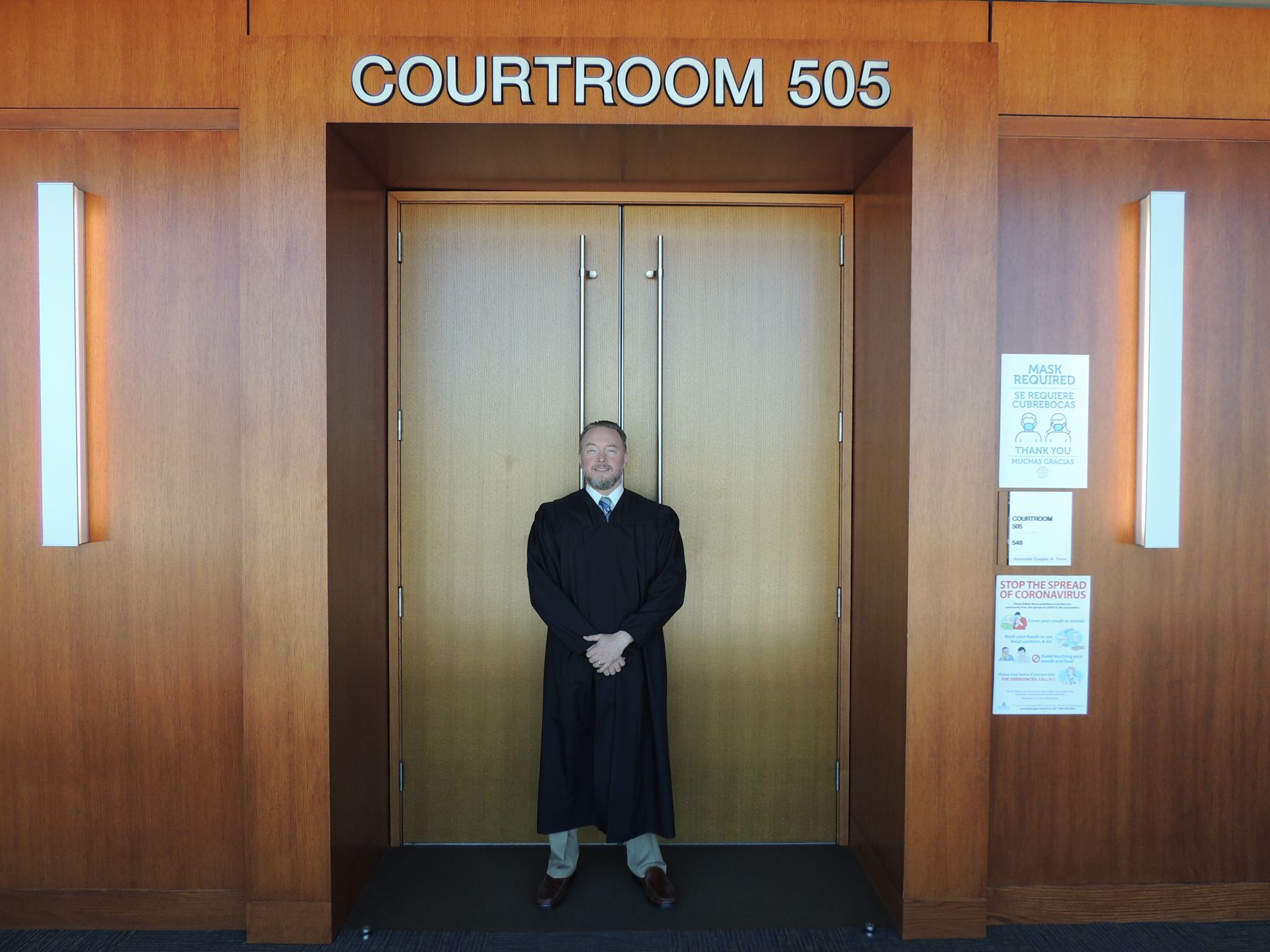
Former Pima County Judge on Your Side
¿Necesita ayuda en español? Defendemos a personas acusadas de delitos graves y delitos menores en Tucson, el Condado de Pima y el sur de Arizona. Podemos explicarle los cargos, el proceso judicial y sus opciones de defensa. Llame o envíe un mensaje de texto al (520) 440-5635, disponible las 24 horas.
contact us
If you or a loved one needs an experienced Tucson criminal defense lawyer, contact Taylor Law Group 24/7. Call or text (520) 440-5635, email us, or complete the contact form below. All fields are required.