

Fact-Checked
This page has been written, edited, and reviewed by our owner, Doug Taylor, who has 25+ years of legal experience as a former Pima County judge and elected official, and a criminal and DV defense and restraining order lawyer. Our last modified date shows when this page was last reviewed.
What Really Happens After a Domestic Violence Arrest in Tucson
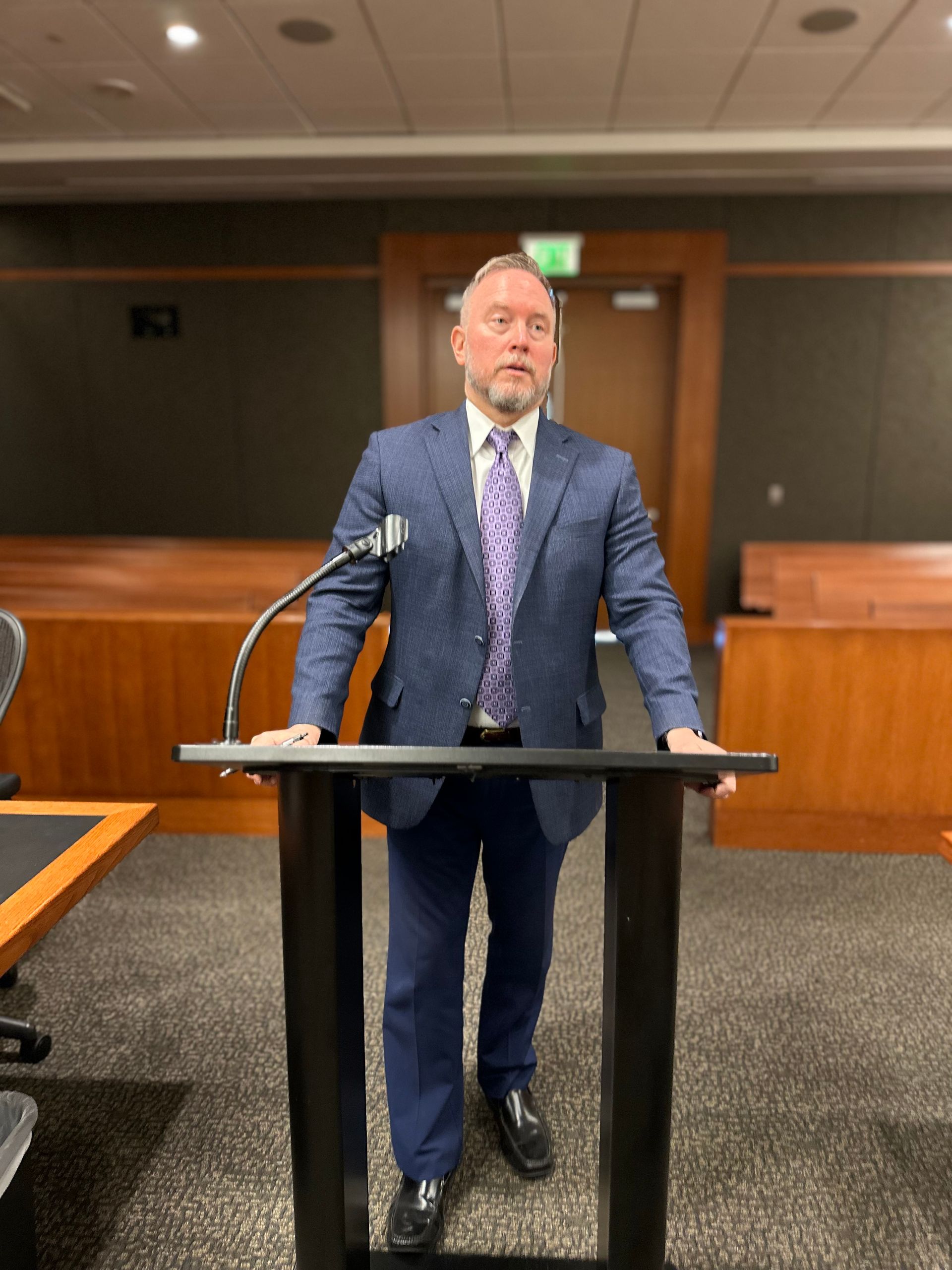
Domestic Violence Arrest in Tucson
If you or a loved one has been arrested for domestic violence in Tucson, the process can feel sudden, confusing, and deeply unfair. Arizona law allows police to make domestic violence arrests based on limited information, often before all facts are fully examined. Understanding what happens next—and how cases are actually evaluated—can make a critical difference.
Arrest First, Questions Later
The First 72 Hours After a Domestic Violence Arrest in Tucson
The first 72 hours after a domestic violence arrest often shape the entire case.
In Tucson, many domestic violence arrests begin with police responding to a 911 call, separating the parties, interviewing witnesses, looking for injuries or property damage, reviewing body-camera evidence, and deciding whether probable cause exists for an arrest.
Domestic violence calls are treated with urgency. Officers frequently arrest one party at the scene, even when evidence is incomplete or conflicting. This does not mean the case is proven. It means the system has been triggered. In other words, police often arrest first and sort out the full context later.
After arrest, the accused person may be transported to the Pima County Adult Detention Complex for booking. This process can include fingerprinting, photographs, intake questions, and temporary custody before an initial appearance.
The initial appearance is one of the most important early moments in the case. The court reviews the allegations, addresses release conditions, and decides what restrictions should apply while the case is pending.
Release conditions may be imposed before the accused person has seen all police reports, text messages, body-camera footage, or witness statements.
No-contact orders and protective orders are common, even when both parties want continued communication.
After release, the period before arraignment is critical. This is when people often make serious mistakes by texting the alleged victim, posting online, trying to retrieve property, discussing the case with others, or violating no-contact terms.
The goal during the first 72 hours should be simple: protect your rights, follow all court orders, preserve evidence, and speak with a domestic violence defense attorney before making decisions that could affect the case.
If this is your first arrest or first DV allegation, read our guide for people facing a first domestic violence charge in Tucson.
The First Court Appearance Matters More Than You Think
The initial court appearance sets the tone for the entire case. Conditions of release, bond, and early restrictions can shape your life for weeks or months.
What Release Conditions Actually Look Like in Pima County DV Cases
Release conditions in domestic violence cases can be strict, even when the allegations are disputed.
Common conditions may include:
• No contact with the alleged victim
• No return to a shared residence
• No alcohol or drug use
• Firearm surrender or firearm restrictions
• No possession of weapons
• Pretrial Services supervision
• GPS monitoring in some cases
• Restrictions involving children or third-party exchanges
• Orders not to harass, threaten, or intimidate witnesses
One of the most difficult situations occurs when the accused person is ordered not to return home, even if their name is on the lease, mortgage, or utilities.
Another common issue involves children. Courts may allow limited third-party arrangements for child exchanges, but informal communication through friends or family can create serious problems if it violates the court’s order.
These conditions must be taken seriously. A violation can create new criminal exposure and may make the original case much harder to resolve.
As a former Pima County Judge, I know how judges evaluate domestic violence cases at this early stage—what concerns them, what evidence matters, and where weaknesses often exist. Strategic intervention early can prevent long-term damage.
Evidence Is Often Weaker Than It Appears
A Former Judge’s Perspective: Evidence Can Change Quickly
As a former Pima County Judge, Doug Taylor has seen domestic violence cases change dramatically once the evidence is reviewed carefully.
In some cases, the original police report may appear strong at first glance, but later review of body-camera footage, 911 calls, text messages, or witness statements reveals inconsistencies that were not obvious at the scene.
For example, a case may begin with one person making a clear accusation during a highly emotional moment. But later evidence may show conflicting statements, missing context, mutual argument, minimal physical evidence, or messages that contradict the first version of events.
In other cases, the most damaging evidence is created after the arrest. A person who might have had a defensible case can make things worse by sending repeated apology texts, pressuring the other person to drop the case, or violating no-contact conditions.
That is why domestic violence defense requires early evidence review, careful strategy, and strict compliance with court orders.
Many domestic violence cases rely on:
- Emotional statements made in the heat of the moment
- Inconsistent accounts
- Minimal physical evidence
- Assumptions made under pressure
Prosecutors still move forward even if the victim doesn't want to, but these cases are still frequently defensible when handled correctly.
Protective Orders and Criminal Charges Interact
Protective orders are civil in nature, but violating one can lead to new criminal charges. Mishandling communication—even unintentionally—can make a difficult situation far worse.
Can the Alleged Victim Drop the Charges?
One of the most common questions in domestic violence cases is whether the alleged victim can simply “drop the charges.”
In Arizona, the answer is usually no.
Once a criminal case is filed, the prosecutor controls the case. The alleged victim’s wishes may matter, but they do not automatically decide whether the case continues.
Prosecutors may still move forward based on:
• 911 recordings
• Police reports
• Body-camera footage
• Photographs
• Medical records
• Witness statements
• Text messages
• Prior statements
This can be frustrating for everyone involved, especially when both parties want contact or reconciliation.
Victim recantation may affect the case, but it does not automatically end it. Prosecutors may question why the statement changed, whether pressure was involved, and whether other evidence still supports the charge.
This is another reason domestic violence cases must be handled strategically from the beginning.
Why Experience Inside the System Matters
Domestic violence cases are not just about the law—they’re about judgment, discretion, and leverage. Understanding how prosecutors and judges think is often more important than raw statute knowledge.
That perspective only comes from experience inside the courtroom.
What Makes a Case “Domestic Violence” Under Arizona Law?
In Arizona, domestic violence is not always a separate stand-alone charge.
Under A.R.S. § 13-3601, certain criminal offenses may receive a domestic violence designation when the alleged conduct involves a qualifying relationship.
That means an underlying offense such as assault, disorderly conduct, criminal damage, harassment, threatening or intimidating, or interference with judicial proceedings may become a domestic violence-related case if the relationship element is present.
The domestic violence designation matters because it can affect:
• Release conditions
• No-contact orders
• Counseling requirements
• Firearm rights
• Protective orders
• Immigration consequences
• Employment issues
• Family court or custody matters
The DV label can sometimes create consequences that reach far beyond the original allegation.
- For a broader overview of what happens after an arrest, read our guide to what really happens after an arrest in Tucson.
FAQs — Domestic Violence Arrests in Tucson
How long will I be held after a domestic violence arrest in Tucson?
The timeline depends on booking, court availability, release conditions, and the specific allegations. Many people are brought before a judge for an initial appearance relatively quickly, but release is not automatic. The court may impose restrictions before allowing release.
Can I go home if we share a house?
Maybe, but not always. In domestic violence cases, courts may prohibit the accused person from returning to a shared residence even if their name is on the lease, mortgage, or utilities. Do not return home unless the release conditions clearly allow it.
Will I lose my gun rights after a domestic violence arrest?
A domestic violence arrest can immediately create firearm-related restrictions through release conditions or protective orders. A conviction may create longer-term consequences under Arizona or federal law. Gun rights issues should be handled carefully from the beginning.
What if my spouse or partner contacts me first?
Do not assume contact is allowed just because the other person initiated it. If a no-contact order or release condition is in place, responding in any way may still violate the court’s order. Save the message and speak with your attorney before responding.
Can the victim drop the charges?
Under the Arizona Victim's Rights Bill, the alleged victim can express their wishes, but prosecutors generally decide whether a criminal case continues. Even if the alleged victim wants the case dropped, prosecutors may rely on police reports, 911 calls, body-camera footage, photographs, or prior statements and proceed with prosecution anyway.
Do I need a lawyer at the first court appearance?
It is strongly recommended. The first court appearance can affect release conditions, no-contact terms, firearm restrictions, housing access, and the overall direction of the case. Early representation can help prevent avoidable mistakes.
What happens if I violate a release condition?
Violating release conditions can result in arrest, stricter conditions, bond changes, new criminal allegations, or a worse negotiating position. Even technical violations can seriously complicate a domestic violence case.
What should I do immediately after release?
Follow every release condition exactly. Do not contact the alleged victim, post about the case, delete evidence, or discuss the facts with others. Preserve texts, photos, videos, and witness information, and speak with a domestic violence defense attorney quickly.
Talk to a Tucson Domestic Violence Attorney Early
Domestic violence arrests move quickly. The first 72 hours can affect release conditions, protective orders, evidence, firearm rights, housing, family contact, and the future direction of the case.
Former Pima County Judge Doug Taylor defends clients facing domestic violence allegations throughout Tucson and Southern Arizona.
Call or text Taylor Law Group, PLLC 24/7 at
(520) 440-5635 for a free confidential consultation.
Search our site
Categories
FOLLOW US