
How Much Does It Cost to Quash a Bench Warrant in Tucson?
For many straightforward bench-warrant matters in Tucson, private attorney fees may range from approximately $500 to $2,500. A simple warrant arising from a missed misdemeanor or traffic court date may fall near the lower end. A warrant connected to a felony, probation violation, new failure-to-appear charge, or complicated underlying case may cost substantially more.
A useful working estimate is:
• Straightforward misdemeanor or traffic warrant: approximately $500 to $1,500
• Warrant involving a more serious criminal case: approximately $1,500 to $2,500 or more
• Warrant plus representation in the underlying criminal case: additional fees may apply
These are estimated market ranges supplied for this page—not an official Tucson fee schedule or a Taylor Law Group quote. The actual fee depends upon the issuing court, reason for the warrant, underlying charge, whether a hearing is required, whether the defendant must personally appear, and whether representation in the underlying case is also needed.
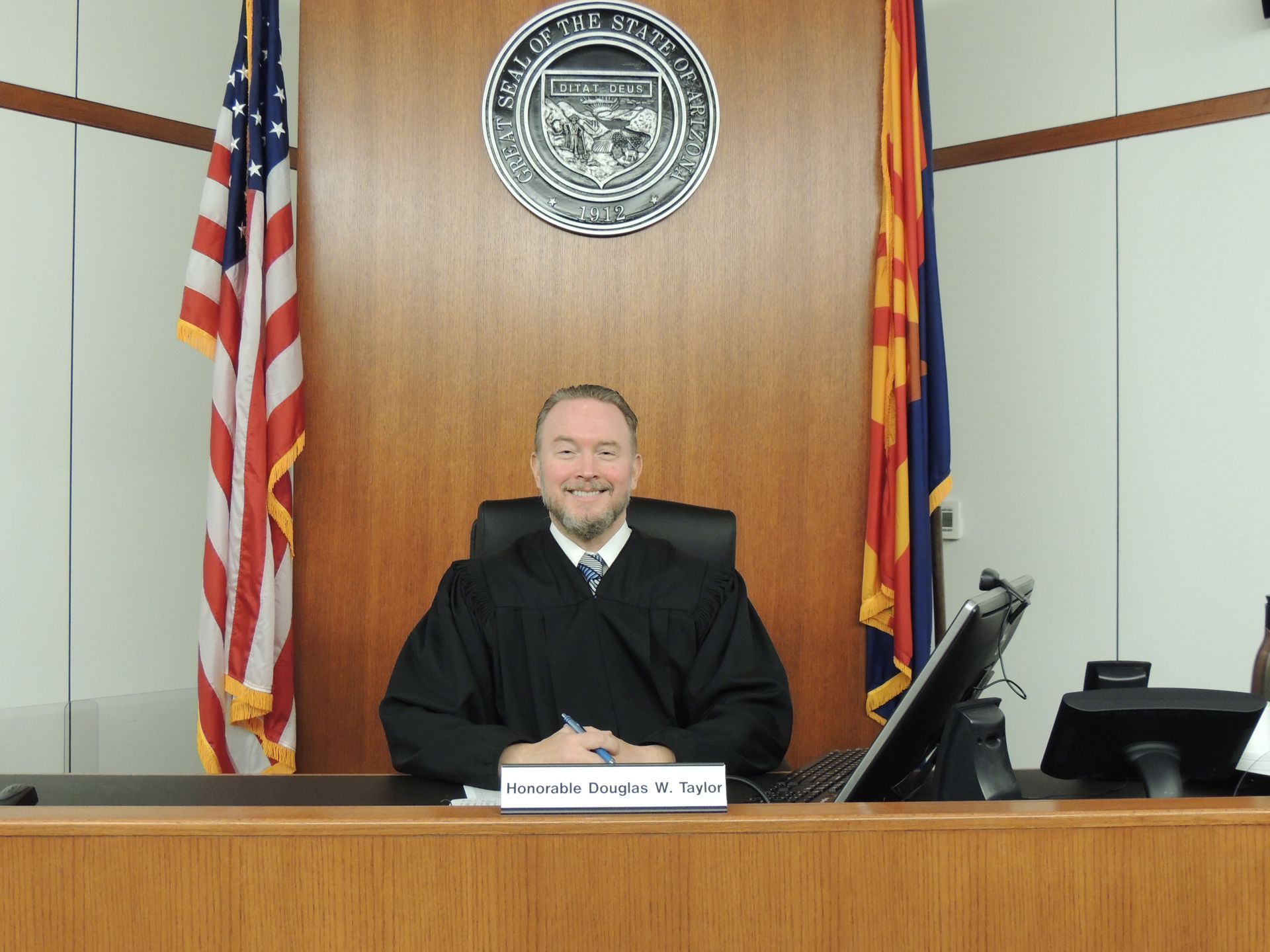
Douglas W. Taylor, Sr. is a former Pima County judge with more than 25 years of criminal-law experience. Before representation begins, clients should receive a clear explanation of what must be done to address the warrant and what the quoted fee covers.
Written by the team at Taylor Law Group, PLLC and reviewed by Doug Taylor, former Pima County judge and criminal defense and post-conviction attorney.
Last updated: August 8, 2026
What Is a Bench Warrant?
A bench warrant is an order issued by a judge directing law enforcement to take a person into custody.
Bench warrants commonly arise when a defendant:
• Misses a scheduled court appearance
• Fails to comply with a court order
• Fails to complete a required program
• Violates release conditions
• Fails to address court-ordered financial obligations
• Violates probation
• Fails to appear after receiving lawful notice
The precise reason for the warrant matters because quashing the warrant does not necessarily resolve the underlying criminal case or alleged violation.
Arizona’s Judicial Branch explains that an arrest or bench warrant can be quashed or canceled only by a judicial officer in the jurisdiction where the warrant originated.
What Determines the Cost of QUASHING A WARRANT?
Several factors may affect the attorney’s fee.
The Court That Issued the Warrant
A Tucson warrant may originate from:
• Tucson City Court
• Pima County Consolidated Justice Court
• Pima County Superior Court
• Another Arizona municipal or justice court
Each court has its own procedures for warrant resolution.
Tucson City Court currently directs Arizona residents with active warrants to appear at the court to be scheduled for a Motion to Quash hearing. The warrant remains active until a judicial officer actually orders it quashed.
Pima County Pretrial Services separately offers bench-warrant resolution assistance for outstanding Justice Court and Superior Court warrants.
Why the Warrant Was Issued
The work required may differ substantially depending upon whether the warrant resulted from:
• A missed misdemeanor court date
• A missed felony hearing
• Failure to comply with sentencing requirements
• Failure to pay or address financial obligations
• A probation violation
• Failure to appear after release
• A new criminal allegation
The lawyer must first determine exactly what caused the warrant and what the court requires to resolve it.
Misdemeanor or Felony Case
A warrant attached to a minor misdemeanor usually presents different risks from one attached to a serious felony.
The underlying case may involve:
• Custody exposure
• Release-condition issues
• Bond
• Probation consequences
• New failure-to-appear allegations
• Additional criminal charges
• Sentencing consequences
The more serious the underlying case, the more work may be required beyond simply asking the court to recall the warrant.
Can Failure to Appear Be a Separate Crime?
Yes, in some circumstances.
Arizona recognizes separate failure-to-appear offenses.
Under A.R.S. § 13-2506, knowingly failing to appear in connection with certain misdemeanor or petty-offense proceedings may constitute failure to appear in the second degree. Depending upon the circumstances, it may be classified as a Class 1 or Class 2 misdemeanor.
Under A.R.S. § 13-2507, knowingly failing to appear when required in connection with a felony is failure to appear in the first degree, a Class 5 felony.
Not every missed appearance automatically creates a new criminal conviction. The statute, notice, mental state, facts, and procedural history must be evaluated.
How Does a Motion to Quash Work?
The exact procedure depends upon the court.
Generally, resolving a bench warrant may involve:
• Confirming that a warrant actually exists
• Identifying the court and case number
• Determining why the warrant was issued
• Preparing or requesting a Motion to Quash or recall the warrant
• Explaining the failure to appear or comply
• Providing supporting documentation
• Appearing before a judicial officer if required
• Obtaining a new court date
• Addressing release or bond conditions
• Resuming the underlying case
A motion does not itself cancel the warrant.
The warrant remains active until a judge orders it quashed or recalled. Tucson City Court expressly warns that its warrants remain in full force and effect until the judicial officer quashes them at the Motion to Quash hearing.
Will I Have to Appear in Court?
Maybe.
Tucson City Court currently states that defendants residing within Arizona are expected to appear in person to resolve warrants issued by that court and be scheduled for a Motion to Quash hearing.
Other courts and circumstances may permit different procedures.
An attorney may still be valuable by:
• Determining the correct process before you appear
• Preparing the motion
• Advising you regarding custody risk
• Gathering documentation
• Appearing with you
• Advocating for the warrant to be quashed
• Addressing release conditions
• Taking over the underlying criminal case
Do not assume either that you must surrender immediately or that an attorney can guarantee you will never be taken into custody. The issuing court controls the result.
Why Acting
Before
an Arrest Matters
An outstanding warrant may remain active until it is resolved.
That means an arrest can potentially occur during:
• A traffic stop
• Contact with law enforcement
• Another court appearance
• A probation contact
• Other circumstances in which the warrant is discovered
Acting voluntarily allows you and your attorney to investigate the warrant and determine the court’s procedure before an unexpected arrest forces the issue.
Pima County Pretrial Services even provides a free warrant-check service and can assist with warrant resolution in some Justice Court and Superior Court cases.
What Can Help Get a Warrant Quashed?
Every case is different, but useful information may include:
• Proof that you did not receive notice
• Documentation of hospitalization or illness
• Evidence of incarceration elsewhere
• Transportation problems
• Proof of a calendaring or clerical mistake
• Evidence that you attempted to contact the court
• Employment documentation
• Proof that the missed obligation has now been completed
• Evidence explaining why compliance was impossible
• A record of otherwise consistent court appearances
The court decides whether the explanation justifies quashing the warrant and what conditions should apply afterward.
How Do Warrant Lawyers Charge?
Many straightforward warrant matters are handled through a flat fee.
Flat Fee
A flat fee may cover:
• Warrant verification
• Court-record review
• Preparation of a Motion to Quash
• Communication with the court
• A specified Motion to Quash hearing
• Obtaining a new court date
The written agreement should say whether the underlying criminal case is included.
Hourly Fee
Hourly billing may make more sense when:
• Several warrants exist
• Multiple courts are involved
• A felony case is pending
• The warrant involves probation
• Custody or bond issues are complicated
• Substantial litigation will follow
Combined Representation
A lawyer may quote one fee for resolving the warrant and a separate fee for taking over the underlying criminal case.
That distinction should be clear before representation begins.
What May Cost Extra?
Possible additional expenses may include:
• Representation on the underlying criminal charge
• Bond-related proceedings
• Probation-violation representation
• Multiple warrants
• Multiple courts
• Investigators
• Certified records
• Travel
• Additional hearings
• Trial representation
The cheapest warrant fee may cover only the Motion to Quash—not the case waiting underneath it.
What Do You Receive for the Legal Fee?
Depending upon the case, warrant representation may include:
• Confirming the warrant and issuing court
• Reviewing the docket and prior minute entries
• Determining why the warrant was issued
• Assessing potential failure-to-appear exposure
• Preparing the Motion to Quash
• Gathering supporting documentation
• Advising about surrender or appearance procedures
• Appearing with the client when required
• Advocating against unnecessary custody
• Addressing release conditions
• Obtaining a new hearing date
• Resuming defense of the underlying case
The first goal is to resolve the warrant safely and correctly. The second is to address the reason the warrant existed in the first place.
FORMER JUDGE INSIGHT
A bench warrant often starts with something relatively simple—a missed date, a misunderstanding, an address problem, or an uncompleted requirement—but ignoring it can turn a manageable problem into a much larger one.
Having served as a Pima County judge, I understand that the explanation matters.
A person who appears voluntarily, takes responsibility for addressing the situation, provides documentation, and demonstrates an intention to comply going forward presents a very different picture from someone who simply ignores the court indefinitely.
The goal is to put the court in a position to resolve the warrant and move the underlying case forward.
Why the Cheapest WARRANT Lawyer May Cost More in the End
The Motion to Quash may be the easy part.
The underlying case may involve:
• Criminal charges
• Probation revocation
• New failure-to-appear exposure
• Jail or prison consequences
• Bond issues
• Missed deadlines
• License consequences
• Additional court orders
A very low advertised fee may cover only filing a motion and nothing beyond it.
Ask exactly what happens after the warrant is quashed.
Questions to Ask Before Hiring a WARRANT Lawyer
Before signing an agreement, ask:
• Have you confirmed that the warrant is active?
• Which court issued it?
• Why was it issued?
• Will I need to appear personally?
• Is there any risk that I will be taken into custody?
• Does the fee include the Motion to Quash hearing?
• Does it include the underlying criminal case?
• Could I face a separate failure-to-appear charge?
• Is bond involved?
• How quickly can the motion or hearing be scheduled?
The goal is to know both how the warrant will be handled and what happens afterward.
Real Example: A Missed Court Date Does Not Always Require the Same Solution
Two defendants each discover that a bench warrant has been issued.
The first missed a Tucson misdemeanor court date after moving and says the court notice went to an old address.
The second missed a felony hearing while already on probation and may also face a new failure-to-appear allegation.
Both have “bench warrants,” but their exposure and the work required are dramatically different.
The first may primarily require a Motion to Quash and a new hearing date.
The second may require warrant resolution, custody and release advocacy, probation representation, defense of the original felony, and analysis of possible new charges.
That is why an accurate fee cannot be determined from the word “warrant” alone.
Frequently Asked Questions
How much does it cost to quash a bench warrant in Tucson?
For a relatively straightforward matter, private attorney fees may fall approximately between $500 and $1,500. A warrant involving a more serious criminal case, probation matter, contested hearing, or additional representation may cost approximately $1,500 to $2,500 or more.
Can a lawyer quash my warrant without me being arrested?
Sometimes, but it depends upon the court and circumstances. Tucson City Court currently expects Arizona residents with its active warrants to appear in person for a Motion to Quash hearing. Other courts may use different procedures.
Do I have to turn myself in before asking the court to quash the warrant?
Not necessarily. The correct procedure depends upon the issuing court, the warrant, and the underlying case. You should determine the court’s requirements before taking action.
What is a bench warrant for failure to appear?
It is a warrant issued by the court after a required appearance is missed or another court obligation is not satisfied. In some circumstances, knowingly failing to appear can also result in a separate criminal charge.
Will the warrant eventually expire?
Do not assume that it will. An outstanding warrant remains enforceable until the issuing court resolves or quashes it.
What if I never received notice of the court date?
Lack of notice may be important. Records concerning your address, service, mail, communications with the court, and other circumstances should be preserved and presented where appropriate.
Can I check whether I have a warrant before going to court?
Yes. Pima County Pretrial Services provides a free warrant-check service and can identify the jurisdiction in which a warrant exists.
Does quashing the warrant dismiss my underlying criminal case?
No. Quashing the warrant generally addresses the warrant itself. The underlying criminal case usually remains pending unless the court separately dismisses or otherwise resolves it.
Does the lawyer’s fee include the underlying case?
Not necessarily. Confirm whether the quoted fee covers only warrant resolution or also defense of the criminal, probation, or other matter that caused the warrant.
When should I contact a warrant lawyer?
As soon as you learn or reasonably believe that a warrant exists. Early action provides more opportunity to determine the correct procedure before an unexpected arrest occurs.
Speak With a Former Judge About Your Tucson Bench Warrant
An outstanding bench warrant should not be ignored, but it should also be handled carefully.
Douglas W. Taylor, Sr. is a former Pima County judge with more than 25 years of criminal-law experience representing clients in warrant matters and criminal cases throughout Tucson and Southern Arizona.
Taylor Law Group, PLLC can determine which court issued the warrant, review why it was issued, explain the available procedure, prepare the appropriate motion, and address the underlying criminal matter when representation is needed.
Call (520) 440-5635 to set up your free consultation.
This page provides general information about Tucson bench-warrant resolution and estimated attorney fees. It is not legal advice, does not guarantee that a warrant will be quashed without an appearance or arrest, does not guarantee any particular fee or outcome, and does not create an attorney-client relationship.