What Is
Criminal Speeding in Arizona?
Arizona law distinguishes ordinary
civil
speeding violations
from
criminal excessive speeding.
Under
A.R.S. § 28-701.02, a person may commit excessive speeding by:
- Exceeding
35 miles per hour while approaching a school crossing;
- Exceeding the posted speed limit by
20 miles per hour or more in a business or residential district, or exceeding
45 miles per hour if no speed limit is posted in that district; or
- Exceeding
85 miles per hour in other locations.
Criminal speeding under this statute is classified as a
Class 3 misdemeanor.
That distinction matters. Someone who believed they were receiving an ordinary speeding ticket may instead find themselves facing a criminal case.
Criminal Speeding Is
Not
Just a Traffic Ticket
One of the most important things to understand about an A.R.S. § 28-701.02 charge is that Arizona treats excessive speeding as a
criminal offense.
Depending upon the circumstances and disposition of the case, a criminal speeding charge can potentially involve:
- A criminal court proceeding;
- A misdemeanor conviction;
- Fines and surcharges;
- Possible jail exposure;
- Points or consequences involving the person's driving record;
- Increased insurance costs;
- Consequences for commercial or professional drivers; and
- Other practical consequences associated with a criminal conviction.
The precise consequences depend upon the facts, the driver's history, the court involved, and the ultimate resolution of the case.
How Police Determine
Speed
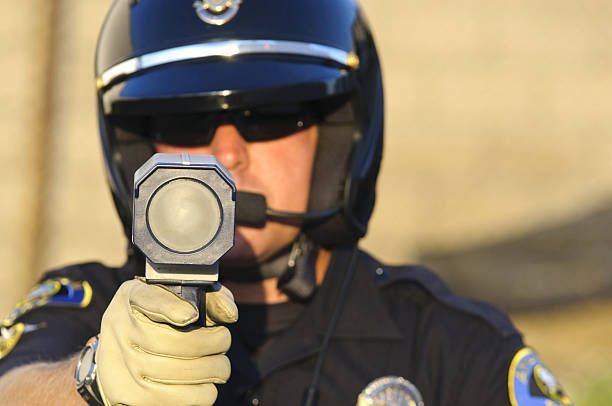
Law enforcement officers may use several methods to determine a vehicle's speed, including:
Radar
Radar equipment uses radio waves to estimate vehicle speed. The circumstances surrounding the use of the equipment, the officer's training, equipment operation, and other evidentiary issues may be relevant to the case.
LIDAR
LIDAR uses laser technology to measure speed. As with other speed-measuring devices, the reliability of the measurement may depend upon how the device was operated and the circumstances under which the reading was obtained.
Pacing
An officer may attempt to determine speed by following a vehicle and comparing its speed with the patrol vehicle's speed.
The reliability of pacing can depend upon factors such as distance, duration, traffic conditions, the officer's ability to maintain a consistent interval, and the accuracy of the patrol vehicle's speed measurement.
Officer Observation
In some cases, an officer's observations may also form part of the evidence supporting the allegation.
The appropriate defense therefore depends heavily upon
how the State intends to prove the alleged speed.
Defending
an Arizona Criminal Speeding Charge
There is no single defense that applies to every criminal speeding case.
Potential issues may include:
- Whether the State can prove the alleged speed;
- The method used to measure speed;
- Reliability or operation of radar or LIDAR equipment;
- Pacing methodology;
- Identification of the driver;
- Road, traffic, visibility, or environmental conditions;
- Signage and the applicable speed limit;
- Evidentiary or procedural problems;
- Mitigating circumstances; and
- Whether a negotiated or reduced resolution may be available.
A defense strategy should be based upon the actual evidence rather than assumptions about what occurred.
Can a Criminal Speeding Charge Be Reduced or
Dismissed?
Potentially.
The outcome of any case depends upon its facts, evidence, driving history, prosecuting agency, court, and other circumstances. Some cases may present factual or evidentiary defenses. In others, the most productive strategy may involve pursuing a negotiated resolution or presenting mitigation.
No attorney can legitimately guarantee that a criminal speeding charge will be dismissed or reduced.
An experienced attorney can, however, examine the evidence, identify weaknesses or defenses, communicate with the prosecution when appropriate, and advocate for the best available outcome.
Criminal Speeding Cases in Tucson and Pima County
Criminal speeding cases may arise throughout Tucson and Southern Arizona, including on major roads and highways such as
Interstate 10, Interstate 19, State Route 77/Oracle Road, State Route 86, and other roadways throughout Pima County.
Depending upon where the alleged offense occurred and which law-enforcement agency issued the citation, the case may be filed in a municipal or justice court.
Taylor Law Group represents clients in Tucson-area criminal matters and understands the importance of identifying the particular court, charge, evidence, and procedural posture of each case.
Out-of-State Drivers Charged With Criminal Speeding in Arizona
Arizona's criminal speeding laws can create an unpleasant surprise for visitors who believed they were receiving an ordinary traffic citation.
An out-of-state driver cited under A.R.S. § 28-701.02 should not assume the matter can simply be treated like a routine speeding ticket from home.
The effect of an Arizona disposition on an out-of-state driver's license or insurance can depend upon the driver's home jurisdiction and individual circumstances. The Arizona criminal case itself should therefore be addressed carefully.
Commercial Drivers (CDL) and Professional Consequences
A criminal speeding charge can be especially important for people whose employment depends upon driving.
Commercial drivers, delivery drivers, transportation professionals, government employees, licensed professionals, and others may have employment or reporting concerns beyond the immediate court case.
Those collateral consequences should be considered when evaluating possible resolutions.
Former Judge Perspective in Criminal Speeding Cases
Before returning to private practice,
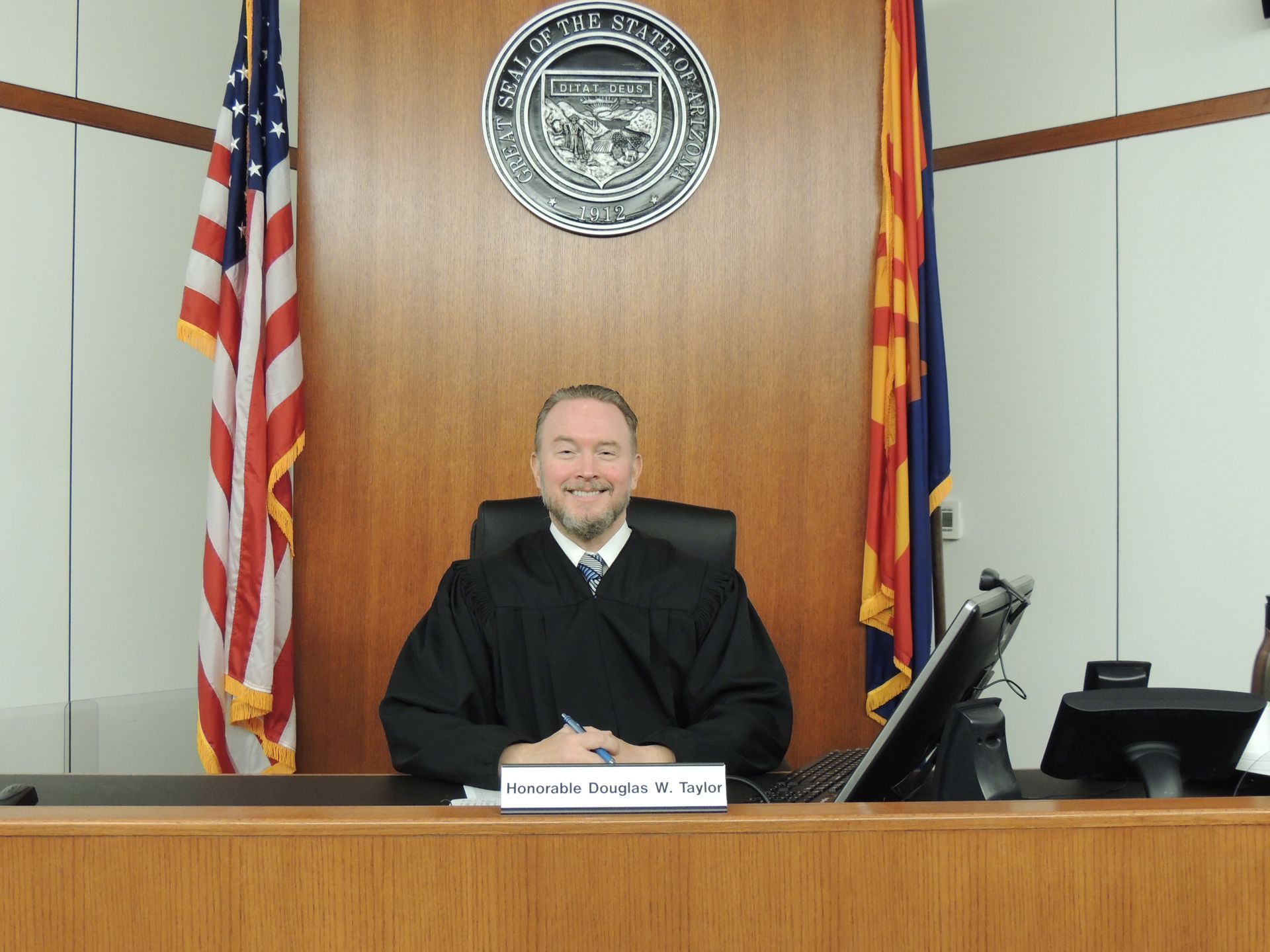
Douglas W. Taylor, Sr. served as an elected Pima County Justice of the Peace.
As a judge, Mr. Taylor presided over criminal and traffic matters and evaluated evidence presented by law enforcement, prosecutors, defense attorneys, and defendants.
That experience provides a valuable perspective when defending criminal speeding cases today.
A criminal speeding case is not simply about the number written on a citation.
The court may need to consider:
how the alleged speed was determined, whether the evidence is reliable, what occurred during the traffic stop, the driver's history, and what resolution is appropriate under the circumstances.
What Should I Do
After Receiving a Criminal Speeding Citation?
Do
not
ignore
the citation.
Read it carefully and determine:
- Whether the offense is identified as criminal;
- The statute cited;
- The alleged speed;
- The posted speed limit;
- The court listed on the citation; and
- The scheduled appearance or response date.
Keep the citation and any other documents you received.
If you intend to seek legal representation, contacting an attorney early allows time to review the allegations and determine what should happen next.
Tucson Criminal Defense From a
Former Judge
Criminal speeding occupies an unusual position in Arizona law: the underlying allegation involves driving, but the offense itself can be prosecuted criminally.
Taylor Law Group represents clients facing misdemeanor and felony criminal allegations throughout Tucson and Southern Arizona. When a criminal speeding case involves additional charges or broader criminal-defense concerns, the entire situation should be evaluated together.
_____________________________________
Frequently Asked Questions About Criminal Speeding in Arizona
Is criminal speeding actually a crime in Arizona?
Yes. Excessive speeding under A.R.S. § 28-701.02 is a Class 3 misdemeanor, not merely a civil traffic violation. That distinction is important because a criminal speeding case is handled as a criminal matter and can result in a misdemeanor conviction.
How fast do you have to drive to get criminal speeding in Arizona?
Arizona's criminal excessive-speeding statute can apply when a driver exceeds 35 mph approaching a school crossing, exceeds the posted speed limit by 20 mph or more in a business or residential district or exceeds 45 mph where no speed limit is posted in such a district, or exceeds 85 mph in other locations. The particular subsection charged should be confirmed from the citation and circumstances of the case.
Is driving over 85 mph automatically criminal speeding in Arizona?
Under A.R.S. § 28-701.02, exceeding 85 mph can constitute criminal excessive speeding even when the posted speed limit is relatively high. Whether the State can prove the charge is a separate question and depends upon the evidence.
Can I go to jail for criminal speeding in Arizona?
Because criminal speeding is a Class 3 misdemeanor, jail is legally possible. The actual outcome depends upon the circumstances of the offense, driving and criminal history, the court, mitigation, and the ultimate disposition of the case.
Will criminal speeding give me a criminal record?
A conviction for criminal speeding is a misdemeanor criminal conviction. The consequences of a particular disposition depend upon how the case is resolved, which is one reason it is important to distinguish criminal speeding from an ordinary civil traffic ticket.
Can an Arizona criminal speeding charge be reduced or dismissed?
Potentially. Some cases may present factual, evidentiary, or procedural defenses, while others may be candidates for a negotiated resolution or mitigation. The available options depend upon the alleged speed, method of measurement, evidence, driving history, court, prosecutor, and other circumstances.
Can I challenge a radar or LIDAR reading in a criminal speeding case?
Potentially. The State must prove the criminal speeding allegation with admissible evidence. Depending upon the case, issues involving the speed-measuring method, equipment, operation, officer testimony, identification, surrounding conditions, or other evidence may be relevant to the defense.
Do I have to appear in court for criminal speeding in Arizona?
Criminal speeding is not simply an ordinary civil traffic ticket, and court obligations should be taken seriously. Whether a particular appearance can be handled differently depends upon the court, procedural posture, and circumstances. Do not miss a required court date listed on your citation or subsequent court notice.
What if I live outside Arizona and received a criminal speeding ticket near Tucson?
Out-of-state drivers can still face an Arizona criminal case under A.R.S. § 28-701.02. The Arizona charge should be addressed even if the driver lives elsewhere. Any effect on an out-of-state driver's license, insurance, or driving record may also depend upon the laws and procedures of the driver's home jurisdiction.
Should I hire a lawyer for criminal speeding in Tucson?
A lawyer is not required in every criminal speeding case, but representation can be valuable when the driver wants the evidence and available defenses evaluated, faces significant collateral consequences, has prior history, or wants assistance seeking the best available resolution. Former Pima County Judge Douglas W. Taylor, Sr. represents clients charged with criminal speeding in Tucson and Southern Arizona.
Talk With a Tucson Criminal Speeding Lawyer
If you have been cited for criminal speeding or excessive speed under
A.R.S. § 28-701.02, Taylor Law Group can review the charge, the circumstances of the stop, the evidence supporting the alleged speed, and the options available in your case.
Douglas W. Taylor, Sr. is a former Pima County Judge and experienced Tucson criminal defense attorney representing clients throughout Tucson, Pima County, and Southern Arizona.
Call (520) 440-5635 to discuss your case.