
How Much Does It Cost to Set Aside a Conviction in Tucson?
For many straightforward Arizona set-aside matters, private attorney fees may fall approximately between $1,000 and $2,500 for a single conviction. Multiple convictions, cases in different courts, missing records, prosecutor or victim objections, contested hearings, or related firearm-rights issues may increase the fee.
A useful working estimate is:
• Single straightforward conviction: approximately $1,000 to $2,500
• Multiple convictions or courts: additional fees may apply for each case
• Contested or unusually complex application: may cost more depending upon the work required
Arizona law prohibits the clerk from charging a filing fee for an application to set aside a judgment of guilt.
These figures are estimates supplied for this page—not an official Tucson fee schedule or a Taylor Law Group quote. The actual fee depends upon the number of convictions, courts involved, offense classifications, record availability, eligibility, objections, hearing requirements, and whether additional relief is needed.
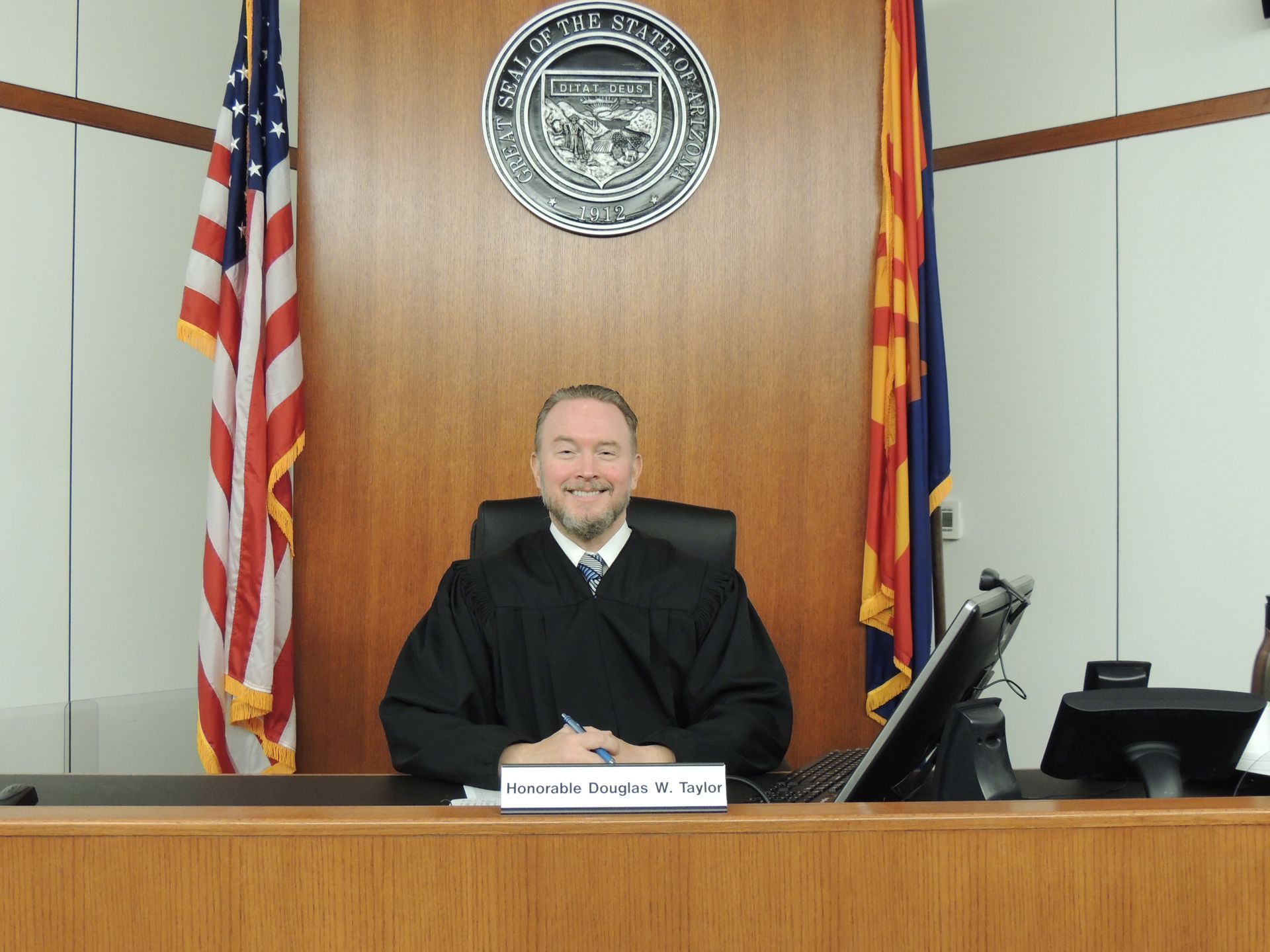
Douglas W. Taylor, Sr. is a former Pima County judge with more than 25 years of criminal-law experience. Before representation begins, clients should receive a clear explanation of the anticipated work and fee arrangement.
Written by the team at Taylor Law Group, PLLC and reviewed by Doug Taylor, former Pima County judge and assault defense attorney.
Last updated: August 7, 2026
What Is AN Arizona CONVICTION SET ASIDE?
Under A.R.S. § 13-905, a person who has fulfilled the conditions of probation or sentence and has been discharged by the court may apply to have the judgment of guilt set aside, unless the conviction falls within a statutory exclusion.
If the application is granted, the court:
• Sets aside the judgment of guilt
• Dismisses the complaint, information, or indictment
• Releases the person from many penalties and disabilities resulting from the conviction
• Directs DPS to annotate the criminal history to show that the conviction was set aside
The conviction is not deleted or removed. It may still be used as a prior conviction, alleged as an element of a later offense, admitted in later proceedings when otherwise permissible, and used by Arizona transportation authorities for specified purposes.
What Determines the Cost of a Set-Aside?
Several factors may affect the attorney’s fee.
Number of Convictions
A separate application may be required for each conviction and in each court where a judgment was entered.
Examples may include:
• Pima County Consolidated Justice Court
• Another Arizona municipal, justice, or superior court
Each matter may require separate records, pleadings, filing, monitoring, and court review.
Eligibility Analysis
Before filing, counsel should determine:
• Whether the sentence and probation were fully completed
• Whether restitution and other obligations were satisfied
• Whether the offense is excluded
• Whether the conviction involved a dangerous offense
• Whether sex-offender registration or a sexual-motivation finding applies
• Whether the victim was under fifteen in an excluded felony matter
• Whether firearm restoration may occur with the set-aside
• Whether sealing should also be pursued
The fact that a sentence is complete does not guarantee that the court will grant the application.
The Court’s Discretion
The court considers several statutory factors, including:
• The nature and circumstances of the offense
• Compliance with probation or sentence conditions
• Prior and subsequent convictions
• Victim input
• Restitution status
• The time elapsed since sentence completion
• The applicant’s age at the time of conviction
• Any other relevant factor
An organized application should address the factors most important to the particular case.
Objections and Hearings
The State or a victim may object within thirty days after the application is filed. If an objection is submitted, the court may set a hearing.
A contested matter may require:
• A written reply
• Supporting exhibits
• Evidence of rehabilitation
• Employment or education records
• Character references
• Witness preparation
• Oral argument
That additional work may affect the fee.
Missing or Older Records
Older convictions may require additional work to locate:
• Case numbers
• Disposition records
• Sentencing documents
• Probation discharge information
• Restitution records
• Payment histories
• The correct court file
Missing or incomplete records can make an otherwise simple application more time-consuming.
What Does a Set-Aside Actually Do?
A granted set-aside can provide meaningful relief.
The court sets aside the judgment, dismisses the charging document, and releases the person from many penalties and disabilities resulting from the conviction.
However, important exceptions remain.
A set-aside does not:
• Remove the conviction from the criminal record
• Prevent the conviction from being used as a prior conviction
• Eliminate specified Arizona Department of Transportation consequences
• Eliminate certain Game and Fish consequences
• Eliminate a qualifying lifetime injunction
• Prevent DPS or the Board of Fingerprinting from considering the conviction for fingerprint-clearance-card purposes
DPS must annotate the criminal history to reflect that the conviction was set aside but may not redact or remove the record.
Does a Set-Aside Restore Firearm Rights?
In some cases, yes.
Current A.R.S. § 13-905 provides that when a conviction is set aside, the person’s right to possess a firearm is restored unless the conviction was for a “serious offense” under A.R.S. § 13-706.
Important limitations include:
• Dangerous offenses cannot be set aside under A.R.S. § 13-905
• A serious offense may require a separate firearm-rights restoration proceeding after the applicable waiting period
• Federal firearm law may require separate analysis
• The precise conviction and court record must be reviewed
Under A.R.S. § 13-910, a person convicted of a dangerous offense may not apply for firearm-rights restoration, while a person convicted of a serious offense generally must wait ten years after absolute discharge. Restoration under that statute remains discretionary.
No one should assume firearm rights have been restored without reviewing the exact order, offense, and applicable state and federal law.
What Is a Certificate of Second Chance?
When granting certain set-aside applications, the court must include a Certificate of Second Chance if the statutory requirements are satisfied.
The certificate may:
• Remove certain barriers to occupational licensing under Arizona law
• Provide specified protections to employers
• Provide specified protections to housing providers
Eligibility generally includes:
• Misdemeanor convictions
• Class 4, 5, or 6 felony convictions after at least two years have passed since completion of probation or sentence conditions
• Class 2 or 3 felony convictions after at least five years have passed
A person generally cannot receive another Certificate of Second Chance after previously receiving one involving a felony set-aside.
The certificate is valuable, but it is not an endorsement, pardon, expungement, or guarantee of employment, licensing, or housing.
Set-Aside Versus Record Sealing
A set-aside and record sealing provide different forms of relief.
Set-Aside
A set-aside:
• Changes the legal status of the judgment
• Dismisses the charging document
• Releases the person from many penalties and disabilities
• May restore firearm rights in qualifying cases
• May include a Certificate of Second Chance
• Leaves the conviction visible with an annotation
Record Sealing
Record sealing under A.R.S. § 13-911:
• Restricts public access to eligible arrest, conviction, and sentencing records
• Allows the person to deny the case in many ordinary applications, subject to statutory exceptions
• Does not completely destroy or erase the record
Many people may benefit from pursuing both forms of relief, depending upon eligibility and objectives.
Which Convictions Cannot Be Set Aside?
A.R.S. § 13-905 excludes convictions for:
• Dangerous offenses
• Offenses requiring sex-offender registration
• Offenses involving a finding of sexual motivation
• Felony offenses in which the victim was under fifteen years old
Eligibility depends upon the actual statute of conviction and court record—not merely the general description of the incident.
How
Do SET-ASIDE Lawyers Charge?
Most set-aside matters are suited to a flat fee.
Flat Fee
A flat fee may cover:
• Eligibility review
• Criminal-history review
• Identifying the proper court
• Obtaining and reviewing available records
• Preparing the application
• Filing and monitoring the application
• Reviewing any response
• Handling an uncontested ruling
A contested hearing, multiple convictions, extensive record reconstruction, firearm-rights proceedings, or sealing applications may be charged separately.
Hourly Fee
Hourly billing may be appropriate when:
• Several courts are involved
• Eligibility is disputed
• Records are incomplete
• The State or victim is expected to object
• A hearing is likely
• Related rights-restoration issues are complicated
Multiple-Case Fee
A firm may charge a base fee for the first conviction and separate fees for additional applications.
The written agreement should state whether the fee covers one conviction, every conviction, objections, hearings, sealing, firearm restoration, and certificates of second chance.
What May Cost
Extra?
Possible additional expenses may include:
• Certified records
• Record-retrieval costs
• Transcripts
• Additional applications in other courts
• Contested hearings
• Appeals
• Record-sealing petitions
• Civil-rights restoration
• Separate firearm-rights restoration proceedings
Ask which services and expenses are included and which are billed separately.
What Do You Receive for the ATTORNEY'S Fee?
Set-aside representation may include:
• Reviewing the complete criminal history
• Confirming sentence and probation completion
• Evaluating statutory exclusions
• Identifying the correct court
• Obtaining supporting documents
• Preparing the application
• Addressing statutory factors
• Presenting rehabilitation and compliance
• Responding to objections
• Preparing for a hearing
• Determining whether a Certificate of Second Chance applies
• Evaluating firearm-rights consequences
• Advising whether sealing should also be pursued
The value lies in seeking the correct relief, presenting the application effectively, and avoiding assumptions about what a set-aside will and will not accomplish.
FORMER JUDGE INSIGHT
Completing a sentence makes a person eligible to apply in many cases. It does not automatically require the judge to grant the application.
The court considers the offense, compliance, criminal history, restitution, victim input, time elapsed, rehabilitation, and other relevant circumstances.
Having served as a Pima County judge, I understand the importance of giving the court a complete, organized application that proves compliance and explains why granting relief is justified.
Why the Cheapest FILING May Cost More in the End
Arizona provides forms that allow a person to apply without an attorney.
The risk is not merely completing the form incorrectly.
The larger risks include:
• Applying for relief that does not match the person’s goal
• Assuming the record will disappear
• Failing to seek sealing when appropriate
• Failing to address an exclusion
• Overlooking a Certificate of Second Chance
• Assuming firearm rights are automatically restored without reviewing the offense
• Filing in the wrong court
• Failing to respond effectively to an objection
A denied application does not necessarily prevent a later application, but it may delay relief and require additional work. The court must state its reasons for denial in writing and on the record.
Questions to Ask Before Hiring a SET-ASIDE Lawyer
Before signing an agreement, ask:
• Is the fee flat or hourly?
• Does it cover one conviction or every conviction?
• Does it include responding to an objection?
• Does it include a hearing?
• Am I eligible for a Certificate of Second Chance?
• Will the set-aside restore my firearm rights?
• Do I also qualify for record sealing?
• Are civil-rights or firearm-rights proceedings separate?
• What records or documentation are needed?
• Is a payment plan available?
The goal is to understand exactly what relief is being requested and what the fee includes.
Real Example: ONE CONVICTION, THREE DIFFERENT GOALS
A person completed probation on an eligible felony several years ago.
The person wants:
• Better employment opportunities
• Reduced licensing barriers
• Restoration of firearm rights
A set-aside may address some of those goals. A Certificate of Second Chance may help with certain licensing and employment barriers. Record sealing may be necessary to restrict public access to the conviction. Firearm restoration depends upon the precise offense and applicable law.
The correct strategy may therefore involve more than filing a single generic form.
Frequently Asked Questions
How much does a set-aside lawyer cost in Tucson?
For a straightforward single conviction, private attorney fees may fall approximately between $1,000 and $2,500, based upon the estimated range supplied for this page. Multiple convictions, objections, hearings, missing records, or related rights-restoration matters may increase the fee.
Is there a court filing fee for an Arizona set-aside application?
No. A.R.S. § 13-905 states that the court clerk may not charge a filing fee for an application to set aside a judgment of guilt.
Does a set-aside erase my conviction?
No. DPS annotates the criminal history to show that the conviction was set aside, but the record is not redacted or removed.
Does a set-aside restore firearm rights?
Generally, a granted set-aside restores firearm rights unless the conviction was for a serious offense under A.R.S. § 13-706. Dangerous offenses cannot be set aside. Federal law and the precise offense should also be reviewed.
What is a Certificate of Second Chance?
It is a certificate that may accompany a qualifying set-aside and can remove certain occupational-licensing barriers and provide specified protections to employers and housing providers.
Should I set aside my conviction or seal the record?
It depends upon the goal. A set-aside changes the legal status of the judgment and releases many penalties and disabilities. Sealing restricts public access to eligible records. Some people may qualify for both.
Can I apply without a lawyer?
Yes. Arizona provides self-service forms. An attorney may help confirm eligibility, obtain records, prepare the application, address objections, and determine whether related relief should also be requested.
Can the State or victim object?
Yes. The State or victim may object within thirty days after filing, and the court may set a hearing.
How long does the process take?
Timing varies by court, objections, records, and whether a hearing is required. There is no single statutory processing time that applies to every application.
When should I speak with a lawyer?
Before filing, particularly when several convictions, firearm rights, sealing, professional licensing, objections, or complicated eligibility issues are involved.
SPEAK WITH A FORMER JUDGE ABOUT SETTING ASIDE YOUR CONVICTION
A set-aside may provide meaningful relief from a past conviction, but it is important to understand what it changes, what remains visible, and whether additional relief is needed.
Douglas W. Taylor, Sr. is a former Pima County judge with more than 25 years of criminal-law experience. Taylor Law Group, PLLC assists eligible clients with Arizona set-aside applications, Certificates of Second Chance, record sealing, and related post-conviction matters throughout Tucson and Southern Arizona.
Call (520) 440-5635 to set up your free consultation.
This page provides general information about Arizona set-aside law and estimated Tucson attorney fees. It is not legal advice, does not guarantee eligibility, relief, firearm restoration, timing, or a particular fee, and does not create an attorney-client relationship.