
Order of Protection Lawyer
SERVING TUCSON & SOUTHERN ARIZONA

Being served with an Order of Protection can affect your home, your parenting time, your employment, your reputation, and your firearm rights almost immediately. Many people mistakenly believe that once an Order of Protection is issued, nothing can be done. Arizona law provides the right to request a hearing and challenge the allegations before the order remains in effect.
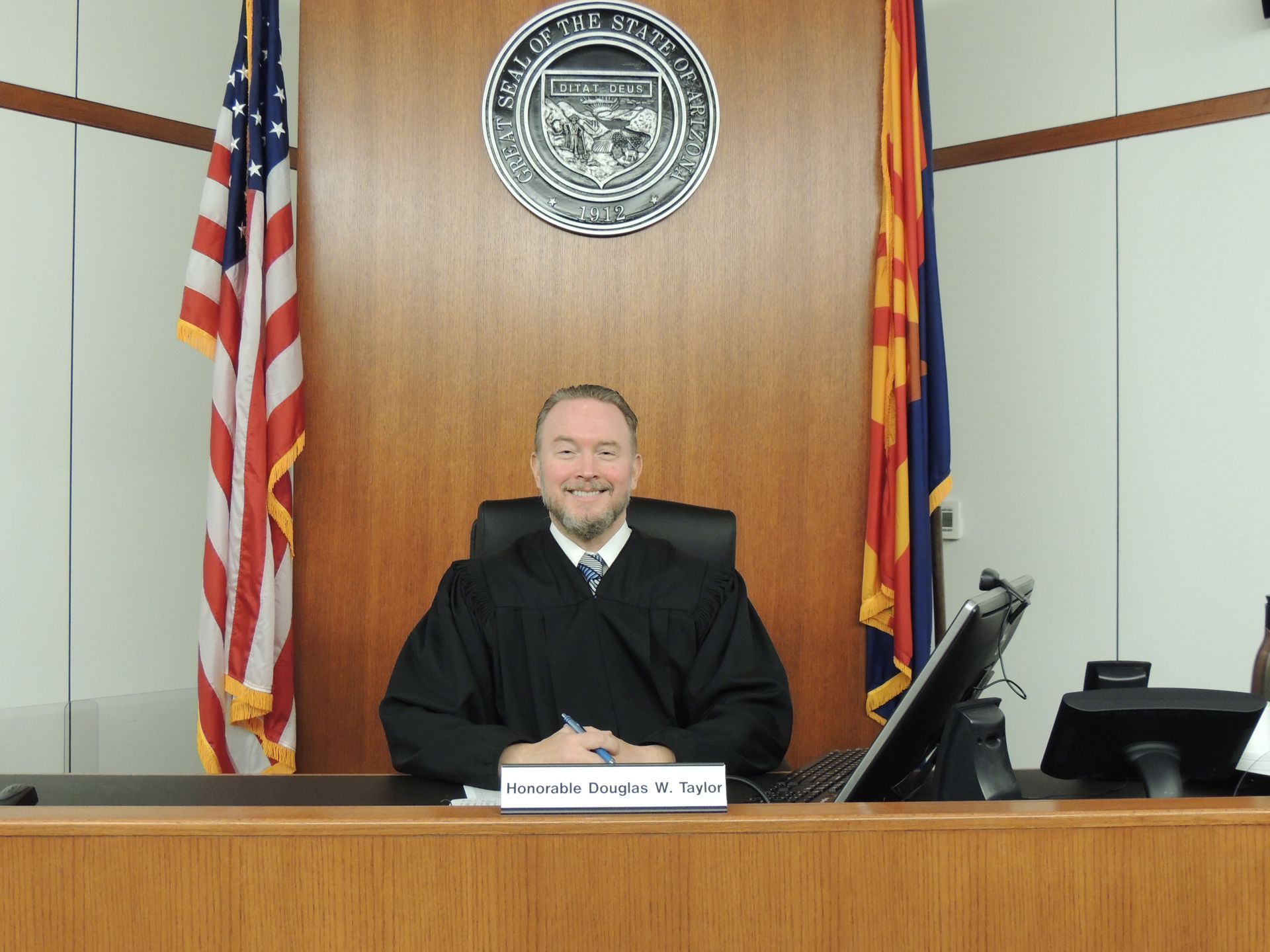
Douglas W. Taylor, Sr. brings more than 25 years of criminal-law experience to these cases. As a former Pima County judge, he understands how judges evaluate witness credibility, conflicting testimony, documentary evidence, text messages, photographs, recordings, and whether the petitioner has met the legal burden required to continue an Order of Protection.
We Represent Clients Involving:
• Newly issued Orders of Protection
• Requests to dismiss or quash an Order of Protection
• Contested evidentiary hearings
• False or exaggerated allegations
• Domestic violence allegations connected to criminal charges
• Family-law and parenting disputes involving protective orders
• Firearm restrictions associated with protective orders
• Appeals and related post-judgment issues where appropriate
Preparation matters. Many hearings are decided by the quality of the evidence presented rather than simply by who filed first.
Orders of Protection Under Arizona Law
Arizona's Order of Protection statute, A.R.S. § 13-3602, allows a court to issue an order designed to protect individuals who share a qualifying domestic relationship with the defendant. These orders may prohibit contact, restrict access to certain locations, require the surrender of firearms in some circumstances, and impose other significant legal restrictions.
An Order of Protection may initially be issued without the defendant being present. Once served, however, the defendant generally has the right to request a hearing where both parties may present testimony, evidence, and witnesses before the court determines whether the order should remain in effect.
Although these proceedings are civil in nature, they often carry serious consequences affecting employment, housing, child custody, firearm rights, and related criminal cases.
What the Court Must Decide
At a contested hearing, the court evaluates whether sufficient evidence exists to continue the Order of Protection under Arizona law.
Important considerations often include:
• Whether the alleged acts satisfy the statutory requirements
• The credibility of each witness
• Consistency between testimony and other evidence
• Text messages, emails, social media communications, and recordings
• Photographs and medical documentation
• Prior interactions between the parties when legally admissible
• Whether the alleged conduct occurred within the applicable statutory time period
Each case depends upon its own facts. The court weighs the totality of the evidence rather than relying solely upon the initial petition.
Possible Consequences of an Order of Protection
An Order of Protection may significantly affect daily life even when no criminal conviction exists.
Potential consequences include:
• Restrictions on contacting the protected person
• Removal from a shared residence
• Restrictions involving children or parenting exchanges
• Firearm restrictions under Arizona or federal law in qualifying cases
• Employment consequences
• Effects upon professional licenses or security clearances
• Impact on related criminal or family-law proceedings
Because these consequences may begin immediately after service, prompt legal representation can be extremely important.
Common Defense Strategies
Every Order of Protection case is different, and no single strategy applies in every situation.
Depending upon the evidence, legal strategy may include:
• Challenging whether the alleged conduct satisfies the statute
• Demonstrating inconsistencies in testimony
• Presenting communications that place events in context
• Introducing witnesses or documentary evidence
• Challenging credibility when appropriate
• Demonstrating mistaken identity or factual inaccuracies
• Showing that the petitioner has failed to meet the required legal burden
Early preparation frequently makes a substantial difference. Witnesses, electronic communications, photographs, surveillance footage, and other evidence should be preserved before they become unavailable.
Order of Protection Hearings Require Careful Preparation
Having presided over many protective-order hearings as a judge, I understand that these cases often turn on credibility, preparation, and organization rather than dramatic courtroom moments.
The party who presents clear testimony supported by reliable evidence generally stands in a much stronger position than the party who simply denies the allegations. Careful preparation before the hearing often determines the outcome.
Real Example: Evidence Matters
A petitioner alleges repeated threats and harassment and obtains an ex parte Order of Protection. After requesting a hearing, the defendant presents complete text-message conversations, location records, and witness testimony showing that important portions of the petition omitted significant context.
The court evaluates all of the evidence—not merely the initial allegations—to determine whether the Order of Protection should remain in effect.
Related Legal Matters
Orders of Protection frequently overlap with criminal defense, domestic violence allegations, family-law disputes, and firearm-rights issues.
You may also need representation involving:
• Injunctions Against Harassment
• Domestic Violence Assault Defense
• Domestic Violence Strangulation Defense
• Domestic Violence Firearm Rights
Because these issues often arise simultaneously, legal strategy should consider the entire case rather than each proceeding individually.
Frequently Asked Questions
How long does an Order of Protection remain in effect?
Generally, an Arizona Order of Protection is effective for two years after it is served on the defendant, unless it is modified or dismissed by the court. An Order of Protection that is not served expires one year after the date it was issued.
Can I fight an Order of Protection?
Yes. After being served, you generally have the right to request a hearing where both parties may present evidence and testimony.
Will I be arrested if I violate the order?
Possibly. Violating an Order of Protection may result in criminal charges in addition to any existing proceedings.
Can the order affect my firearm rights?
Yes. Depending upon the court's findings and applicable state and federal law, firearm restrictions may apply.
Can text messages be used during the hearing?
Yes. Text messages, emails, photographs, videos, social-media communications, and other electronic evidence are frequently presented.
Can the petitioner dismiss the Order of Protection?
The petitioner may request dismissal, but the court ultimately determines whether dismissal is appropriate.
Will an Order of Protection appear on background checks?
It may. The practical effect depends upon the type of background check being conducted and the circumstances involved.
Can an Order of Protection affect child custody?
Yes. Protective-order proceedings may affect parenting issues and may also influence related family-court proceedings.
Do I need an attorney for the hearing?
Although not legally required, experienced representation often helps organize evidence, prepare testimony, question witnesses, and present the strongest possible defense.
When should I contact an attorney?
Immediately. Early preparation provides the greatest opportunity to preserve evidence and prepare effectively before the hearing.
Speak With a Former Judge About Your Order of Protection Case
An Order of Protection can have immediate and lasting consequences that extend well beyond the courtroom. The decisions made during the early stages of the case may affect your family, your employment, your firearm rights, and your future.
Douglas W. Taylor, Sr. is a former Pima County judge with more than 25 years of criminal-law experience representing clients throughout Tucson and Southern Arizona. He provides strategic, experienced representation for individuals seeking to challenge or defend against Orders of Protection.
Call Taylor Law Group, PLLC today at (520) 440-5635 for a free and confidential consultation.