
How Much Does It Cost to Seal a Criminal Record in Tucson?

For many straightforward Arizona record-sealing matters, private attorney fees may fall approximately between $2,000 and $3,500 for a single case. Multiple convictions, records in different courts, missing documents, prosecutor objections, contested hearings, or complicated eligibility issues may increase the fee.
A useful working estimate is:
• Single straightforward case: approximately $2,000 to $3,500
• Multiple cases or courts: additional fees may apply for each separate matter
• Contested or unusually complex petition: may cost more depending upon the work required
Arizona law also permits the Department of Public Safety to charge certain investigative or record-correction fees, subject to statutory exceptions.
These figures are estimates supplied for this page—not an official Tucson fee schedule or a Taylor Law Group quote. The actual cost depends upon the number of cases, courts involved, offense classifications, record availability, eligibility, objections, and whether a hearing becomes necessary.
Douglas W. Taylor, Sr. is a former Pima County judge with more than 25 years of criminal-law experience. Before representation begins, clients should receive a clear explanation of the anticipated work and fee arrangement.
Written by the team at Taylor Law Group, PLLC and reviewed by Doug Taylor, former Pima County judge and assault defense attorney.
Last updated: August 6, 2026
What Is Arizona Record Sealing?
A.R.S. § 13-911 allows eligible people to petition the court to seal records associated with:
• A criminal conviction after completion of the sentence and required waiting period
• A criminal charge that was later dismissed
• A charge that resulted in a not-guilty verdict
• An arrest for which no charges were filed
When a petition is granted, the court directs criminal-justice entities to designate the qualifying case records as sealed. In many ordinary employment, housing, financial-aid, and loan applications, the person may state that the arrest, charge, or conviction did not occur, subject to statutory exceptions.
Sealing does not physically erase every reference to the case from existence. Information that was published or distributed before sealing may remain available, and sealed records remain accessible or usable for certain purposes authorized by law.
What Determines the
Cost
of RECORD SEALING?
Several factors may affect the attorney’s fee.
Number of Cases
Arizona requires filing in the appropriate court connected to each case or arrest. A person with cases in several courts may need multiple petitions.
Examples may include:
• Pima County Consolidated Justice Court
• Another Arizona municipal or justice court
Each matter may require separate research, records, pleadings, and court monitoring.
Eligibility Analysis
Before filing, counsel should determine:
• Whether the offense is legally eligible
• Whether the sentence was fully completed
• Whether all fines, fees, and restitution were paid
• Which waiting period applies
• Whether later convictions affect eligibility
• Whether a prior denial creates a refiling restriction
• Whether any statutory exclusion applies
A premature or legally defective petition may be dismissed without a hearing.
Missing or Incomplete Records
Older cases may require additional work to identify:
• Case numbers
• Disposition records
• Sentencing dates
• Probation discharge dates
• Payment status
• Arresting agencies
• The proper filing court
The Arizona courts require enough information for the court to identify the records and determine eligibility.
Prosecutor or Victim Objections
The prosecutor may respond and request a hearing. A qualifying victim also has the right to receive notice, be present, and be heard.
If an objection is filed, counsel may need to prepare:
• A written reply
• Supporting exhibits
• Evidence of rehabilitation
• Proof of employment or education
• Character references
• Testimony
• Oral argument at a hearing
That additional work may affect the fee.
What Are the Waiting Periods?
For an eligible conviction, the waiting period begins after the person completes the nonmonetary terms of probation or sentence and is discharged by the court.
The statutory periods are:
• Class 2 or Class 3 felony: 10 years
• Class 4, Class 5, or Class 6 felony: 5 years
• Class 1 misdemeanor: 3 years
• Class 2 or Class 3 misdemeanor: 2 years
The petitioner must also have paid all court-ordered fines, fees, and restitution by the time the petition is filed.
Dismissed charges, not-guilty verdicts, and arrests with no filed charge are governed differently from convictions and should be analyzed under the applicable subsection.
Which Offenses Cannot Be Sealed?
A.R.S. § 13-911 excludes several categories of offenses.
Ineligible matters include certain:
• Dangerous offenses
• Dangerous crimes against children
• Serious offenses
• Violent or aggravated felonies
• Offenses involving the discharge, use, or threatening exhibition of a deadly weapon or dangerous instrument as an element
• Offenses involving the knowing infliction of serious physical injury as an element
• Sex-trafficking offenses
• Specified felony offenses involving sexual offenses or exploitation
Eligibility depends upon the actual conviction statute and classification—not merely a general description of the incident.
How Is Record Sealing Different From a Set-Aside?
Arizona record sealing and setting aside a conviction are separate forms of relief.
Record Sealing
Record sealing under A.R.S. § 13-911 restricts public access to eligible case records and, subject to statutory exceptions, permits the person to deny the arrest, charge, or conviction in many ordinary applications.
Set-Aside
A set-aside under A.R.S. § 13-905 sets aside the judgment of guilt, dismisses the charging document, and releases the person from many penalties and disabilities associated with the conviction.
However, the record is not removed. The Department of Public Safety adds an annotation showing that the conviction was set aside, and the conviction may still be used for various legal purposes.
Depending upon the circumstances, a person may benefit from seeking one form of relief, both forms, or another remedy.
Does Sealing Completely Erase the Record?
No.
A sealed record remains available for certain authorized purposes, including some uses involving:
• Later criminal prosecutions
• Sentencing enhancement
• Law-enforcement agencies
• Prosecutors
• Courts
• Probation and correctional agencies
• Fingerprint-clearance-card review
• Certain regulated jobs and governmental applications
Records published or distributed before the sealing order may also remain available outside the criminal-justice databases controlled by the statute.
The value of sealing is substantial, but the result should not be described as complete destruction or universal erasure.
How
Do RECORD SEALING Lawyers Charge?
Most record-sealing matters are well suited to a flat fee.
Flat Fee
A flat fee may cover:
• Eligibility review
• Identifying the correct court
• Obtaining and reviewing available records
• Preparing the petition
• Filing the petition
• Monitoring prosecutor and victim responses
• Preparing a reply where appropriate
• Handling an uncontested ruling
A contested hearing, appeal, multiple cases, or extensive record reconstruction may be charged separately.
Hourly Fee
An hourly arrangement may be used when eligibility is unusually complicated, records are missing, several courts are involved, or substantial litigation is expected.
Multiple-Case Fee
A firm may charge a base amount for the first petition and additional amounts for other cases or courts.
The written agreement should state whether the quoted fee covers one case, all cases, objections, hearings, and additional post-conviction relief.
What May Cost
Extra?
Possible additional expenses may include:
• Department of Public Safety fees
• Certified records
• Record-retrieval expenses
• Transcripts
• Additional petitions in other courts
• Contested hearings
• Appeals
• Separate set-aside applications
• Civil-rights restoration
• Firearm-rights restoration proceedings
Ask which costs are included and which will be billed separately.
What Do You Receive for the ATTORNEY'S Fee?
Record sealing involves much more than simply completing a form.
Depending upon the matter, representation may include:
• Reviewing the complete criminal history
• Determining eligibility under current law
• Calculating the correct waiting period
• Confirming sentence completion
• Confirming payment of restitution and other obligations
• Identifying the proper filing court
• Gathering supporting records
• Drafting the petition accurately
• Presenting rehabilitation and public-safety factors
• Responding to prosecutor objections
• Preparing for a hearing
• Monitoring implementation of the sealing order
The value lies in reducing the risk of filing too early, filing in the wrong court, omitting required information, or requesting relief that the statute does not permit.
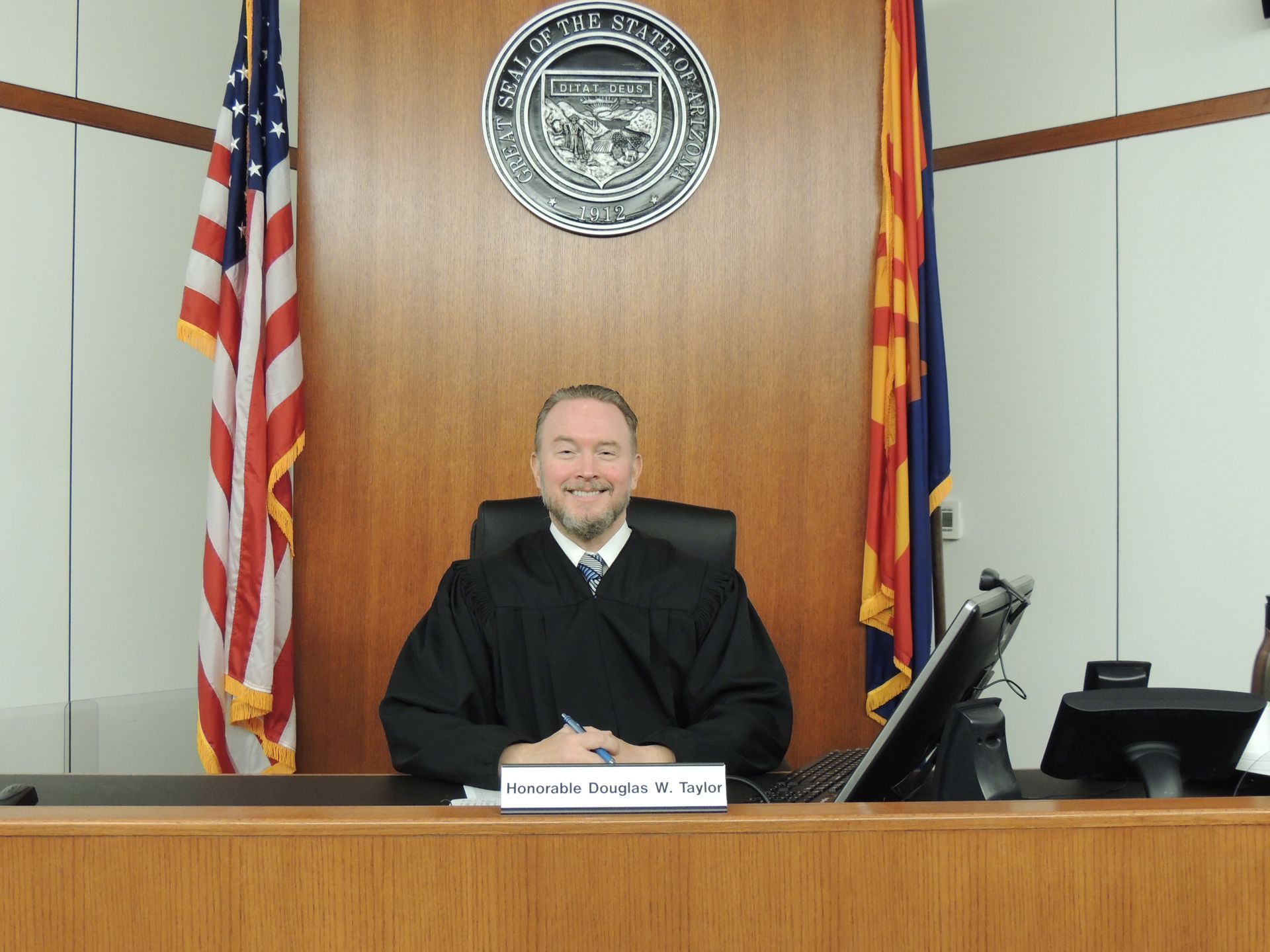
FORMER JUDGE INSIGHT
Record-sealing petitions are not granted merely because the required amount of time has passed.
The court must determine that granting relief is in the best interests of the petitioner, victim, and public safety.
The prosecutor and victim may be heard, and the court may consider the petitioner’s history, rehabilitation, compliance, and the circumstances of the case.
Having served as a Pima County judge, I understand the importance of presenting a complete, organized petition that proves eligibility and gives the court a sound basis to grant relief.
Why the Cheapest FILING May Cost More in the End
The forms are publicly available, and a person may file without hiring an attorney.
The risk is not the ability to type information into a form.
The risk is:
• Filing before the waiting period expires
• Filing in the wrong court
• Misidentifying the offense
• Failing to address an exclusion
• Omitting another conviction
• Failing to document sentence completion
• Ignoring a prosecutor’s objection
• Confusing sealing with a set-aside or expungement
If a petition is denied, Arizona generally bars a new petition for three years after a denial.
Careful eligibility review before filing can therefore be more valuable than simply submitting the least expensive petition possible.
Questions to Ask Before Hiring a RECORD-SEALING Lawyer
Before signing an agreement, ask:
• Is the fee flat or hourly?
• Does the fee cover one case or every case in my record?
• Have you reviewed my complete criminal history?
• Does the fee include responding to an objection?
• Does it include a hearing?
• Are DPS or record-retrieval fees separate?
• Should I also seek a set-aside?
• Are civil-rights or firearm-rights issues included?
• What happens if the petition is denied?
• Is a payment plan available?
The goal is to understand exactly which relief is being requested and what work the fee includes.
Real Example: ONE PERSON, THREE DIFFERENT COURTS
A person has three eligible Arizona convictions:
• A Tucson City Court misdemeanor
• A Pima County Justice Court misdemeanor
• A Pima County Superior Court felony
Although all three records belong to the same person, each case must be evaluated separately. Different waiting periods may apply, and individual petitions may need to be filed in three different courts.
For each, the attorney must confirm eligibility, obtain records, calculate the correct dates, prepare separate filings, and monitor each court’s response.
That is why the cost of sealing three records may be substantially greater than the cost of sealing one uncomplicated case.
Frequently Asked Questions
How much does a record-sealing lawyer cost in Tucson?
For a straightforward single case, private attorney fees may fall approximately between $2,000 and $3,500, based upon the estimated range supplied for this page. Multiple cases, objections, missing records, or contested hearings may increase the fee.
Is there a court filing fee for an Arizona record-sealing petition?
The Arizona sealing statute allows DPS to charge certain investigative or record-correction fees, subject to exceptions. Court-specific filing practices should be confirmed before filing.
Can I seal more than one conviction?
Potentially. Each case must be individually eligible, and separate petitions may be required in each court where a conviction occurred.
How long must I wait to seal a felony?
The waiting period is generally ten years for a Class 2 or 3 felony and five years for a Class 4, 5, or 6 felony, measured from completion of the nonmonetary sentence conditions and discharge.
How long must I wait to seal a misdemeanor?
The waiting period is generally three years for a Class 1 misdemeanor and two years for a Class 2 or 3 misdemeanor after completion of the nonmonetary sentence conditions and discharge.
Does sealing erase my criminal record?
No. Sealing restricts public access and provides important legal protections, but specified government agencies and other authorized entities may still access or use the record.
Can I file the petition myself?
Yes. Arizona provides mandatory forms and instructions for self-represented petitioners. An attorney may help confirm eligibility, select the correct court, prepare supporting evidence, and respond to objections.
Is sealing the same as setting aside a conviction?
No. Sealing restricts access to eligible records. A set-aside changes the legal status of the judgment but does not remove the record; DPS annotates that the conviction was set aside.
How long does the process take?
The court generally may not grant or deny the petition until at least sixty calendar days after receiving it unless the prosecutor and all qualifying victims indicate that they do not object. Processing, objections, and hearings may extend the total time.
When should I speak with a lawyer?
Before filing. Eligibility, waiting periods, offense exclusions, prior cases, court location, and supporting evidence should be reviewed before risking a denial and the resulting refiling restriction.
SPEAK WITH A FORMER JUDGE ABOUT SEALING YOUR RECORD
Record sealing may improve access to employment, housing, education, financing, and other opportunities, but eligibility and procedure matter.
Douglas W. Taylor, Sr. is a former Pima County judge with more than 25 years of criminal-law experience. Taylor Law Group, PLLC assists eligible clients with Arizona record-sealing petitions, set-asides, and related post-conviction matters throughout Tucson and Southern Arizona.
Call (520) 440-5635 to set up your free consultation.
This page provides general information about Arizona record-sealing law and estimated Tucson attorney fees. It is not legal advice, does not guarantee eligibility, relief, timing, or a particular fee, and does not create an attorney-client relationship.