
How Much Does a Probation Violation Lawyer Cost in Tucson?
For many probation-violation matters in Tucson, private attorney fees may range from approximately $2,500 to $10,000. A relatively straightforward misdemeanor technical violation may fall near the lower end. A felony violation involving a contested revocation hearing, new criminal allegations, extensive evidence, or significant prison exposure may cost substantially more.
A useful working estimate is:
• Misdemeanor probation violation: approximately $2,500 to $5,000
• Felony probation violation: approximately $5,000 to $10,000
• Contested revocation hearing: generally toward the higher end or above these ranges, depending upon the work required
These are estimated market ranges supplied for this page—not an official Tucson fee schedule or a Taylor Law Group quote. The actual fee depends upon the underlying conviction, alleged violation, court, evidence, whether a warrant has issued, whether the State seeks revocation, and whether a contested evidentiary hearing is necessary.
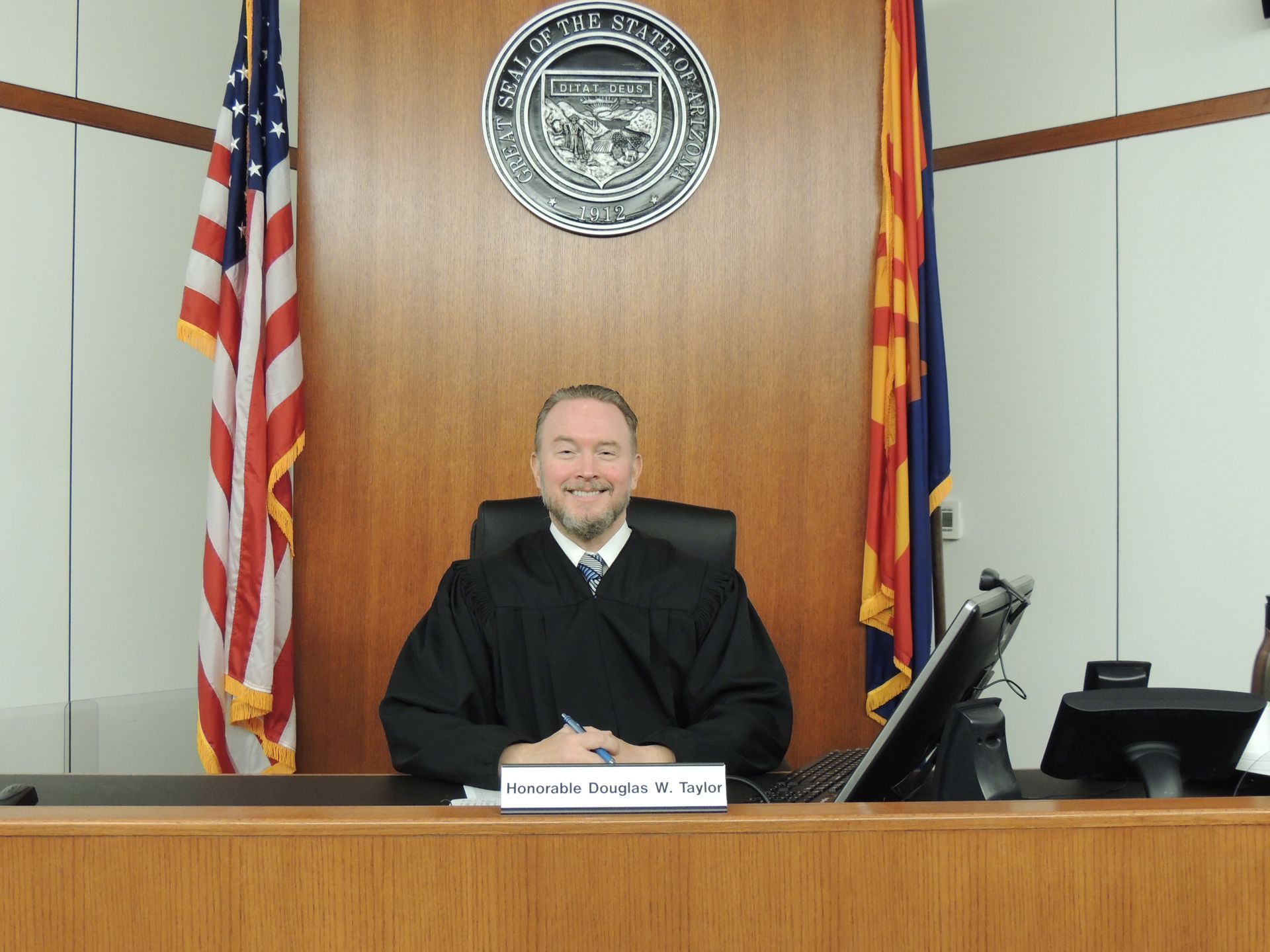
Douglas W. Taylor, Sr. is a former Pima County judge with more than 25 years of criminal-law experience. Before representation begins, clients should receive a clear explanation of the potential exposure, anticipated work, and applicable fee arrangement.
Written by the team at Taylor Law Group, PLLC and reviewed by Doug Taylor, former Pima County judge and probation violation attorney.
Last updated: August 8, 2026
What Determines the Cost of a Probation-Violation Defense?
Probation violations vary enormously.
A missed appointment or failure to complete a class may require a very different defense from an allegation that a probationer committed a new felony while already on felony probation.
Several factors commonly affect the legal fee.
Misdemeanor or Felony Probation
Felony probation violations usually involve greater sentencing exposure and more serious consequences than misdemeanor violations.
The attorney may need to review:
• The original conviction
• Sentencing documents
• Conditions of probation
• Probation reports
• Prior modifications or violations
• Available jail or prison exposure
• Whether probation remains legally available
• Whether multiple probation terms are involved
Arizona law allows a court to revoke probation when a person commits another offense or violates a probation condition.
Technical Violation or New-Crime Allegation
A technical violation may involve allegations such as:
• Missing a probation appointment
• Failing to complete treatment
• Missing drug testing
• Testing positive for drugs or alcohol
• Failing to pay required amounts
• Violating travel or reporting conditions
• Failing to complete community restitution
A new-crime violation alleges that the probationer committed another criminal offense while on probation.
Those cases may involve two separate problems at once:
- The probation-revocation proceeding
- A new criminal prosecution
That can substantially increase the amount of work required.
Whether a Warrant Has Been Issued
A petition to revoke probation may lead to a warrant or other court action.
Counsel may need to evaluate:
• Whether a warrant is outstanding
• Whether surrender should be coordinated
• Whether release can be requested
• Whether the defendant is already in custody
• Whether the alleged violation can be addressed before the revocation hearing
Timing matters because release and custody issues may develop quickly after a petition to revoke is filed.
Whether the Violation Is Contested
Some violations are largely undisputed and focus on mitigation.
Others require a full evidentiary hearing involving:
• Witness testimony
• Probation-officer testimony
• Drug-test records
• Treatment records
• Police reports
• Body-camera video
• Digital evidence
• New-crime allegations
• Cross-examination
A contested hearing requires substantially more preparation than an uncontested disposition.
What Can Happen After a Probation Violation?
A violation does not automatically produce the harshest possible result.
Depending upon the case and governing law, the court may consider outcomes such as:
• Reinstating probation
• Modifying probation conditions
• Extending or intensifying supervision when legally available
• Ordering additional treatment or programming
• Imposing jail as a condition where permitted
• Revoking probation and imposing a sentence authorized by law
The available options depend upon the underlying conviction and the nature of the violation.
For certain technical violations, Arizona law also contemplates intensive-probation treatment rather than automatically treating every violation like a new criminal offense.
Why Acting Early Matters
Probation violations can move quickly.
A petition to revoke may result in a warrant, custody, changed release conditions, and a hearing before the same court that imposed probation.
Early representation may allow counsel to:
• Determine precisely what is alleged
• Obtain the petition to revoke
• Address an outstanding warrant
• Gather treatment or compliance records
• Locate witnesses
• Document employment or rehabilitation
• Correct misunderstandings with probation
• Prepare mitigation before the hearing
• Coordinate defense of any new criminal charge
Waiting until the hearing date may eliminate opportunities to solve problems before they become part of the court record.
How Do PROBATION-VIOLATION Lawyers Charge?
These matters are commonly handled through flat, hourly, or hybrid fee arrangements.
Flat Fee
A flat fee may cover:
• Initial case review
• Court appearances
• Review of the petition to revoke
• Communication with probation
• Negotiations
• Mitigation preparation
• A specified violation hearing
The agreement should say whether a fully contested revocation hearing is included.
Hourly Fee
Hourly billing may be used when:
• The allegations are complicated
• A new criminal case is involved
• Multiple hearings are expected
• Extensive records must be reviewed
• The matter involves significant motion practice
• The sentencing exposure is substantial
Hybrid Fee
A hybrid agreement may charge a flat amount for initial representation and a separate fee if the matter proceeds to a contested revocation hearing.
The key is knowing what the quoted fee actually includes.
What May Cost
Extra?
Possible additional expenses may include:
• Private investigators
• Expert witnesses
• Drug or alcohol testing
• Medical or treatment records
• Transcripts
• Travel
• Separate representation on a new criminal case
• Sentencing experts or mitigation specialists
• Appeals or post-conviction proceedings
Ask whether those costs are included or billed separately.
What Do You Receive for the Legal Fee?
A probation-violation lawyer’s work may include:
• Reviewing the original conviction and sentence
• Reviewing every probation condition
• Obtaining the petition to revoke
• Evaluating whether the alleged conduct actually violated probation
• Reviewing probation-officer reports
• Gathering proof of compliance
• Addressing treatment or testing issues
• Investigating new-crime allegations
• Coordinating with counsel on related criminal charges
• Preparing mitigation
• Negotiating for reinstatement or modification
• Preparing witnesses
• Cross-examining probation or other witnesses
• Presenting evidence at the violation hearing
The goal is not merely to admit or deny the violation. It is to understand what happened, what the court may legally do, and what evidence supports the best available outcome.
FORMER JUDGE INSIGHT
Probation-violation hearings are often driven by one question:
What does this violation tell the court about whether probation is still working?
Having served as a Pima County judge, I understand that courts look beyond the label “violation.” Judges may consider the seriousness of the conduct, prior compliance, treatment history, honesty with probation, employment, family responsibilities, new criminal allegations, rehabilitation, and whether continued supervision still serves its purpose.
A technical mistake, a relapse, and a new violent felony allegation do not present the same case.
The defense should make that distinction clear.
Technical Violations and New-Crime Violations Are Different
A technical violation generally involves failure to comply with a probation condition without committing a separately chargeable criminal offense.
A new-crime violation alleges conduct that may itself be prosecuted as a new offense.
The distinction matters because a new criminal offense can create sentencing exposure beyond the probation case itself. Arizona sentencing law may impose significant additional consequences for felony offenses committed while a person is already on felony probation.
When new charges are involved, both cases should be evaluated together.
Why the Cheapest Lawyer May Cost More in the End
Price matters, but probation violations can involve immediate liberty interests.
A poor outcome may result in:
• Jail
• Prison
• More restrictive supervision
• Additional treatment
• Extended probation
• New criminal convictions
• Consecutive sentencing issues in some cases
• Employment consequences
• Housing consequences
A low fee may provide little value if the representation excludes a contested hearing, mitigation work, communication with probation, or defense of related new charges.
Ask what work is actually included.
Questions to Ask Before Hiring a PROBATION-VIOLATION Lawyer
Before signing an agreement, ask:
• Is the fee flat, hourly, or hybrid?
• Does it include a contested revocation hearing?
• Is there already a warrant?
• Is the alleged violation technical or based upon a new crime?
• Does the fee include representation on any new charge?
• What sentence could the court impose if probation is revoked?
• Will the lawyer communicate directly with probation?
• Is mitigation preparation included?
• Are investigators or experts extra?
• Is a payment plan available?
The goal is to understand both the exposure and the scope of the representation.
Real Example: The Same “Violation” Can Mean Very Different Things
Two people are each accused of violating felony probation.
The first missed several treatment appointments after losing transportation but remained employed, committed no new offense, and resumed treatment before the hearing.
The second is accused of committing a new felony while on probation and faces a separate criminal prosecution.
Both matters may be described as “probation violations,” but the legal exposure, evidence, preparation, and defense strategy are dramatically different.
That is why an accurate fee cannot be determined from the words “probation violation” alone.
Frequently Asked Questions
How much does a probation-violation lawyer cost in Tucson?
For many matters, private attorney fees may fall approximately between $2,500 and $10,000, depending upon whether the underlying case is a misdemeanor or felony, whether the violation is contested, and whether a new criminal case is involved.
What happens if my probation is revoked?
If probation is revoked, the court may impose a sentence authorized for the underlying conviction. The precise sentencing options depend upon the original offense and applicable law. Arizona law permits revocation when a person commits an additional offense or violates a probation condition.
Is a technical violation less serious than a new-crime violation?
Often, but not automatically. A technical violation usually does not allege a new criminal offense, while a new-crime violation can expose the person to consequences in both the probation matter and a separate prosecution.
Can the judge reinstate probation instead of revoking it?
Potentially. Depending upon the offense, violation, probation history, and governing law, the court may have options short of revocation.
What if I missed probation because of work, illness, or transportation problems?
The reason may matter. Documentation showing why the violation occurred and what steps were taken to correct it may become important mitigation evidence.
What if I failed a drug test?
A failed test can result in a probation violation, but the consequences depend upon the underlying offense, probation history, treatment needs, and other circumstances.
Can a warrant be issued for a probation violation?
Yes. A petition to revoke may result in a warrant or other custody-related court action.
Does the lawyer’s fee include a new criminal case?
Not necessarily. A new criminal prosecution is separate from the probation matter. Confirm whether the quoted fee covers one case or both.
Should I wait until the violation hearing to hire a lawyer?
No. Earlier representation provides more time to address warrants, gather compliance records, prepare mitigation, investigate allegations, and communicate with probation.
When should I contact a probation-violation lawyer?
As soon as you learn that probation believes you violated a condition, a petition has been filed, or a warrant may exist.
SPEAK WITH A FORMER JUDGE ABOUT YOUR PROBATION VIOLATION
A probation violation can put your liberty and the outcome of your original criminal case back before the court.
Douglas W. Taylor, Sr. is a former Pima County judge with more than 25 years of criminal-law experience representing clients in probation violations and other criminal matters throughout Tucson and Southern Arizona.
Taylor Law Group, PLLC can review the alleged violation, determine the potential exposure, address warrant and hearing issues, and provide a clear explanation of the anticipated fee.
Call (520) 440-5635 to set up your free consultation.
This page provides general information about Tucson probation-violation defense fees. It is not legal advice, does not guarantee any particular outcome or fee, and does not create an attorney-client relationship.