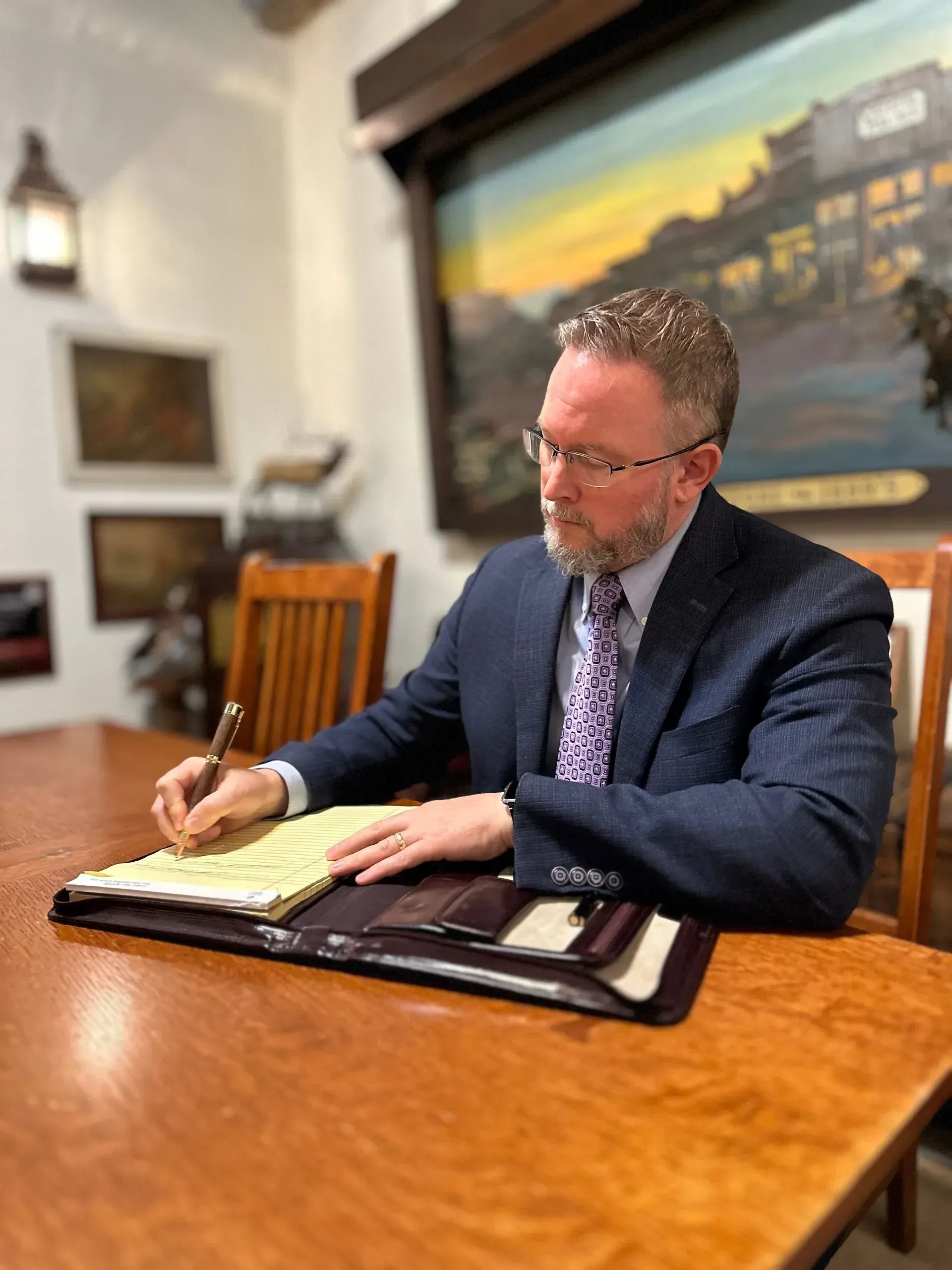
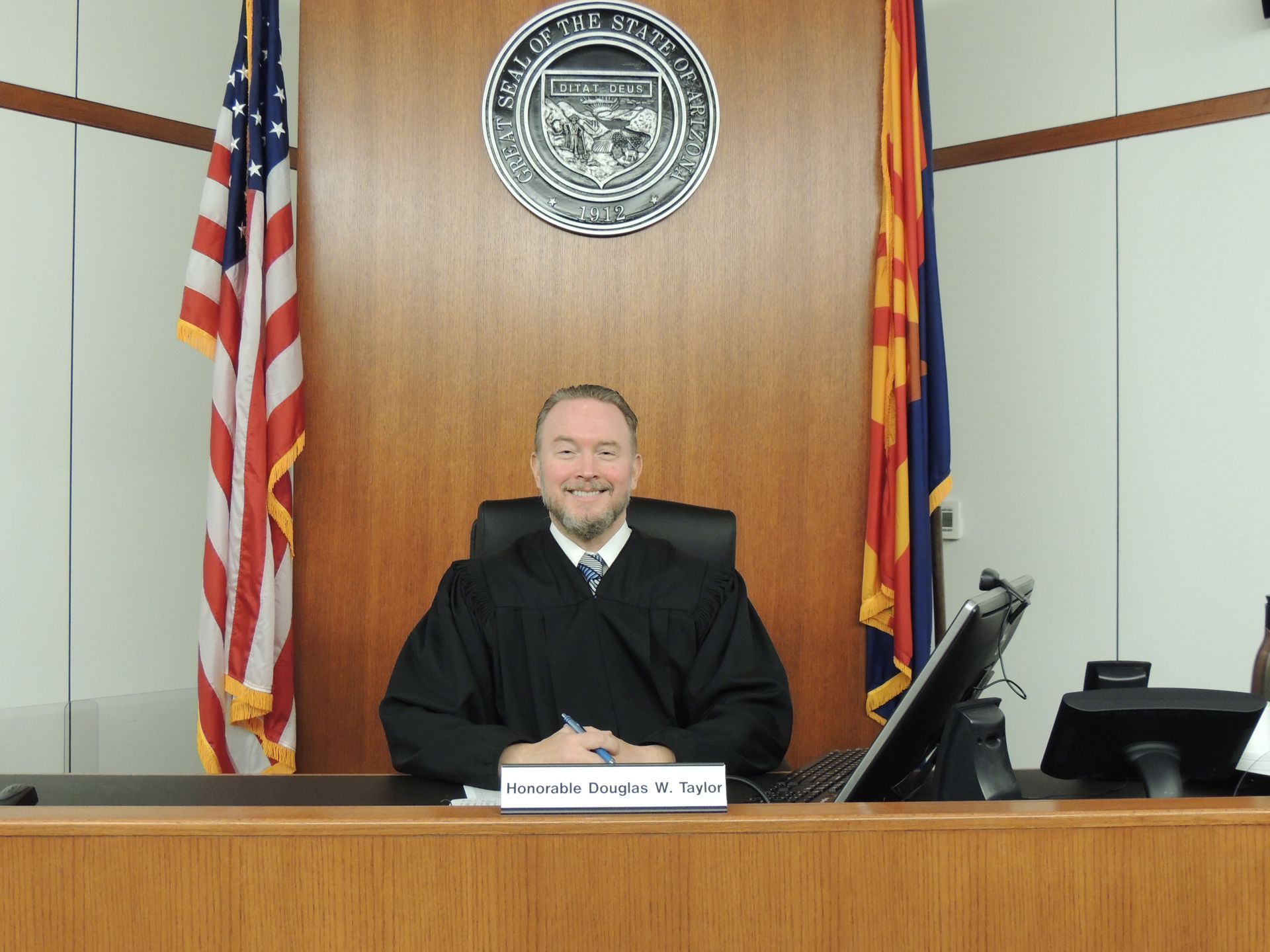
PROSTITUTION DEFENSE GUIDED BY A
Former Pima County Judge
Prostitution-sting cases often turn on details that are easy to overlook: the exact language used, whether a fee arrangement was actually proposed or accepted, what occurred before and after a recorded statement, and whether police reports fairly describe the complete conversation.
As a former elected Pima County Judge, Doug Taylor has evaluated probable cause, witness credibility, police testimony, constitutional challenges, plea agreements, trials, and sentencing issues from the bench. He applies that judicial perspective when examining how the prosecution is likely to present the allegation—and where the evidence may be incomplete, ambiguous, inconsistent, or legally insufficient.
Doug personally reviews the communications, recordings, body-camera footage, search and seizure issues, interrogation evidence, and surrounding circumstances. The objective is to identify the facts and legal issues that can support suppression, dismissal, reduction of the charge, a favorable resolution, or trial.
WHAT
CONDUCT
CAN RESULT IN A PROSTITUTION CHARGE IN ARIZONA?
Arizona law now treats the two sides of an alleged prostitution transaction differently. A person accused of offering to provide sexual conduct under a fee arrangement generally faces a Class 1 misdemeanor. A person accused of purchasing sexual conduct may face a Class 6 felony.
Under
A.R.S. § 13-3214, the State may prosecute a person who knowingly:
- Pays for sexual conduct under a fee arrangement;
- Agrees to pay for sexual conduct under a fee arrangement; or
- Offers to pay for sexual conduct under a fee arrangement.
Neither sexual contact nor an exchange of money must actually occur. An alleged offer or agreement may be sufficient, which is why the complete conversation—not an isolated text message or police summary—can be critically important.
HOW PROSTITUTION STING
CASES
ARE
BUILT
Many prostitution prosecutions begin with an online advertisement, undercover profile, text-message exchange, recorded telephone call, massage-business investigation, or face-to-face conversation with an undercover officer.
Police reports may reduce a lengthy interaction to a few selected statements. The defense should examine the complete communications, including who introduced the subject of sexual conduct, whether the terms were clear or ambiguous, whether any fee arrangement was actually proposed, and whether the accused knowingly accepted it.
Important evidence may include:
- Complete text or application message threads;
- Audio and video recordings;
- Undercover officers’ notes and reports;
- Body-camera footage;
- Hotel, business, or parking-lot surveillance;
- Search warrants and phone-extraction records; and
- Evidence identifying who actually used the phone or online account.
The full sequence matters. A statement that appears incriminating when isolated may have a different meaning when viewed in the context of the entire conversation.
PHONES,
SEARCHES
AND POLICE
QUESTIONING
Prostitution investigations increasingly rely on digital evidence. Police may seek consent to examine a phone, obtain a search warrant, use screenshots from an undercover account, or download messages and location information.
The defense should determine how the evidence was obtained, whether consent was voluntary, whether a warrant was sufficiently supported and properly limited, and whether the extracted material is complete and reliably connected to the accused.
Statements made during an arrest or interview may also become important evidence. A person contacted by investigators should not attempt to explain ambiguous messages or “clear things up” without legal advice. Even an innocent or incomplete explanation can be misunderstood, summarized inaccurately, or used to supply an element the State otherwise may have difficulty proving.
PENALTIES
FOR PROSTITUTION CHARGES IN ARIZONA
A.R.S. § 13-3214 now imposes different penalties depending on whether the accused allegedly purchased or offered to provide sexual conduct.
For a person accused of paying, agreeing to pay, or offering to pay:
- First offense: Class 6 felony and at least 15 consecutive days in jail;
- Second offense: Class 6 felony and at least 30 consecutive days in jail;
- Third offense: Class 6 felony and at least 60 consecutive days in jail; and
- Fourth or subsequent offense: Class 4 felony and at least 180 consecutive days in jail.
A conviction also carries a mandatory $200 assessment used to support services for victims of sex trafficking.
A person accused of offering or agreeing to provide sexual conduct under a fee arrangement generally faces a Class 1 misdemeanor, with escalating mandatory jail terms for repeat convictions.
The criminal classification is only part of the exposure. A conviction may also affect employment, professional licensing, firearm rights, immigration status, housing, and reputation.
POTENTIAL DEFENSES TO PROSTITUTION AND SOLICITATION CHARGES
The available defense depends on the alleged communications, law-enforcement conduct, and evidence obtained during the investigation.
Potential issues may include:
- No knowing offer or agreement to pay for sexual conduct;
- No sufficiently definite fee arrangement;
- Ambiguous, incomplete, altered, or misunderstood communications;
- Mistaken identity or failure to prove who used a phone or online account;
- Missing recordings or police reports that omit important context;
- An unlawful search, seizure, phone extraction, or interrogation; and
- Failure to prove every element beyond a reasonable doubt.
Entrapment
may apply in limited cases, but merely providing an opportunity or using an undercover identity is not entrapment. Under
A.R.S. § 13-206, the accused must admit the substantial elements of the offense and prove by clear and convincing evidence that law enforcement originated the idea, urged and induced the conduct, and that the accused was not predisposed to commit the offense.
WHAT THE STATE
MUST PROVE
For a felony buyer prosecution, the State must prove beyond a reasonable doubt that the accused knowingly paid, agreed to pay, or offered to pay for sexual conduct under a fee arrangement.
The prosecution may rely on messages, recorded conversations, money, surveillance, officer testimony, location evidence, or statements made after arrest.
The defense should examine whether that evidence proves:
- The accused was the person involved in the communications;
- The accused acted knowingly;
- Sexual conduct was actually discussed;
- A fee arrangement was offered or agreed upon; and
- The evidence has been presented completely and accurately.
Suspicion, suggestive conversation, presence at a location, or communication with an undercover officer does not eliminate the State’s burden to prove every required element.
WHY CHOOSE TAYLOR LAW GROUP FOR A PROSTITUTION CASE?
A prostitution accusation can threaten far more than freedom. Clients may also face damage to their careers, professional licenses, relationships, and reputations. These cases require discretion, careful evidence review, and direct advice from an experienced criminal-defense lawyer.
Doug Taylor offers:
- More than 25 years of criminal-law experience;
- The perspective of a former elected Pima County Judge;
- Personal representation by the attorney whose name is on the firm;
- Experience evaluating police reports, recordings, constitutional issues, credibility, plea agreements, trials, and sentencing; and
- A downtown Tucson office located across from Pima County Justice Court and near Pima County Superior Court and Tucson City Court.
Every case receives an individualized assessment. Prior results cannot guarantee a particular outcome, but preparation, legal accuracy, and focused advocacy matter.
Call or text Taylor Law Group at (520) 440-5635 for a free and confidential consultation.
ARRESTED IN A PROSTITUTION STING IN TUCSON?
START HERE
What you do immediately after an arrest or police contact can affect the entire case.
- Do not explain the messages or alleged agreement to police.
- Clearly state that you want to remain silent and speak with an attorney.
- Do not consent to a search of your phone, vehicle, hotel room, or home.
- Preserve
every text, message, advertisement, call log, receipt, photograph, and location record.
- Do not delete or alter communications, even if they are embarrassing.
- Write
a private timeline of the interaction while your memory is fresh.
- Follow
all release conditions and attend every scheduled court appearance.
- Contact
a criminal-defense lawyer before responding to investigators.
Early review allows the defense to preserve evidence, identify missing context, evaluate police conduct, and address the felony exposure before avoidable statements or lost evidence damage the case.
CAN YOU BE CHARGED IF
NO SEXUAL ACT OCCURRED?
Yes. Arizona law does not require sexual contact or a completed payment. A person may be charged based on an alleged offer or agreement to pay for sexual conduct under a fee arrangement.
That does
not
mean every suggestive conversation proves a felony. The State must still establish the accused’s identity, knowledge, the alleged sexual conduct, and a sufficiently definite fee arrangement beyond a reasonable doubt.
Ambiguous language, incomplete messages, joking, negotiation that never reached an agreement, or assumptions made by an undercover officer may become important issues.
DOES A PROSTITUTION CONVICTION REQUIRE
SEX-OFFENDER REGISTRATION?
A conviction under
A.R.S. § 13-3214 involving consenting adults does not ordinarily require sex-offender registration by itself. The felony classification for purchasing sexual conduct does not automatically convert the charge into a registrable sex offense.
Registration consequences may arise when the allegations involve a minor, sex trafficking, or another offense specifically listed in
Arizona’s registration statute. The precise charges and alleged circumstances must therefore be reviewed before any conclusion is reached.
WHERE
ARE TUCSON PROSTITUTION CASES
FILED?
Felony
allegations involving paying or offering to pay for sexual conduct are ultimately prosecuted in
Pima County Superior Court, although early proceedings may begin in a justice court.
Misdemeanor prostitution allegations may be handled in
Tucson City Court or
Pima County Justice Court, depending on where the alleged conduct occurred and which agency submitted the charge.
The court affects the charging process, available hearings, prosecutor, and case timeline.
____________________________
FREQUENTLY ASKED QUESTIONS ABOUT PROSTITUTION CHARGES IN ARIZONA
Is paying for sex a felony in Arizona?
Yes. Under
A.R.S. § 13-3214, knowingly paying, agreeing to pay, or offering to pay for sexual conduct under a fee arrangement is a Class 6 felony. The law applies even when no sexual activity occurs.
Does money have to change hands for a prostitution charge?
No. An alleged offer or agreement to pay may support a charge even if no money changes hands. The State must still prove a knowing offer or agreement involving sexual conduct under a fee arrangement.
What is the mandatory jail sentence for a first offense?
A first conviction for purchasing or offering to purchase sexual conduct requires at least 15 consecutive days in jail. A second conviction requires at least 30 days, a third requires at least 60 days, and a fourth or subsequent offense carries at least 180 days.
Are buyers and sellers charged the same way?
No. A person accused of purchasing or offering to purchase sexual conduct may face a Class 6 felony. A person accused of offering or agreeing to provide sexual conduct under a fee arrangement generally faces a Class 1 misdemeanor.
Is entrapment a defense to a prostitution sting?
Entrapment may be a defense, but an undercover identity, police ruse, or opportunity to commit an offense is not enough. Under
A.R.S. § 13-206, the accused must admit the substantial elements of the offense and prove by clear and convincing evidence that law enforcement originated the idea, urged and induced the conduct, and that the accused was not predisposed to commit it.
What evidence is commonly used in a prostitution-sting case?
Evidence may include text messages, online advertisements, recorded calls, surveillance, body-camera footage, money, location information, phone-extraction records, and statements made to officers. The defense should examine the complete communications rather than relying only on selected messages or a police summary.
Can police search my phone after a prostitution arrest?
Police may search a phone with valid consent, a properly supported search warrant, or another legally recognized exception. You may decline a request for consent and ask to speak with an attorney. The defense should examine the warrant, the scope of the search, and how the digital evidence was collected.
Will an adult prostitution conviction require sex-offender registration?
A conviction under
A.R.S. § 13-3214 involving consenting adults does not ordinarily require registration by itself.
A.R.S. § 13-3821 may require registration when the allegations involve a minor or another specifically listed offense.
What should I do after being arrested in a Tucson prostitution sting?
Remain silent, request an attorney, and do not consent to searches. Preserve all messages, advertisements, call records, receipts, photographs, and location information without deleting or altering anything. Follow every release condition and obtain legal advice before responding to investigators.