7/27/2026
— Client “D.M.” — Reckless Driving
PLED DOWN TO CIVIL SPEEDING!
9/1/2026
— Client “B.A.” — Reckless Driving
PLED DOWN TO CIVIL SPEEDING!
Case results depend on the unique facts and law of each matter. Prior outcomes do not guarantee or predict a similar result.
What Is
RECKLESS DRIVing in Arizona?
Under
A.R.S. § 28-693, a person commits reckless driving by driving a vehicle in reckless disregard for the safety of persons or property.
Unlike Arizona's criminal speeding statute, reckless driving generally does not depend upon exceeding a particular numerical speed threshold. Instead, the charge focuses on the
nature of the driving conduct and the surrounding circumstances.
That distinction can be critically important.
Driving fast does not necessarily answer the ultimate question of whether someone's conduct constituted reckless driving. Likewise, allegations involving weaving through traffic, dangerous passing, excessive speed combined with other conduct, or other unsafe driving behavior may cause law enforcement to allege reckless driving.
Reckless Driving Is a
Criminal
Offense
A first conviction for reckless driving under A.R.S. § 28-693 is generally a
Class 2 misdemeanor.
Potential consequences may include:
- A misdemeanor criminal conviction;
- Jail exposure;
- Fines and surcharges;
- A possible suspension of driving privileges for up to 90 days;
- Consequences involving a driving record;
- Increased insurance costs;
- Employment consequences for people who drive professionally; and
- Other collateral consequences associated with a criminal conviction.
Arizona law permits up to
four months of incarceration for a Class 2 misdemeanor, although the actual sentence in any particular case depends upon the charge, circumstances, history, applicable law, and disposition.
What
Conduct
Can Lead to a Reckless Driving Charge?
There is no single factual scenario required for a traditional reckless driving allegation.
Depending upon the circumstances, law enforcement may investigate or cite reckless driving based upon allegations involving:
- Excessive speed combined with other dangerous conduct;
- Aggressive or unsafe lane changes;
- Weaving through traffic;
- Dangerous passing;
- Following other vehicles dangerously closely;
- Ignoring traffic conditions or roadway hazards;
- Losing control of a vehicle;
- Driving behavior that allegedly endangered pedestrians, passengers, motorists, or property; or
- Multiple unsafe driving behaviors occurring together.
The existence of one of these allegations does not automatically establish guilt. The State still bears the burden of proving the criminal charge.
Reckless Driving
vs. Criminal Speeding in Arizona
Reckless driving and criminal speeding are separate Arizona offenses.
Criminal speeding under
A.R.S. § 28-701.02 is generally based upon specific statutory speed thresholds.
Reckless driving under
A.R.S. § 28-693 focuses instead upon whether the person's driving demonstrated reckless disregard for the safety of persons or property.
A driver therefore should
not assume that:
criminal speeding automatically equals reckless driving.
The facts may sometimes result in multiple allegations, but each charge has its own legal requirements.
Defending
an Arizona Reckless Driving Charge
The appropriate defense depends upon what allegedly occurred and what evidence the State actually possesses.
Potential issues may include:
- Whether the driving actually rose to the level required for reckless driving;
- The officer's opportunity to observe the vehicle;
- Video or dash-camera evidence;
- Body-worn camera evidence;
- Witness accounts;
- Road and traffic conditions;
- Weather or visibility;
- Identification of the driver;
- Whether speed measurements are accurate and relevant;
- Whether allegedly dangerous conduct has an innocent or reasonable explanation;
- Inconsistencies in the evidence;
- Evidentiary or procedural problems; and
- Mitigating circumstances.
The defense should be based upon the evidence—not merely the terminology written on the citation.
Can a Reckless Driving Charge Be Reduced or
Dismissed?
Potentially.
Some cases may contain factual or evidentiary weaknesses that support dismissal or acquittal. In other cases, negotiation or mitigation may provide the best path toward a more favorable resolution.
Possible outcomes depend upon the facts, evidence, driving history, criminal history, prosecuting agency, court, and other circumstances.
No attorney can legitimately guarantee dismissal or reduction.
An experienced attorney can evaluate the evidence, identify available defenses, communicate with the prosecution when appropriate, and advocate for the best available outcome.
Repeat
Reckless Driving Charges Can Be Much More Serious
Arizona law imposes significantly greater consequences in certain repeat-offense situations.
Under
A.R.S. § 28-693, a qualifying prior conviction within the statutory
24-month period can result in the new reckless driving offense being treated as a
Class 1 misdemeanor, with mandatory jail provisions and a one-year suspension of driving privileges.
Because the statute identifies particular prior offenses and contains specific rules governing the 24-month period, a person's actual record should be reviewed rather than assuming that every prior traffic offense triggers the enhanced penalties.
Reckless Driving and
DUI
Allegations
Reckless driving and
DUI are separate criminal offenses.
However, the circumstances surrounding a traffic stop may sometimes cause law enforcement to investigate more than one potential offense.
When reckless driving is charged alongside DUI or another criminal allegation, the entire case should be evaluated together rather than treating each accusation in isolation.
Motorcycle
Reckless Driving and Arizona's 2026
Law
Arizona enacted legislation in 2026 amending
A.R.S. § 28-693 to address certain motorcycle conduct involving lane use and passing.
The legislation adds specified violations of
A.R.S. § 28-903(B) or (C) to the reckless-driving statute. Because newly enacted legislation has effective-date considerations, motorcycle riders should have the law applicable on the
date of the alleged offense evaluated carefully rather than relying upon outdated online descriptions of Arizona law.
This is especially important because older websites and legal articles may not yet reflect Arizona's 2026 statutory changes.
Commercial Drivers (CDL) and Professional Consequences
A reckless driving charge can be particularly concerning for someone whose livelihood depends upon driving.
Commercial drivers, delivery drivers, transportation professionals, government employees, licensed professionals, and others may face consequences extending beyond the immediate criminal case.
Potential employment, licensing, insurance, and driving-record consequences should therefore be considered when evaluating possible resolutions.
Talk With
a Tucson RECKLESS DRIVing Lawyer
If you have been charged with reckless driving under
A.R.S. § 28-693, Taylor Law Group can review the allegations, evidence, circumstances of the traffic stop, and available options.
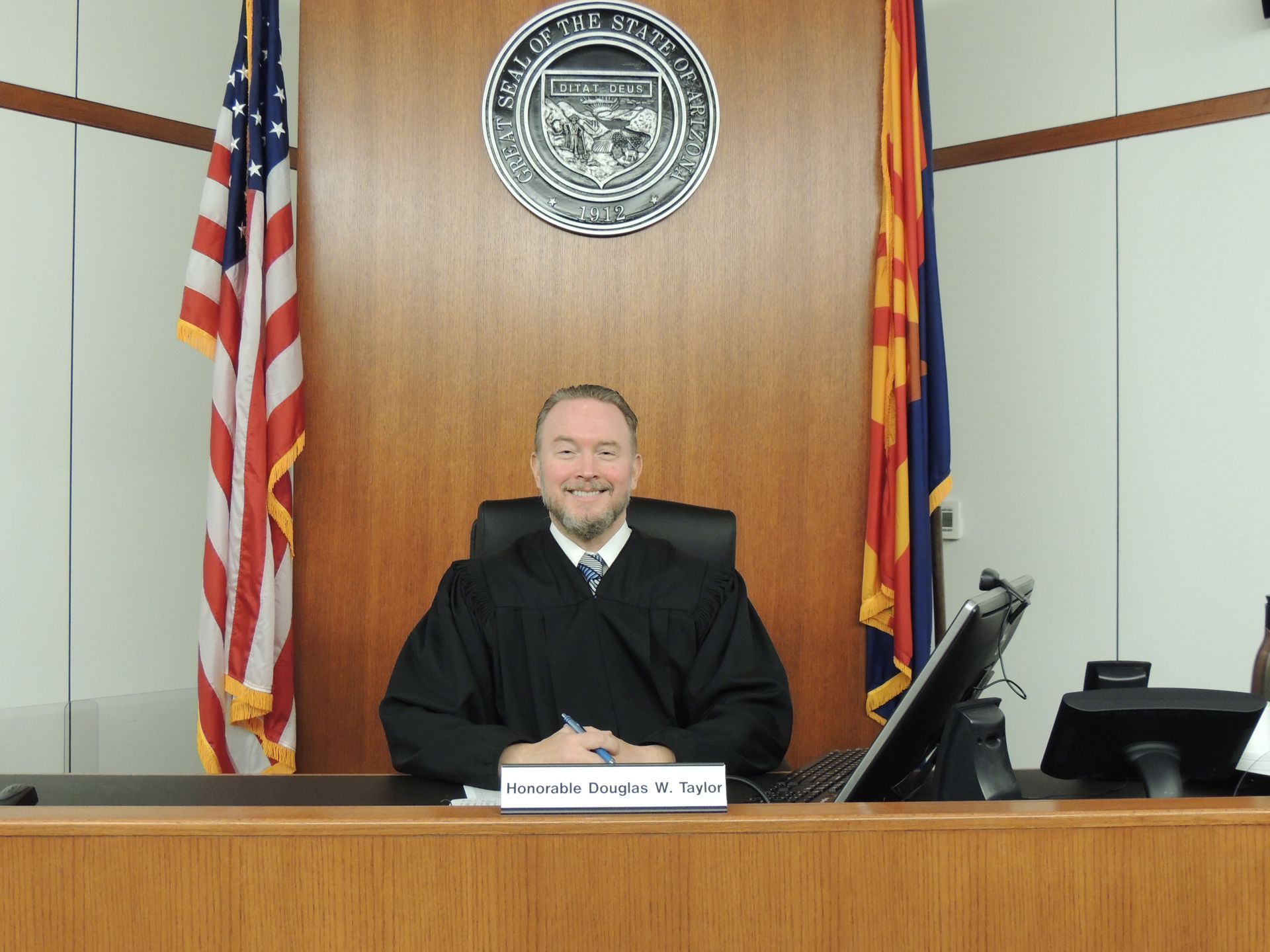
Douglas W. Taylor, Sr. is a former Pima County Judge and experienced Tucson criminal defense attorney representing clients throughout Tucson, Pima County, and Southern Arizona.
Call (520) 440-5635 to discuss your case.
Former Judge Perspective
in RECKLESS DRIVing Cases
Before returning to private practice,
Douglas W. Taylor, Sr. served as an elected Pima County Justice of the Peace.
As a judge, Mr. Taylor presided over criminal and traffic matters and evaluated testimony, law-enforcement evidence, credibility, mitigation, and legal arguments.
That experience provides a valuable perspective when defending reckless driving allegations today.
A reckless driving case should not simply be reduced to an officer's characterization of someone's driving as “reckless.” The actual conduct and evidence matter.
What Should I Do
After BEING CHARGED WITH RECKLESS DRIVING?
Do not ignore the citation or criminal charge.
Review the paperwork carefully and determine:
- The statute charged;
- The court handling the case;
- The date of the alleged offense;
- The allegations described by the officer;
- Whether other offenses were cited;
- Your scheduled appearance or response date; and
- Whether you received additional documents from law enforcement.
Preserve the citation, photographs, video, dash-camera footage, or other evidence that may relate to the incident.
Seeking legal advice early can provide additional time to investigate the circumstances and evaluate available options.
Tucson Criminal Defense From a
Former Judge
Reckless driving is a
criminal
offense, and the consequences can extend beyond an ordinary traffic citation.
Taylor Law Group represents clients throughout Tucson and Southern Arizona facing misdemeanor and felony criminal allegations. When reckless driving occurs alongside criminal speeding, DUI, or other charges, the entire situation should be evaluated together.
Reckless Driving Cases in Tucson and Pima County
Reckless driving allegations may arise on highways, city streets, residential roads, and other roadways throughout Tucson and Southern Arizona.
Depending upon where the alleged conduct occurred and the law-enforcement agency involved, the case may be filed in a Tucson-area municipal or justice court.
Taylor Law Group evaluates the particular charge, court, evidence, driving history, and circumstances of each case rather than treating every reckless driving citation alike.
Out-of-State Drivers Charged With Reckless Driving in Arizona
Visitors to Arizona may be surprised to discover that a driving allegation has resulted in a
criminal misdemeanor charge rather than an ordinary traffic citation.
An out-of-state driver should not ignore an Arizona reckless driving case simply because the person has returned home.
The Arizona criminal case must still be addressed, and the effect of a conviction or other disposition upon an out-of-state license, driving record, employment, or insurance may depend upon the driver's home jurisdiction.
_____________________________________
Frequently Asked Questions About RECKLESS DRIVing in Arizona
Is reckless driving a criminal offense in Arizona?
Yes. Reckless driving under
A.R.S. § 28-693 is a criminal offense. A first offense is generally a Class 2 misdemeanor, rather than an ordinary civil traffic violation. A conviction can therefore carry criminal penalties and other consequences.
What does Arizona consider reckless driving?
Arizona law generally defines reckless driving as driving a vehicle with reckless disregard for the safety of persons or property. Unlike criminal speeding, the traditional reckless-driving offense is not based upon one specific speed threshold. The State's evidence concerning the driver's conduct and the surrounding circumstances can therefore be particularly important.
Can I go to jail for reckless driving in Arizona?
Yes. Because a first reckless-driving offense is generally a Class 2 misdemeanor, incarceration is legally possible. Arizona law generally allows up to four months in jail for a Class 2 misdemeanor. Repeat reckless-driving offenses can carry substantially more serious consequences, including mandatory jail provisions in qualifying cases.
Can my driver's license be suspended for reckless driving?
Yes. A first reckless-driving conviction can result in a suspension of driving privileges for up to 90 days. Qualifying repeat offenses can carry substantially greater license consequences, including a one-year suspension under
A.R.S. § 28-693.
Is reckless driving the same as criminal speeding in Arizona?
No. Criminal speeding and reckless driving are separate offenses.
Criminal speeding under
A.R.S. § 28-701.02 generally involves specific statutory speed thresholds. Reckless driving under
A.R.S. § 28-693 focuses upon whether the driving demonstrated reckless disregard for the safety of persons or property. Depending upon the circumstances, a driver could potentially face more than one charge.
Is reckless driving the same as aggressive driving in Arizona?
No. Arizona has a separate aggressive driving statute,
A.R.S. § 28-695, with its own required elements. Reckless driving and aggressive driving should not be treated as interchangeable simply because both may involve allegations of dangerous driving.
Does speeding automatically make driving reckless?
Not necessarily. Speed may be relevant to the overall circumstances, but reckless driving and criminal speeding are separate offenses with different legal elements. Whether particular driving constitutes reckless driving depends upon the evidence and circumstances rather than merely attaching the word “reckless” to a high speed.
Can a reckless driving charge be reduced or dismissed?
Potentially. The available outcome depends upon the facts, evidence, driving history, criminal history, court, prosecutor, and other circumstances. Some cases may present factual or evidentiary defenses, while others may be appropriate for negotiation or mitigation. No particular outcome can be guaranteed.
What happens if I have a prior reckless driving conviction?
A qualifying prior conviction within the statutory period can substantially increase the consequences of a subsequent reckless-driving offense. Arizona law provides enhanced penalties in certain cases involving specified prior driving convictions within 24 months. The actual prior record and applicable statute should be reviewed carefully.
What evidence can be important in a reckless driving case?
Relevant evidence can include the officer's observations, body-camera or dash-camera footage, civilian video, witness testimony, speed-measurement evidence, roadway and traffic conditions, photographs, vehicle information, and statements attributed to the driver. The important evidence depends upon what conduct the State alleges was reckless.
Can an out-of-state driver be charged with reckless driving in Arizona?
Yes. Arizona can prosecute an alleged reckless-driving offense occurring within the state even when the driver lives elsewhere. The Arizona case still needs to be addressed, while any effect on the person's home-state license, insurance, or driving record may depend upon that jurisdiction's laws and procedures.
Should I hire a lawyer for reckless driving in Tucson?
Legal representation can be valuable because reckless driving is a criminal charge rather than merely a routine traffic ticket. An attorney can evaluate the State's evidence, identify potential defenses, investigate the circumstances, address collateral consequences, and pursue an appropriate resolution. Former Pima County Judge Douglas W. Taylor, Sr. represents clients charged with reckless driving in Tucson and Southern Arizona.