Drug-possession allegations can appear straightforward in a police report. In court, however, the State must prove the particular charge against the individual accused using admissible evidence.
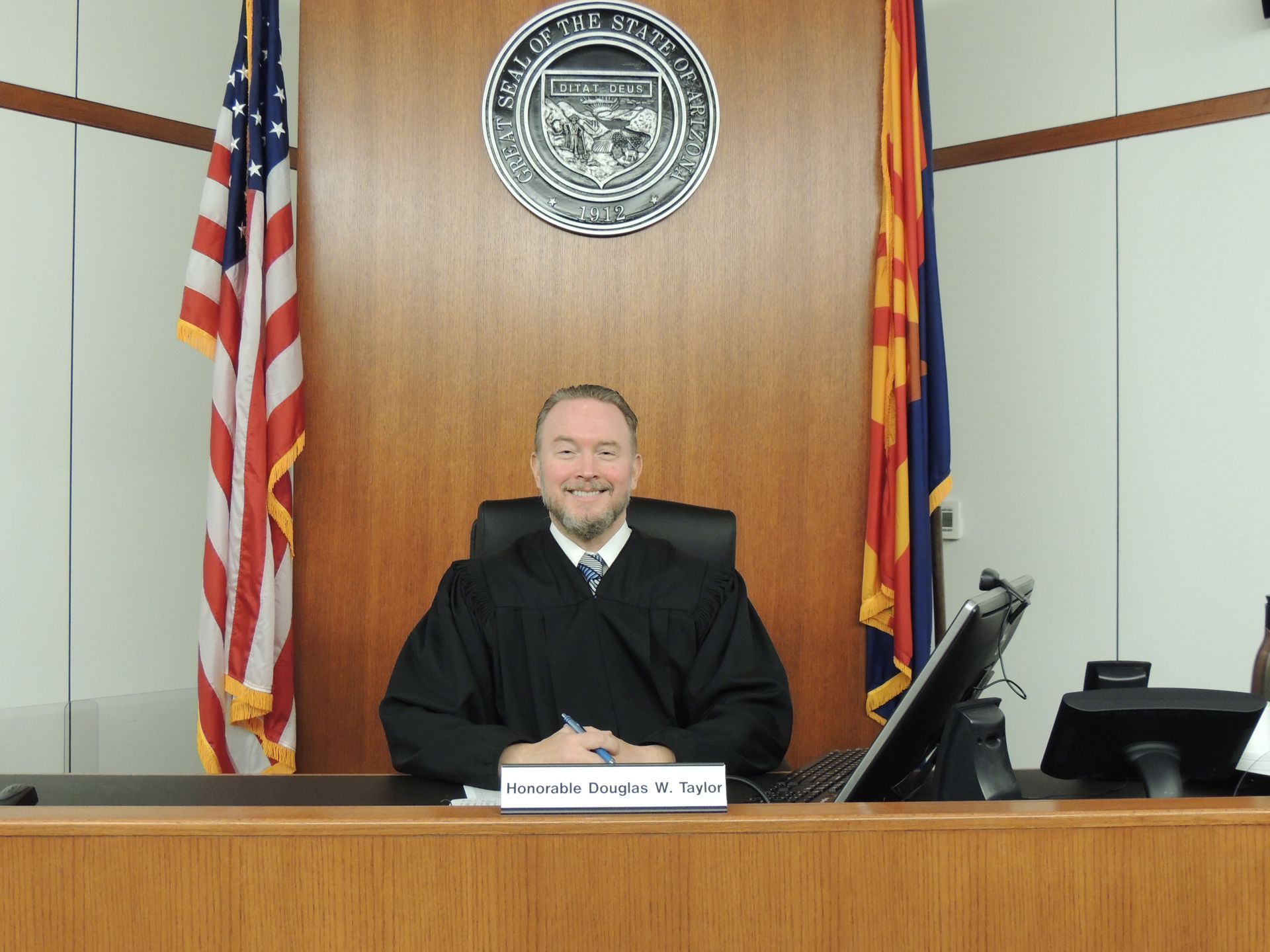
As a former Pima County Judge, Douglas W. Taylor has evaluated probable cause, search warrants, release conditions, witness credibility, police testimony, constitutional arguments, plea agreements, trial evidence, and sentencing issues from the bench.
In a drug-possession case, important questions may include:
- Did the accused knowingly possess or control the substance?
- What evidence connects the accused to the drugs?
- Where exactly were the drugs discovered?
- Did other people have access to the location?
- Was the alleged substance properly identified and weighed?
- Were the traffic stop, detention, search, and seizure lawful?
- Are witness statements consistent and reliable?
- Were statements attributed to the accused lawfully obtained?
- Does a valid prescription or other lawful authorization exist?
- Can the State prove every required element beyond a reasonable doubt?
Former judicial experience does not predetermine an outcome. It provides an additional perspective for identifying what judges examine, what evidence matters, and where the prosecution’s theory may be vulnerable.
Arizona separates controlled substances into statutory categories. The classification of the substance determines which statute applies and can affect the charge, sentencing provisions, and available defenses.
Narcotic-drug cases may involve substances such as
fentanyl, heroin, cocaine, oxycodone, or other substances classified as narcotic drugs under Arizona law.
Dangerous-drug cases may involve methamphetamine, amphetamine, certain hallucinogens, or other substances included within Arizona’s statutory definition of dangerous drugs.
Important defense questions may include:
- What substance does the State claim was possessed?
- Did laboratory testing reliably identify that substance?
- Did the accused knowingly possess or control it?
- Was it discovered in a shared location?
- What evidence connects the accused individually to the drugs?
- Was the alleged quantity measured correctly?
- Did police obtain the evidence through a lawful stop, detention, and search?
- Do probation or treatment provisions apply?
The statutory category should never be assumed from the appearance of a pill, powder, crystal, or other material. The charge and laboratory evidence must be examined carefully.
Arizona law generally prohibits knowingly possessing or using a prescription-only drug unless it was obtained through a valid prescription from an authorized prescriber.
Prescription-drug cases can arise when medication is discovered outside its original container, mixed with other pills, carried in a vehicle or bag, allegedly obtained from another person, or not immediately supported by accessible pharmacy records.
Important issues may include:
- Whether the accused had a valid prescription
- Whether pharmacy, medical, or prescriber records confirm lawful authorization
- Whether the medication belonged to someone else
- Whether the accused knowingly possessed or controlled it
- Whether the pills were properly identified and counted
- Whether multiple people had access to the location or container
- Whether police accurately recorded what the accused said
- Whether the stop, detention, or search was lawful
Possession or use of a prescription-only drug without lawful authorization is generally a class 1 misdemeanor under A.R.S. § 13-3406. More serious allegations involving sale, transportation, transfer, manufacturing, fraud, or misbranded drugs are treated differently.
Medical and pharmacy records should be preserved and reviewed promptly when lawful possession may be an issue.
Is drug possession a felony in Arizona?
It depends on the substance and charge. Possession or use of a dangerous drug or narcotic drug is generally a class 4 felony. Possession or use of a prescription-only drug without lawful authorization is generally a class 1 misdemeanor. Marijuana classifications depend on the amount and circumstances.
What must the State prove in an Arizona drug-possession case?
The prosecution must prove every required element of the particular offense beyond a reasonable doubt. An important issue is often whether the accused knowingly possessed or used the alleged substance. When drugs are found in a shared location, knowledge, access, dominion, and control can become disputed.
Can I be charged if the drugs were not found on me?
Yes. Prosecutors may allege constructive possession when drugs are found in a vehicle, residence, room, bag, container, or other location they claim the accused controlled. But proximity alone does not automatically establish knowing possession.
What if drugs were found in a car with several people?
The presence of drugs in a vehicle does not automatically prove that every occupant possessed them. Important evidence may include where the drugs were located, who owned or controlled the vehicle or container, whether the drugs were visible, what each person said, and whether forensic or electronic evidence connects a particular occupant to them.
What is the difference between actual and constructive possession?
Actual possession generally refers to drugs allegedly found directly on a person. Constructive possession may be alleged when drugs are found elsewhere but the State claims the accused knowingly exercised dominion or control over them. Both theories require evidence connecting the accused to the substance.
Can police search my vehicle for suspected drugs?
Not automatically. A traffic stop does not by itself give police unlimited authority to search a vehicle. The State may rely on consent, probable cause, a warrant, or another recognized exception. The legal basis, duration, scope, and circumstances of the stop and search should be reviewed.
Can evidence from an illegal search be suppressed?
Potentially. Drug evidence obtained through an unconstitutional stop, detention, search, or seizure may be subject to suppression when legally appropriate. Whether suppression is available depends on the particular facts and law governing the police conduct.
What if I had a valid prescription for the medication?
A valid prescription may provide lawful authorization to possess or use a prescription-only drug. Pharmacy, medical, and prescriber records should be preserved and reviewed. The identity of the medication, who possessed it, and how police obtained the evidence may also matter.
Does a field test prove that a substance is an illegal drug?
A field test may be used during an investigation, but laboratory analysis generally provides more reliable evidence of chemical identity. The defense should examine the testing method, laboratory report, sampling procedure, weight calculation, evidence handling, and chain of custody.
Is probation possible for a first drug-possession offense?
It may be. Arizona has probation and treatment-related provisions that can apply to some personal-possession cases. Eligibility depends on the precise charge, substance, prior record, surrounding circumstances, and any applicable statutory exclusions.
What is the difference between drug possession and possession for sale?
Simple possession generally concerns knowingly possessing or using a prohibited substance. Possession for sale includes the additional allegation that the substance was possessed for a commercial purpose. Prosecutors may rely on quantity, packaging, cash, scales, communications, surveillance, or other circumstantial evidence when alleging an intent to sell.
Can an Arizona drug-possession charge be reduced or dismissed?
Sometimes. Possible outcomes depend on the evidence, criminal history, applicable law, prosecutorial discretion, and available defenses. Issues involving possession, knowledge, searches, warrants, statements, laboratory testing, lawful prescriptions, or proof of the substance may materially affect the case.
When should I contact a Tucson drug-possession lawyer?
Contact a lawyer as soon as you learn that you are under investigation, arrested, cited, or charged. Early representation may help preserve video, witness information, prescription records, electronic evidence, laboratory evidence, and constitutional challenges before important evidence is lost.
Why hire former Judge Doug Taylor for a drug-possession case?
Former Pima County Judge Douglas W. Taylor has experience evaluating probable cause, search warrants, witness credibility, police testimony, constitutional arguments, plea agreements, trials, and sentencing issues from the bench. He uses that perspective to examine what the prosecution can lawfully prove and develop a defense based on the particular evidence and charge.