
Domestic Violence Criminal Damage Attorney
SERVING TUCSON & SOUTHERN ARIZONA

Domestic violence criminal damage charges frequently arise during heated arguments where property is broken, damaged, defaced, or destroyed. A damaged cellphone, broken television, kicked door, dented vehicle, shattered window, or hole punched in drywall can quickly become a criminal case when the people involved share a qualifying domestic relationship.
Although many people assume these cases are "just about property," a domestic violence designation can carry consequences that extend well beyond the cost of repairing or replacing the damaged item. Even relatively minor property damage may affect employment, firearm rights, protective-order proceedings, and future criminal cases.
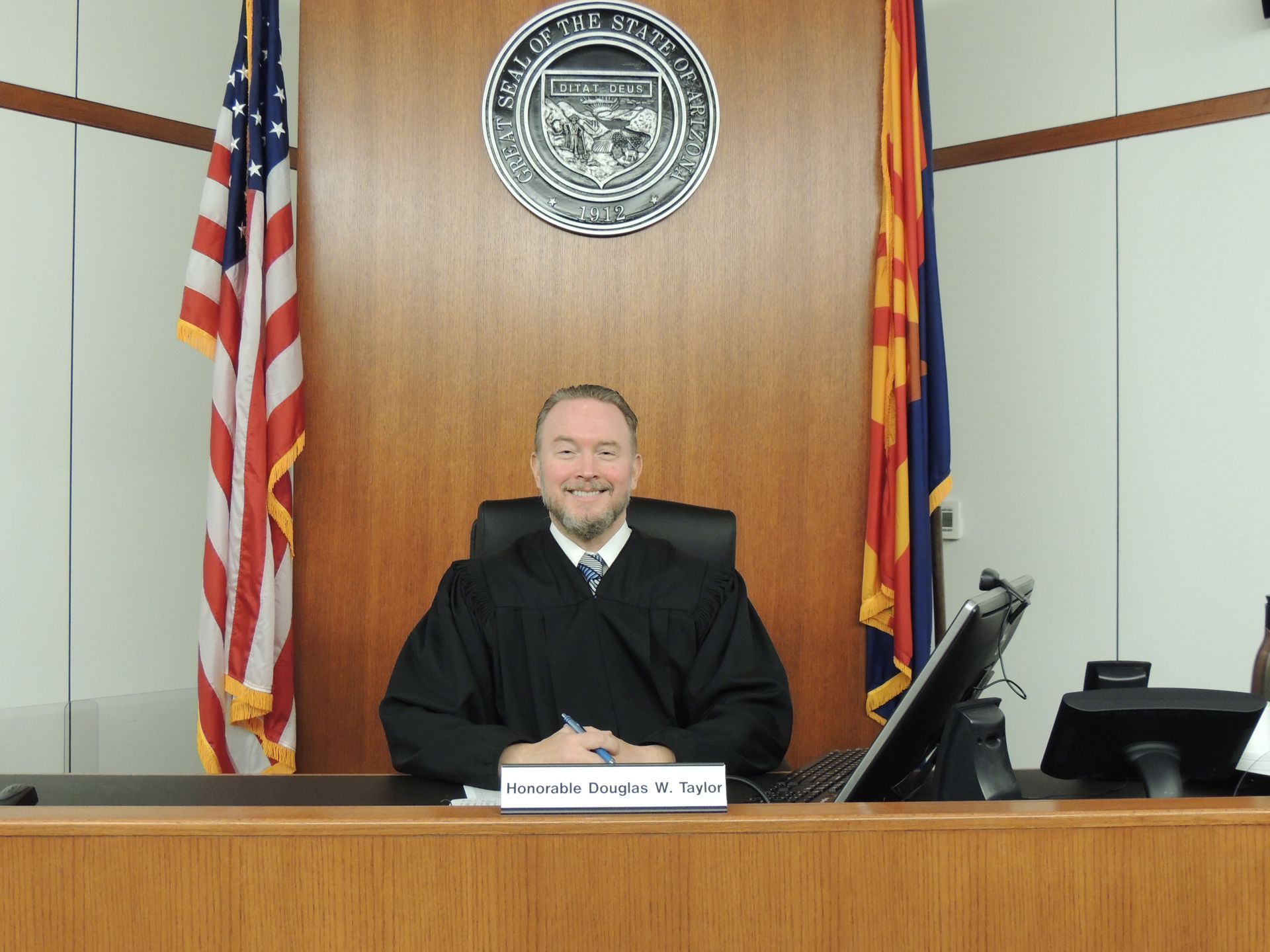
Douglas W. Taylor, Sr. brings more than 25 years of criminal-law experience to these cases. As a former Pima County judge, he understands how courts evaluate competing witness accounts, disputed ownership, repair estimates, photographs, and whether the prosecution can actually prove criminal damage beyond a reasonable doubt.
Common Situations Leading to Domestic Violence Criminal Damage Charges
• Breaking or throwing a cellphone during an argument
• Punching or kicking a wall, door, or window
• Damaging household furniture or electronics
• Scratching, denting, or otherwise damaging a vehicle
• Breaking personal belongings during a dispute
• Allegations involving jointly owned property
• Damage that may have been accidental rather than intentional or reckless
• Disputes where both parties accuse each other of causing damage
Every domestic dispute has its own facts. Determining exactly what happened—and whether it meets Arizona's legal definition of criminal damage—requires careful examination of the evidence rather than assumptions based solely upon the arrest report.
Domestic Violence Criminal Damage Under Arizona Law
Arizona's criminal damage statute, A.R.S. § 13-1602, prohibits recklessly damaging, defacing, tampering with, or damaging another person's property under circumstances defined by law. The seriousness of the offense often depends upon the amount of damage alleged, although other statutory provisions may also affect the classification.
When the alleged victim shares a qualifying relationship with the accused under A.R.S. § 13-3601, prosecutors may designate the offense as domestic violence. Although "domestic violence" is generally not a separate criminal offense, that designation may significantly affect release conditions, counseling requirements, firearm rights, and future criminal proceedings.
Many domestic violence criminal damage cases involve disputes over how the damage occurred, who owned the property, whether the conduct was reckless, or whether the estimated value of the damage has been overstated.
What the State Must Prove
To obtain a conviction for domestic violence criminal damage, the State must prove every required element of the offense beyond a reasonable doubt.
Depending upon the allegations, prosecutors generally must establish:
• That the property belonged to another person or was otherwise protected under the statute
• That the defendant recklessly damaged, defaced, tampered with, or otherwise damaged the property as defined by Arizona law
• That the amount of damage meets the level alleged by the prosecution
• That a qualifying domestic relationship existed when the offense is designated as domestic violence
Many cases are not simply about whether something was damaged. The prosecution may also need to prove ownership, the value of the damage, whether the conduct was reckless rather than accidental, and whether the available evidence supports the allegations.
Potential Consequences
The seriousness of a criminal damage charge often depends upon the value of the alleged damage. Under Arizona law, higher damage amounts may result in more serious misdemeanor or felony charges.
Possible consequences may include:
• Jail or prison, depending upon the classification of the offense
• Probation
• Fines, fees, and restitution
• Court-ordered domestic violence counseling
• Protective orders or restrictive release conditions
• Loss or restriction of firearm rights in certain circumstances
• A permanent criminal record
Even when the underlying property damage is relatively minor, a domestic violence designation can create lasting consequences affecting employment, professional licensing, housing opportunities, background checks, and future criminal proceedings.
The amount of damage alleged by the prosecution is often an important issue. Repair estimates, replacement costs, depreciation, photographs, ownership records, and other evidence may all become relevant when determining the proper classification of the offense.
Common Defense Strategies
Every criminal damage case presents unique facts, and no single defense applies to every situation.
Depending upon the evidence, potential defense strategies may include:
• Demonstrating that the damage was accidental rather than reckless
• Challenging the estimated value of the alleged damage
• Establishing that the property belonged to the defendant or was jointly owned
• Showing that the damage occurred under circumstances different from those alleged
• Exposing inconsistencies in witness statements
• Challenging whether the prosecution can prove every required legal element beyond a reasonable doubt
Domestic disputes often involve heightened emotions, conflicting accounts, and incomplete information gathered during an initial police response. Careful investigation frequently reveals facts that are not reflected in the original police report.
Property Damage Is Not Always as Simple as It Appears
Having presided over criminal cases as a judge, I learned that property damage allegations frequently become more complicated as additional evidence is developed. What initially appears to be a straightforward case may involve disputes over ownership, conflicting repair estimates, inconsistent witness statements, or questions about whether the damage was accidental, reckless, or even caused by someone else.
Courts look beyond the initial accusation. Photographs, repair invoices, surveillance video, text messages, body-camera footage, and witness credibility often become important in determining whether the prosecution has actually proven the charge.
When the amount of damage determines whether an offense is prosecuted as a misdemeanor or a felony, careful examination of the evidence can become especially important.
Real Example: Property Value Can Change the Entire Case
Following a domestic argument, one person reports that a cellphone and television were intentionally damaged. Police photograph the items, obtain statements from those involved, and an arrest is made for domestic violence criminal damage.
As the case progresses, additional questions arise. Were the items already damaged? Were repair estimates inflated? Was the property jointly owned? Did the damage occur accidentally during the struggle? Is the prosecution relying on replacement cost when repair cost is more appropriate? Do photographs accurately reflect the condition of the property?
Issues like these can significantly affect both the strength of the prosecution's case and, in some situations, the classification of the alleged offense.
Related Defense Areas
Domestic violence criminal damage charges frequently arise alongside other criminal allegations or related court proceedings.
Depending upon the circumstances, you may also need legal representation involving:
• Domestic Violence Assault Defense
• Domestic Violence Disorderly Conduct Defense
• Injunctions Against Harassment
Property damage allegations should never be evaluated in isolation. A comprehensive defense strategy considers every related charge, the available evidence, and how each allegation affects the overall case.
Frequently Asked Questions
What qualifies as criminal damage in Arizona?
Arizona law prohibits recklessly damaging, defacing, tampering with, or damaging another person's property under circumstances defined by A.R.S. § 13-1602. The seriousness of the charge often depends upon the value of the alleged damage and the surrounding facts.
Can punching a hole in a wall result in criminal charges?
Yes. Depending upon who owns the property and the circumstances involved, damaging walls, doors, windows, or other parts of a residence may result in criminal damage charges. When a qualifying domestic relationship exists, prosecutors may also designate the offense as domestic violence.
What if I damaged property that belonged to both of us?
Joint ownership does not automatically resolve a criminal damage allegation. Ownership, possessory interests, the circumstances surrounding the incident, and the applicable law should all be carefully evaluated.
How is the amount of damage determined?
The prosecution may rely upon repair estimates, replacement costs, invoices, photographs, expert opinions, or other evidence. The estimated value of the damage can significantly affect whether a case is prosecuted as a misdemeanor or felony.
What if the damage was accidental?
Accidental damage does not necessarily satisfy Arizona's criminal damage statute. Whether the prosecution can prove the required mental state is often an important issue in these cases.
Can the alleged victim ask the prosecutor to dismiss the case?
The alleged victim may express a preference, but the prosecutor—not the alleged victim—decides whether criminal charges proceed.
Will I have to pay restitution?
Possibly. Courts may order restitution if appropriate under Arizona law. The amount and basis for any restitution request may become disputed issues during the case.
Can these charges be dismissed?
Some criminal damage cases are dismissed because the evidence is insufficient, ownership is disputed, the alleged value of the damage cannot be established, constitutional issues arise, or the prosecution cannot prove every required legal element beyond a reasonable doubt.
Will a conviction affect my future?
It may. A criminal conviction can affect employment, professional licensing, housing opportunities, firearm rights in some circumstances, and future criminal proceedings. A domestic violence designation may create additional consequences.
When should I hire an attorney?
As soon as possible. Early legal representation may help preserve evidence, evaluate repair estimates, identify witnesses, protect your rights, and begin developing an effective defense strategy before important evidence is lost.
Speak With a Former Judge About Your Criminal Damage Case
Domestic violence criminal damage charges often involve much more than a disagreement over property. The outcome of your case may affect your criminal record, employment, professional licenses, firearm rights, and future opportunities.
Douglas W. Taylor, Sr. is a former Pima County judge with more than 25 years of criminal-law experience representing individuals accused of domestic violence and other criminal offenses throughout Tucson and Southern Arizona. He provides thoughtful legal guidance, strategic case analysis, and experienced courtroom representation from the beginning of your case through its resolution.
Call Taylor Law Group, PLLC at (520) 440-5635 today for a free and confidential consultation.