LEAVING-THE-SCENE Defense From a
Former Pima County Judge
A leaving-the-scene allegation can appear straightforward in a police report: an accident occurred, a vehicle left, and investigators later identified a suspected driver. The evidence may be considerably more complicated.
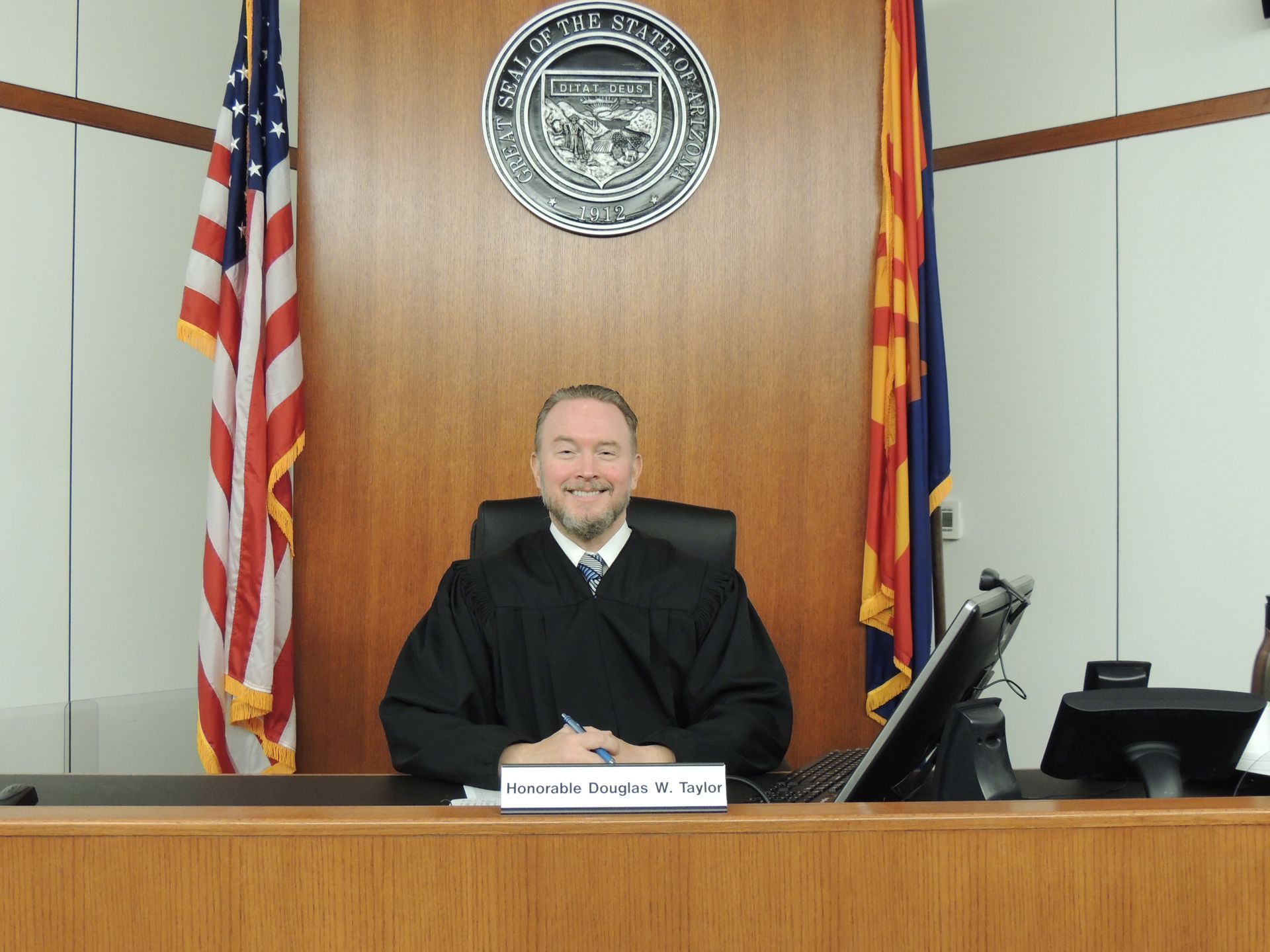
Former Pima County Judge Douglas W. Taylor approaches these cases by examining what the State can actually prove. Relevant evidence may include 911 recordings, witness descriptions, surveillance footage, body-camera video, photographs, vehicle damage, paint transfer, repair records, phone data, location information, admissions, and the timing of any report made after the accident.
The defense must also examine whether the accused was actually driving, whether the person knew an accident had occurred, what the person knew about any resulting injury or damage, whether the driver stopped or returned, and whether the duties imposed by Arizona law were fulfilled.
Douglas Taylor’s experience evaluating evidence and credibility from the bench now informs his defense of people accused of leaving the scene. The objective is to reconstruct what actually occurred and determine whether the prosecution can prove the particular offense charged—not merely accept the initial police narrative.
WHAT DOES ARIZONA LAW
REQUIRE
AFTER AN ACCIDENT?
Arizona imposes different duties depending on the consequences of the accident and the type of property involved.
A driver may be required to:
- Stop immediately at or as close as possible to the accident scene
- Return to the scene if the vehicle initially stopped elsewhere
- Remain at the scene until the required duties are completed
- Provide the driver’s name, address, and vehicle-registration information
- Display a driver license when legally required
- Render reasonable assistance to an injured person
- Notify the owner of an unattended vehicle or leave the required written notice
- Take reasonable steps to notify the owner of damaged fixtures or property located on or adjacent to a highway
Accidents involving physical injury or death are generally addressed under A.R.S. §§ 28-661 and 28-663. Accidents involving damage to an attended vehicle are addressed under A.R.S. § 28-662. Duties involving unattended vehicles and highway fixtures or property are addressed under A.R.S. §§ 28-664 and 28-665.
The applicable statute matters because the classification and possible consequences vary substantially. A property-damage allegation may be charged as a misdemeanor, while leaving the scene of an accident involving injury, serious physical injury, or death may be prosecuted as a felony.
The defense should identify precisely which duty the State claims was violated and whether the available evidence proves that violation.
KNOWLEDGE
OF AN ACCIDENT CAN BE
IMPORTANT
A driver cannot deliberately leave an accident scene without first being aware that an accident occurred. For that reason, evidence concerning the driver’s knowledge can become a central issue.
Some collisions are obvious. Others may involve minor contact, road noise, poor visibility, large vehicles, crowded parking areas, uncertainty about whether contact occurred, or damage that is not immediately apparent.
Investigators may rely on vehicle damage, witness statements, surveillance footage, the force of the collision, the driver’s conduct afterward, statements attributed to the driver, repair activity, phone communications, or other circumstantial evidence to argue that the person knew an accident had occurred.
The defense should examine whether that evidence actually establishes awareness or merely assumes it. The existence of later-discovered damage does not, by itself, answer what the driver perceived or knew at the time.
VEHICLE
AND
DIGITAL EVIDENCE CAN TELL AN IMPORTANT STORY
Leaving-the-scene cases are frequently built through circumstantial evidence rather than an officer personally witnessing the accident. The physical condition of the vehicles and the available digital evidence can therefore become extremely important.
Vehicle evidence may include:
- The location, shape, and severity of the damage
- Paint transfer, broken components, or debris
- Whether the alleged damage patterns correspond
- Photographs taken before or after the accident
- Repair estimates, invoices, or vehicle inspections
- Event-data-recorder or onboard vehicle information
- Surveillance, traffic-camera, doorbell, or parking-lot video
Digital evidence may include phone-location information, text messages, call records, photographs, navigation history, social-media activity, or communications concerning the vehicle or accident.
The existence of damage may help establish that contact occurred, but it does not automatically prove who was driving, what that person knew, or whether the person intentionally failed to perform a required duty. Each link in the prosecution’s theory should be examined separately.
HOW LEAVING-THE-SCENE CASES ARE
INVESTIGATED
A leaving-the-scene investigation may begin at the accident scene, through a witness or surveillance recording, from a license-plate description, or after someone reports suspected damage to a vehicle.
Investigators may attempt to:
- Identify and locate the suspected vehicle
- Compare damage, paint, debris, or broken vehicle parts
- Obtain surveillance or traffic-camera recordings
- Interview drivers, passengers, witnesses, or vehicle owners
- Examine phone, location, or communication evidence
- Determine whether the vehicle was repaired, concealed, or moved
- Obtain admissions or explanations from the suspected driver
- Establish whether anyone knew about an injury or property damage
A person contacted during such an investigation may feel pressure to explain immediately. However, statements made without knowing the available evidence can become a major part of the prosecution’s case.
The defense should review not only what the accused allegedly said, but also how the questioning occurred, whether the statement was accurately documented, whether constitutional protections were respected, and whether objective evidence supports or contradicts the investigator’s conclusions.
MISDEMEANOR
AND
FELONY
LEAVING-THE-SCENE CHARGES
The classification of a leaving-the-scene charge depends primarily on whether the accident involved property damage, physical injury, serious physical injury, or death, and on which statutory duty was allegedly violated.
Under current Arizona law:
- Leaving the scene of an accident involving only damage to an attended vehicle may be charged as a Class 1 misdemeanor.
- Failing to provide required identifying information or display a driver license when required may be charged as a Class 1 misdemeanor.
- Failing to render reasonable assistance to an injured person may be charged as a Class 6 felony.
- Leaving the scene of an accident involving a physical injury other than death or serious physical injury may be charged as a Class 5 felony.
- Leaving the scene of an accident involving death or serious physical injury may be charged as a Class 3 felony.
- If the driver caused an accident resulting in death or serious physical injury and then failed to stop or comply with the statutory duties, the offense may be charged as a Class 2 felony.
- Failing to satisfy the duties involving an unattended vehicle or damaged highway fixture or property may be charged as a Class 1 misdemeanor.
A conviction can also result in substantial driver-license consequences. Depending on the offense, Arizona law may authorize or require a suspension or revocation lasting from one year to ten years. Certain revocation periods exclude time spent incarcerated.
Because the difference between a misdemeanor and serious felony may turn on the nature of an injury, causation, the duty allegedly violated, and the evidence of knowledge, the exact charge and statutory subsection must be examined carefully.
POTENTIAL
DEFENSES
TO LEAVING THE SCENE OF AN ACCIDENT
The appropriate defense depends on the statute charged, the nature of the accident, and the available evidence. Potential issues may include:
- The accused was not the driver
- Mistaken or unreliable eyewitness identification
- The driver did not know that an accident had occurred
- The evidence does not establish knowledge of an injury or property damage
- The driver stopped as close to the scene as reasonably possible
- The driver returned to the scene
- The required identifying information was provided
- Reasonable assistance was rendered when required
- A legally sufficient notice was left for an unattended vehicle
- The prosecution cannot prove the alleged level of injury
- The evidence does not establish that the accused caused the accident
- Vehicle damage or forensic evidence does not reliably connect the vehicles
- Surveillance footage, phone data, or other digital evidence is incomplete or misleading
- Statements were misunderstood, inaccurately reported, or obtained in violation of constitutional protections
- Evidence resulted from an unlawful search, seizure, detention, or interrogation
Leaving because of fear, confusion, or panic is not automatically a complete legal defense. Those circumstances may nevertheless be important when reconstructing what occurred, evaluating intent and knowledge, explaining later conduct, or presenting mitigation.
No single defense applies to every case. The defense should identify each element the prosecution must prove under the specific statute and compare those requirements with the actual evidence.
WHAT HAPPENS
AFTER
A LEAVING-THE-SCENE ACCUSATION IN TUCSON?
A leaving-the-scene case may begin with an immediate arrest, a citation, a police investigation conducted after the accident, or contact from an officer or detective seeking an interview.
In some cases, law enforcement already has a license-plate number, witness description, surveillance recording, or suspected vehicle. In others, investigators may be attempting to determine who owned the vehicle, who was driving, whether the vehicle was damaged or repaired, and what the driver knew.
The early stages can be critical. Relevant video may be overwritten, vehicles may be repaired, witnesses’ memories may fade, and electronic information may become more difficult to obtain. Favorable evidence should therefore be identified and preserved promptly.
Depending on the alleged offense, the case may proceed in a municipal court, justice court, or Pima County Superior Court. Felony allegations involving injury or death can also produce serious release conditions and substantial driver-license consequences.
A defense attorney can communicate with investigators when appropriate, preserve relevant evidence, evaluate whether an interview should occur, determine the precise statute under investigation, and help prevent avoidable statements or decisions from making the situation worse.
SHOULD I SPEAK WITH
POLICE AFTER LEAVING AN ACCIDENT SCENE?
A request from an officer or detective to “hear your side” should be taken seriously. A person may believe that an immediate explanation will resolve the matter, but statements can instead establish identity, driving, knowledge of the collision, awareness of an injury, or another disputed part of the prosecution’s case.
Do not provide false information, conceal evidence, alter the vehicle, delete communications, or attempt to influence a witness. Those actions can create additional legal problems and make the original allegation more difficult to defend.
At the same time, a person generally should not make a detailed statement about the incident without first understanding the potential charge and consulting a criminal defense attorney. An attorney can determine what law enforcement is investigating, communicate with the agency, and advise whether providing information or participating in an interview is appropriate.
Insurance-reporting obligations may also exist and can involve separate deadlines and contractual requirements. Because insurance communications may overlap with the criminal investigation, the criminal and insurance issues should be considered together rather than handled carelessly or inconsistently.
WHAT IF THE OTHER VEHICLE WAS
UNATTENDED?
Leaving the scene does not require another driver to be sitting inside the damaged vehicle. Arizona law imposes specific duties when a driver strikes an unattended vehicle.
Under A.R.S. § 28-664, the driver must stop and either locate and notify the operator or owner or leave a written notice in a conspicuous place on the damaged vehicle. The notice must provide the name and address of the driver and the owner of the vehicle that caused the damage.
Important questions may include:
- Whether the accused was actually driving
- Whether contact with the unattended vehicle occurred
- Whether the driver knew contact had occurred
- Whether the driver stopped
- Whether the owner or operator was located and notified
- Whether a legally sufficient written notice was left
- Whether surveillance footage or witnesses reliably identify the vehicle or driver
- Whether the alleged damage is consistent with the suspected vehicle
A violation involving an unattended vehicle is generally a Class 1 misdemeanor. Although it is not classified as a felony, it is still a criminal charge and should not be treated as an ordinary civil traffic ticket.
Talk
With a Tucson LEAVING-THE-SCENE Lawyer
A leaving-the-scene accusation can escalate quickly from an accident investigation into a misdemeanor or serious felony case. Early decisions concerning police contact, preservation of evidence, vehicle inspections, witness communications, and insurance reporting can materially affect the defense.
Taylor Law Group can examine the accident evidence, determine which statute and classification may apply, evaluate what the prosecution can prove, and communicate with investigators when appropriate.
Former Pima County Judge Douglas W. Taylor represents clients accused of leaving the scene of an accident and other criminal traffic offenses throughout Tucson, Pima County, and Southern Arizona.
Taylor Law Group also represents clients facing related criminal traffic charges, including
reckless driving and
criminal speeding.
Call or text (520) 440-5635 for a free and confidential consultation.
A
FORMER JUDGE’S PERSPECTIVE ON LEAVING-THE-SCENE CASES
Leaving-the-scene allegations often produce an immediate emotional reaction, particularly when someone was injured. A court must nevertheless evaluate the specific statutory charge, the admissible evidence, and every element the prosecution is required to prove.
As a former Pima County Judge, Douglas W. Taylor understands the importance of separating the fact that an accident occurred from the additional questions that determine criminal responsibility: who was driving, what the driver knew, whether the required duties were performed, how the injury should be classified, whether the accused caused the accident, and whether the evidence reliably supports the charge.
INJURY, CAUSATION, AND CHARGE
SEVERITY
The consequences of a leaving-the-scene allegation can change dramatically depending on the nature of any injury and whether the prosecution claims that the accused caused the accident.
An accident involving a physical injury that is not classified as serious physical injury may support a Class 5 felony allegation. When the accident results in death or serious physical injury, failing to stop or comply with the statutory duties may be prosecuted as a Class 3 felony.
The charge may become a Class 2 felony if the State alleges that the driver caused an accident resulting in death or serious physical injury and then failed to stop or fulfill the required duties.
Those distinctions make the evidence concerning injury and causation critically important. Relevant issues may include:
- The medical evidence concerning the alleged injury
- Whether the injury legally qualifies as serious physical injury
- Whether the accident actually caused the claimed condition
- Whether another driver, roadway condition, or intervening event caused or contributed to the collision
- Whether the accused knew or reasonably should have known that a person was injured
- Whether the accused rendered assistance or took other action after the accident
The fact that a collision occurred does not automatically resolve the level of injury, causation, knowledge, or appropriate charge. Each issue must be evaluated from the available evidence.
WHAT IF I STOPPED
LATER
OR
RETURNED
TO THE ACCIDENT SCENE?
Returning to the scene or reporting an accident later can be important, but it does not necessarily erase an earlier failure to stop or immediately perform the duties required by Arizona law.
The prosecution may examine:
- How much time passed before the driver returned or reported the accident
- Why the driver initially left
- Whether the driver knew that an accident had occurred
- What the driver knew about any injury or damage
- Whether emergency assistance was needed
- Whether identifying information was eventually provided
- Whether the driver contacted law enforcement, the other party, or an insurance company
- Whether any evidence was altered, repaired, concealed, or lost during the delay
A prompt voluntary return or report may help explain what occurred and may become important when evaluating the evidence, negotiating the case, or presenting mitigation. However, the legal effect depends on the particular statute, timing, circumstances, and duties involved.
A person considering how to report or address an earlier accident should obtain legal advice rather than making an improvised statement that could unintentionally establish disputed elements of a criminal charge.
CAN I BE CHARGED IF POLICE DID NOT
SEE
ME DRIVING?
Yes. An officer does not have to personally witness the accident or see the vehicle leave for a charge to be filed. Prosecutors may attempt to prove the identity of the driver through direct or circumstantial evidence.
That evidence may include:
- Eyewitness descriptions
- License-plate information
- Surveillance or traffic-camera recordings
- Vehicle ownership and access
- Damage patterns, paint transfer, or debris
- Statements made by the accused or another person
- Phone-location or navigation information
- Repair records or communications about vehicle damage
- Photographs, text messages, or social-media activity
- Evidence concerning who possessed the vehicle before and after the accident
Vehicle ownership does not automatically prove who was driving. The defense should examine whether the identification is reliable, whether other people had access to the vehicle, whether the physical evidence actually matches, and whether the prosecution can prove the driver’s identity beyond a reasonable doubt.
CAN MY
DRIVER’S LICENSE BE SUSPENDED OR REVOKED?
Yes. A leaving-the-scene conviction can result in serious driver-license consequences in addition to the criminal sentence.
Under current Arizona law:
- A court may order a one-year license suspension following a conviction involving failure to stop after an accident causing only damage to an attended vehicle.
- A conviction involving physical injury other than death or serious physical injury carries a three-year license revocation.
- A conviction involving serious physical injury carries a five-year license revocation.
- A conviction involving death carries a ten-year license revocation.
For the five-year and ten-year revocation periods, time spent incarcerated is not included when calculating the revocation period.
The criminal case and the driver-license consequences must both be considered. Avoiding or reducing incarceration is important, but a lengthy revocation can also affect employment, family responsibilities, medical care, and everyday life long after the criminal case ends.
WHAT
EVIDENCE
SHOULD BE
PRESERVED
AFTER AN ACCIDENT?
Evidence can disappear quickly after an accident. Vehicles may be repaired, surveillance recordings may be overwritten, witnesses’ memories may fade, and electronic information may be deleted. Preserving available evidence can therefore be critical to determining who was driving, whether the driver knew an accident occurred, what happened immediately afterward, and whether the prosecution can prove every element of the charge.
Potential evidence may include photographs and videos of the vehicles and accident scene, dash-camera recordings, surveillance footage, phone and navigation data, text messages, call records, insurance communications, repair estimates, towing records, medical records, witness information, and photographs of any claimed injuries.
Do not destroy, conceal, alter, or fabricate evidence. Before repairing, selling, or disposing of a vehicle involved in the accident, speak with an attorney about properly documenting and preserving its condition.
WHAT SHOULD I DO IF I AM ACCUSED OF LEAVING AN ACCIDENT SCENE?
Do not contact the other driver or any witness in an attempt to influence what that person says. Do not post about the accident on social media, delete relevant communications, repair or dispose of the vehicle without first preserving the available evidence, or provide an improvised explanation to investigators.
Save all photographs, videos, messages, call records, insurance documents, towing information, repair estimates, and other materials connected to the accident. Write down what you remember while the events are still fresh, but keep those notes confidential and provide them only to your attorney.
Comply with lawful court orders and address any time-sensitive insurance obligations. Before giving police a detailed statement, consult a
Tucson criminal defense lawyer who can evaluate the allegations, protect your rights, and determine the safest way to proceed..
_____________________________________
FAQs — Arizona LEAVING-THE-SCENE Charges
What is leaving the scene of an accident in Arizona?
Arizona law requires a driver involved in an accident to stop and perform specific duties. Depending on the circumstances, those duties may include remaining at the scene, providing identifying and vehicle information, displaying a driver’s license upon request, and providing reasonable assistance to an injured person. The precise requirements depend on whether the accident involved an attended vehicle, an unattended vehicle, other property, physical injury, serious physical injury, or death.
Is leaving the scene the same as hit-and-run?
Generally, yes. “Hit-and-run” is the commonly used phrase, while Arizona statutes refer to failing to stop or leaving the scene of an accident. The charge does not necessarily mean the accused intentionally caused the collision. The central issues may include whether the person was driving, knew an accident occurred, stopped as required, and performed the duties imposed by Arizona law.
Is leaving the scene of an accident a felony in Arizona?
It can be. Leaving an accident involving only vehicle or property damage is generally prosecuted as a misdemeanor. Leaving an accident involving physical injury may be a Class 5 felony. An accident involving death or serious physical injury may result in a Class 3 felony, or a Class 2 felony when the accused driver allegedly caused the accident.
What are the penalties for leaving an accident involving only property damage?
Failing to stop and comply with Arizona law after striking an attended vehicle, unattended vehicle, or certain other property is generally a Class 1 misdemeanor. A conviction can carry criminal penalties and may also affect the person’s driving privileges. The precise consequences depend on the charge, criminal history, driving record, and circumstances of the accident.
What if I did not know that an accident occurred?
Knowledge can be a critical issue. The prosecution may use vehicle damage, the force of the impact, witness testimony, video recordings, the driver’s conduct, statements, or other circumstantial evidence to argue that the driver knew an accident occurred. The defense can challenge whether that evidence proves the required knowledge beyond a reasonable doubt.
Can I be charged if police did not see me driving?
Yes. Police do not need to witness the accident personally. Prosecutors may attempt to identify the driver through eyewitness accounts, license-plate information, surveillance footage, vehicle ownership and access, physical evidence, phone data, statements, repair records, or other circumstantial evidence. Ownership of the vehicle alone does not necessarily prove who was driving.
What must I do if I strike an unattended vehicle?
Arizona law generally requires the driver to stop and locate and notify the owner or operator. If that person cannot be found, the driver must leave a written notice in a conspicuous place containing the information required by law. Leaving a note that lacks the required information may not satisfy the statute.
Does returning to the scene later prevent criminal charges?
Not necessarily. Returning later or reporting the accident does not automatically erase an earlier failure to stop or perform the required duties. The timing of the return, the reason for any delay, the driver’s knowledge, assistance provided, information exchanged, and surrounding circumstances may nevertheless affect the investigation, charging decision, defense, or resolution.
Should I speak with police about the accident?
You must comply with lawful orders, but you generally should not provide an unplanned detailed statement without first obtaining legal advice. Statements intended to explain the situation can be misunderstood, contradicted by other evidence, or used to establish identity, knowledge, or another element of the offense. An attorney can evaluate the allegations before you decide whether and how to respond.
Can my driver’s license be suspended or revoked?
Yes. A leaving-the-scene conviction can result in suspension or revocation of driving privileges. The potential licensing consequence depends heavily on whether the accident involved property damage, physical injury, serious physical injury, or death. Certain injury-related convictions can produce revocation periods lasting several years.
Can evidence be suppressed in a leaving-the-scene case?
Potentially. Evidence obtained through an unconstitutional stop, search, seizure, interrogation, or warrant may be subject to suppression when legally appropriate. The defense should examine how police identified the suspected driver, obtained statements or electronic information, searched a vehicle, and collected other evidence.
Why hire a former judge for a leaving-the-scene case?
A former judge has experience evaluating evidence, witness credibility, statutory elements, legal arguments, and courtroom proceedings from the bench. Former Pima County Judge Douglas W. Taylor uses that perspective to examine what the prosecution can actually prove and develop a defense based on the particular facts, evidence, and charge.