

Fact-Checked
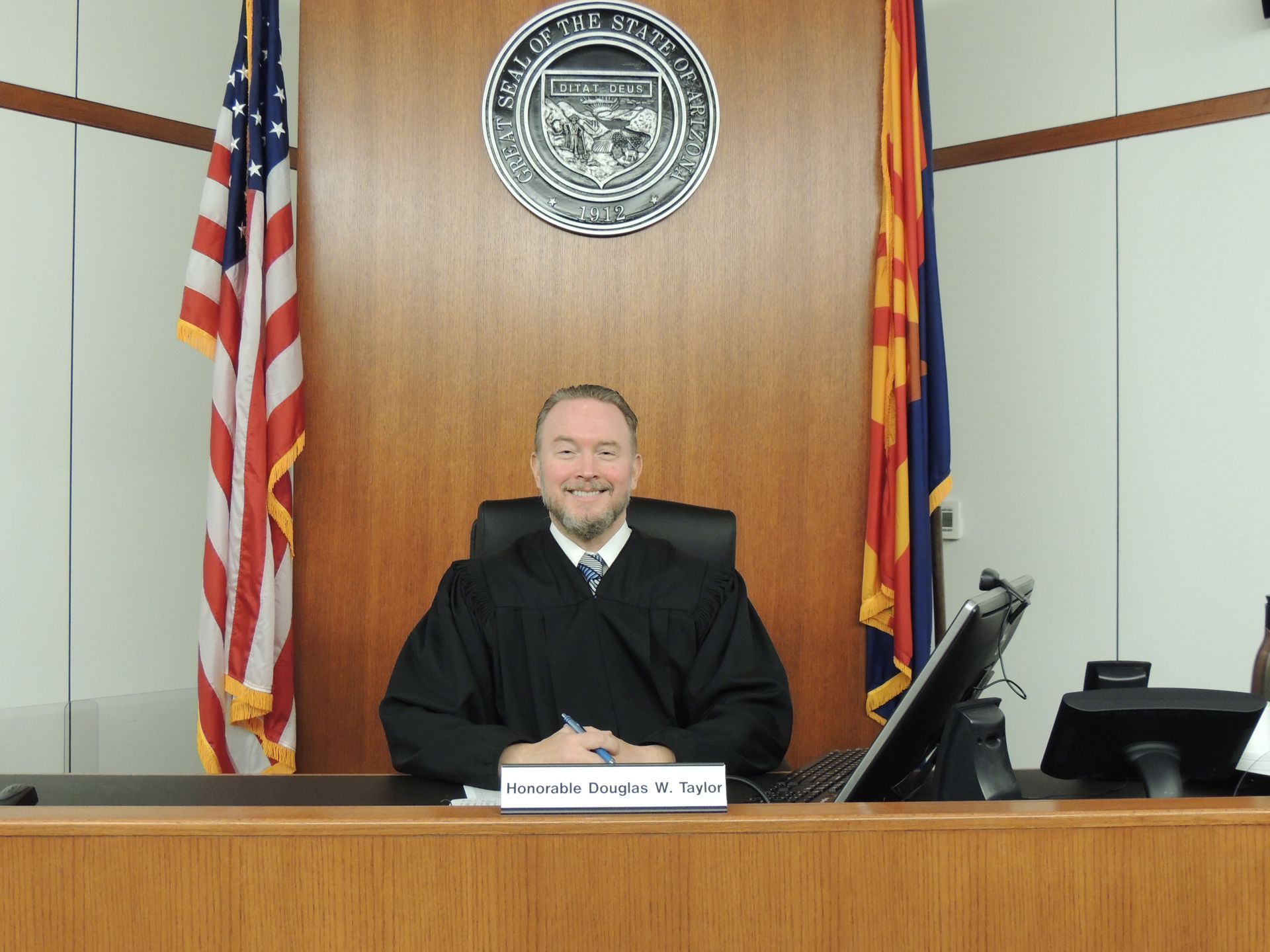
This page has been written, edited, and reviewed by our owner, Doug Taylor, who has 25+ years of legal experience as a former Pima County judge and elected official, and a criminal and DV defense and restraining order lawyer. Our last modified date shows when this page was last reviewed.
What Former Judges Notice Immediately in Domestic Violence Cases
Domestic violence cases are often emotionally charged from the very beginning. Allegations may arise during divorces, breakups, custody disputes, stressful family conflicts, or rapidly escalating arguments where emotions are already running high before police are ever called.
By the time a case reaches the courtroom, many people assume the judge’s decision will turn entirely on one question:
“Who is telling the truth?”
In reality, domestic violence hearings and criminal proceedings are often more complicated than that.
As a former judge and longtime criminal defense attorney, Doug Taylor understands that courts evaluate much more than accusations alone. Credibility, consistency, evidence, demeanor, preparation, and overall context frequently shape the outcome of a case far more than people realize.
In Tucson and throughout Southern Arizona, what happens before the hearing often matters just as much as what happens during it.
In Arizona, domestic violence allegations are commonly evaluated under A.R.S. § 13-3601, which identifies qualifying offenses and relationships that can turn a criminal allegation into a domestic violence-related case. Restraining orders are separately governed by A.R.S. § 13-3602, and alleged violations of court orders may result in additional allegations such as interfering with judicial proceedings under A.R.S. § 13-2810.
Domestic Violence Cases Are Often Decided Long Before Trial
One of the biggest misconceptions about domestic violence cases is that everything will eventually “come out in court.”
Sometimes it does.
Sometimes it does not.
In reality, many domestic violence cases are heavily shaped by:
- early statements,
- text messages,
- body-camera footage,
- social media activity,
- witness credibility,
- compliance with court orders,
- and how parties conduct themselves immediately after allegations surface.
A person may strongly and honestly believe they are “right” factually while simultaneously making decisions that significantly damage how their case is viewed by prosecutors or judges.
That is one reason early legal guidance matters.
In Tucson-area cases, these issues may arise in Tucson City Court, Pima County Justice Court, or Pima County Superior Court depending on the charge, location, and seriousness of the allegations. Each courtroom has its own procedures, expectations, and pace. A person facing a domestic violence allegation should not assume that every court will treat timing, release conditions, protective orders, or evidentiary disputes exactly the same way.
Credibility Matters More Than Most People Realize
In many domestic violence cases, there are:
- no neutral witnesses,
- conflicting stories,
- incomplete recordings,
- emotional communications,
- and competing narratives.
As a result, courts often focus heavily on credibility.
Judges frequently evaluate:
- whether statements remain consistent over time,
- whether evidence supports or contradicts testimony,
- how parties behave in court,
- whether communications appear manipulative or retaliatory,
- and whether the overall story makes sense when viewed alongside the evidence.
Small inconsistencies can become major problems.
So can emotional overreactions after the allegations are made.
What Judges Frequently Notice Immediately
As a former judge, Doug Taylor understands there are certain patterns courts begin noticing very early in domestic violence proceedings.
Emotional Texting After the Incident
One of the most common mistakes people make is continuing to send:
- angry messages,
- repeated apologies,
- threats,
- emotional pleas,
- or excessive explanations.
Even when sent out of panic or frustration, those communications may later become evidence.
In some situations, the post-incident conduct becomes more damaging than the original allegation itself.
For example, in some domestic violence cases, the physical evidence may be thin, disputed, or open to interpretation. But repeated post-incident messages — especially apologies, emotional explanations, or pressure to “fix this” — can give prosecutors evidence they did not otherwise have. A case that begins as a credibility dispute can become much harder to defend when the accused person creates a written record that sounds like an admission.
Social Media Activity
People frequently underestimate how much social media can affect domestic violence cases.
Posts involving:
- anger,
- sarcasm,
- partying,
- retaliation,
- new relationships,
- or indirect comments about the other party
can significantly affect credibility arguments in court.
Deleting content after allegations arise may also create additional problems.
A common problem is that people post online while still angry, embarrassed, or trying to defend themselves publicly. Even indirect posts can be screenshotted and presented later as evidence of hostility, retaliation, or lack of judgment. In a courtroom, the issue is not always what the person intended by the post — it is how the post may reasonably look to a judge, prosecutor, or opposing witness.
Violations of No-Contact Orders
Another serious issue involves indirect or “informal” contact after a court order is issued.
Many individuals mistakenly believe:
- communication is acceptable if the other party initiates it,
- messages sent through friends do not count,
- or casual encounters are harmless.
Courts often take alleged violations very seriously.
In practice, some of the most damaging domestic violence complications happen after release, not during the original incident. A person may believe they are responding to an invitation, trying to retrieve property, or attempting to calm things down. But if a court order prohibits contact, even a short message, third-party communication, or unplanned encounter can create a new allegation and make the original case much harder to resolve favorably.
Disorganized or Inconsistent Evidence
Judges notice quickly when evidence:
- appears incomplete,
- is poorly organized,
- changes repeatedly,
- or contradicts prior statements.
Preparation matters.
Text messages, photos, videos, call logs, and witness information often become critically important in domestic violence cases.
False Allegations and Exaggerated Claims Do Exist
Not every domestic violence allegation is fabricated. Many involve serious accusations that require careful handling.
At the same time, false or exaggerated allegations do occur.
Some cases arise from:
- divorce disputes,
- custody conflicts,
- jealousy,
- retaliation,
- emotional escalation,
- or attempts to gain leverage in related legal matters.
As a former judge, Doug Taylor understands that courts must evaluate:
- motive,
- consistency,
- corroboration,
- and context carefully.
Judges frequently look for:
- timeline problems,
- contradictory communications,
- exaggerated descriptions,
- missing corroboration,
- or behavior inconsistent with the allegations being made.
These cases are often far more nuanced than they initially appear.
Domestic Violence Cases Are Frequently More Complex Than Police Reports Suggest
Police reports are important, but they are not always complete.
Officers often respond during:
- emotionally chaotic moments,
- incomplete investigations,
- conflicting witness accounts,
- or rapidly developing situations.
In some cases:
- important context is omitted,
- witness statements conflict,
- body-camera footage changes the narrative,
- or injuries do not align with allegations.
Courts eventually evaluate far more than the initial accusation itself.
That is one reason strategic evidence review matters so much in domestic violence defense.
The Difference Between Courtroom Reality and Public Assumptions
Many people erroneously imagine domestic violence hearings as dramatic television-style confrontations where truth becomes instantly obvious.
Actual courtroom proceedings are rarely that simple.
Judges often evaluate:
- credibility under pressure,
- consistency over time,
- demeanor,
- corroborating evidence,
- prior communications,
- and compliance with court orders.
A person who remains calm, organized, and prepared frequently presents very differently from someone reacting emotionally or impulsively.
Courtroom presentation matters.
Why a Former Judge's Perspective Can Really Matter
Many criminal defense attorneys understand statutes and courtroom procedure.
Former judges understand something additional:
-how evidence is actually evaluated from the bench.
That perspective may help identify:
- credibility problems,
- evidentiary weaknesses,
- presentation issues,
- judicial concerns,
- and strategic mistakes before they become irreversible.
It also helps shape:
- hearing preparation,
- witness presentation,
- evidence organization,
- and negotiation strategy.
In emotionally charged domestic violence matters, those details can significantly affect outcomes.
Common Mistakes People Make Before Hiring a Lawyer
Many individuals unintentionally make their situations worse before seeking legal advice.
Common mistakes include:
- over-explaining to police,
- continuing emotional communication,
- posting online,
- deleting evidence,
- violating informal or formal no-contact expectations,
- or assuming the allegations will simply “blow over.”
Unfortunately, domestic violence allegations rarely improve through inaction alone.
Early decisions often shape:
- release conditions,
- charging decisions,
- protective orders,
- and long-term strategy.
Protective Orders and Criminal Cases Often Overlap
Many domestic violence allegations also involve:
- Restraining orders,
- custody disputes,
- firearm restrictions,
- or related criminal allegations.
These overlapping proceedings can become legally and strategically complicated very quickly.
Statements made in one proceeding may affect another.
That is one reason coordinated legal strategy matters.
Domestic Violence Cases Affect More Than Criminal Exposure
People often focus initially on whether they may face:
- jail,
- probation,
- or fines.
But domestic violence allegations may also affect:
- employment,
- professional licensing,
- child custody,
- firearm rights,
- housing,
- immigration issues,
- and personal reputation.
In many cases, the long-term collateral consequences become just as important as the immediate criminal allegations.
Frequently Asked Questions
Do judges automatically believe whoever called the police first?
No. Courts evaluate the totality of the evidence, including statements, witness accounts, physical evidence, communications, demeanor, and overall credibility. The first person to call 911 may influence the initial police response, but that does not mean the court will automatically accept every allegation as true.
Can text messages help or hurt a domestic violence case?
Yes, and they can cut both ways. In Pima County domestic violence cases, text messages may establish context, threats, escalation, apologies, contact attempts, or contradictions. Pre-incident messages can matter, and post-incident messages may be treated as admissions or evidence of pressure, anger, or retaliation.
What if the other person wants to drop the charges?
In Arizona, prosecutors generally control criminal charging decisions, not the alleged victim alone. Even if the other person wants the case dropped, the prosecutor may still proceed based on police reports, body-camera footage, 911 recordings, photographs, statements, or other evidence.
Can social media really affect my case?
Yes. Social media activity is increasingly reviewed in domestic violence investigations and hearings. Posts, comments, photos, videos, deleted content, indirect references, and messages may all become relevant if they appear to show anger, retaliation, intimidation, lack of credibility, or contact despite court restrictions.
What if the allegations are exaggerated?
Exaggeration, inconsistency, motive, and context may become important defense issues. Domestic violence cases sometimes arise during breakups, custody disputes, divorce proceedings, or emotionally charged conflicts. The defense may focus on contradictions, missing corroboration, timeline problems, or evidence that does not match the allegation.
Should I explain my side to police immediately?
People should be very careful before providing detailed statements in criminal investigations. Even truthful statements can be incomplete, misunderstood, or later used against the speaker. Before answering questions about a domestic violence allegation, it is usually wise to understand your rights and speak with counsel.
Do protective-order hearings matter?
Very much so. Protective-order proceedings may affect contact, housing, firearm possession, parenting arrangements, employment, and related criminal cases. In Arizona, orders of protection are governed by A.R.S. § 13-3602, and alleged violations may create additional legal exposure.
Can domestic violence charges be dismissed?
Some domestic violence cases are reduced or dismissed depending on the evidence, witness credibility, constitutional issues, lack of corroboration, conflicting statements, or negotiation strategy. Every case is fact-specific, and early evidence review often matters.
Final Thoughts
Domestic violence cases are rarely simple.
The single most important takeaway is this: in many domestic violence cases, what happens in the first 72 hours after the incident can matter as much as the incident itself.
Emotional texts, social media posts, contact attempts, rushed statements, deleted evidence, or violations of release conditions can turn a defensible case into a much harder one.
As a former judge, Doug Taylor understands how courts actually evaluate credibility, evidence, courtroom behavior, and preparation. That perspective helps clients navigate some of the most stressful and high-stakes legal situations they may ever face.
If you are facing domestic violence allegations, protective order proceedings, or related criminal charges in Tucson or Southern Arizona, speak with Taylor Law Group, PLLC before you make statements, send messages, or make decisions that may affect your case.
Taylor Law Group, PLLC offers free confidential consultations 24/7.
Learn more about domestic violence defense representation at:
Taylor Law Group Domestic Violence Defense
Search our site
Categories
FOLLOW US