
STALKING DEFENSE Lawyer
Serving Tucson and Southern Arizona

A stalking accusation can grow out of repeated messages, unwanted contact, surveillance allegations, or conduct that someone views as threatening. Arizona law defines stalking broadly, and the charge can be a felony even when the accusation does not involve physical contact.
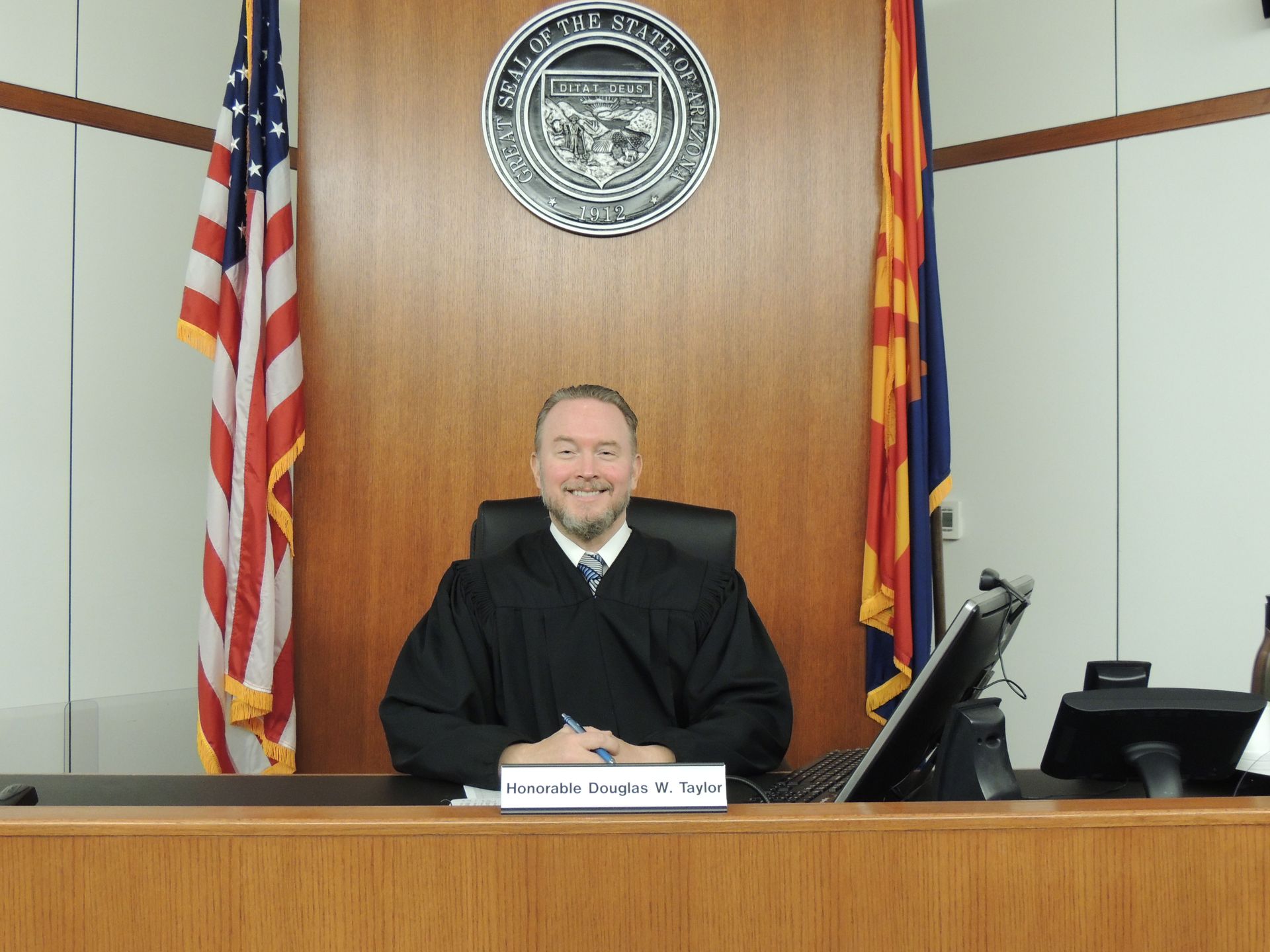
Douglas W. Taylor, Sr. is a former Pima County judge who has presided over domestic violence matters and now defends people accused of criminal offenses in Tucson and Southern Arizona. His courtroom experience informs how he evaluates the allegations, the evidence, witness accounts, and the issues that may shape a case.
If you are under investigation or have been charged with stalking, early legal advice can help you understand the accusation, court orders, and next steps.
Common Situations WHICH CAN Lead to STALKING Charges
Stalking allegations may involve claims of:
- Repeatedly following or approaching someone
- Making repeated threats, in person or through another person
- Sending repeated emails, texts, or other electronic communications
- Using a phone, GPS device, or other technology to monitor someone
- Contacting a former partner after a relationship ends
- Conduct that allegedly caused fear or significant emotional distress
The surrounding circumstances matter. A series of communications or encounters may look different when viewed in full context, including what was said, whether contact was authorized, and whether the evidence supports the accusation.
STALKING
Under Arizona Law
Arizona’s stalking statute, A.R.S. § 13-2923, requires an intentional or knowing course of conduct directed at another person, along with specified effects on that person. Depending on the allegation, the person must have suffered significant emotional distress or reasonably feared certain injury or property damage, or reasonably feared death or the death of a specified person or animal.
The statute defines “course of conduct” to include certain repeated behavior, such as maintaining proximity or making threats on two or more occasions; certain forms of electronic or GPS surveillance; or repeated electronic communications directed at a person without authorization and without a legitimate purpose. The law excludes constitutionally protected activity and other authorized conduct.
Stalking under one part of the statute is a Class 5 felony; stalking involving a reasonable fear of death under another part is a Class 3 felony. The exact charge depends on the allegations and evidence.
What the State
Must Prove
The prosecution must prove the required elements beyond a reasonable doubt.
The issues depend on which part of the statute is charged, but may include whether:
- The accused acted intentionally or knowingly
- The conduct met Arizona’s definition of a “course of conduct”
- The conduct was directed toward the person named in the charge
- The conduct caused the legally required distress or fear
- The evidence reliably identifies the person who made the contact or used the device
A stalking charge is not established by an accusation alone. The specific communications, dates, devices, witnesses, and surrounding events may all matter.
Potential
Consequences
Arizona classifies stalking as a felony. The statute classifies some stalking offenses as Class 5 felonies and others as Class 3 felonies. A felony conviction can carry consequences that extend beyond the immediate sentence, including effects on employment, housing, professional licensing, and firearm rights.
The sentence depends on the charge, criminal history, applicable sentencing laws, and the circumstances of the case. If the alleged victim and accused have a qualifying relationship under Arizona law, the charge may also receive a domestic violence designation. That designation may affect pretrial conditions and other case issues.
POSSIBLE DefenseS to A STALKING CHARGE
Every case depends on its facts. Potential defense issues may include:
- The alleged conduct did not meet the statutory definition of a course of conduct
- The State cannot prove the required intent or knowledge
- The conduct did not cause the type of fear or emotional distress required by the statute
- Messages, calls, or online activity are incomplete, misattributed, or taken out of context
- The evidence does not establish who used a device or account
- The contact was authorized or had a legitimate purpose
- The accusation involves constitutionally protected activity
- The investigation or evidence collection violated the accused person’s rights
A defense requires careful review of the charging documents, communications, device records, witness statements, and any related court orders.
COURTROOM REALITY
Stalking cases can turn on details that are easy to miss in a brief summary: the timing and content of communications, who initiated contact, whether a device was shared, and what the full record shows. Digital evidence may also require close examination to determine who created or sent it and whether it has been presented in context.
A former judge’s perspective can help identify the factual and legal questions a court may need to resolve. The evidence must still be tested against the elements of the charge.
Real Example: When REPEATED CONTACT NEEDS CONTEXT
Suppose two people have ended a relationship, and one later receives a series of messages and sees the other person near familiar locations. The accusation may appear straightforward at first.
A closer review might raise questions about who sent particular messages, whether the contact was requested or authorized, whether location data is reliable, and what occurred before and after the reported incidents. The State must prove the charged offense beyond a reasonable doubt; the complete record matters.
Related Defense Areas
Stalking allegations may overlap with other criminal charges or court proceedings.
Related defense areas include:
- Criminal Defense
- Domestic Violence Defense
- Harassment Defense
- Restraining Orders (Orders of Protection and Injunctions Against Harassment)
A related protective order is a separate court matter. Read and follow every order carefully, and speak with an attorney before contacting the person who obtained it.
Frequently Asked Questions
Is stalking a felony in Arizona?
Yes. Arizona classifies stalking under A.R.S. § 13-2923 as either a Class 5 or Class 3 felony, depending on the conduct and the fear the State alleges it caused.
Can I be charged with stalking for sending messages?
Repeated electronic communications can be part of a stalking charge when the statutory requirements are met. The content, context, authorization, purpose, and effect of the communications matter.
Does stalking require physical contact?
No. The statute covers certain conduct involving proximity, threats, electronic communication, and surveillance. The State must still prove the elements of the specific charge.
Can stalking be charged as domestic violence?
It may receive a domestic violence designation if the relationship between the people meets the requirements in A.R.S. § 13-3601. The designation depends on the alleged relationship and the facts.
What if the messages or online account were not mine?
That may be an important issue in the defense. The source of messages, account access, device use, and other digital evidence should be examined rather than assumed.
What should I do if I am accused of stalking?
Do not delete messages or other potentially relevant information. Preserve the records, follow any court orders, avoid contact that could violate an order or worsen the situation, and get legal advice promptly.
Can the person who made the accusation drop the charge?
The person who reported the conduct does not personally control whether a criminal case proceeds. The prosecutor makes decisions about whether to continue, amend, or dismiss the charge.
When should I contact a stalking defense attorney?
As early as possible—especially if law enforcement has contacted you, you have been arrested, or a court order limits your contact or movement. Early review may help preserve evidence and address the conditions imposed in your case.
Speak With a Former Judge About Your Case
A stalking accusation can put your freedom, reputation, and future at risk. Douglas W. Taylor, Sr. is a former Pima County judge with more than 25 years of criminal-law experience. He represents people accused of stalking and other criminal offenses in Tucson, Pima County, and Southern Arizona.
Call Taylor Law Group, PLLC at (520) 440-5635 for a free and confidential consultation.