
FAILURE TO REGISTER AS A SEX OFFENDER DEFENSE LAWYER
Serving Tucson and Southern Arizona

A failure-to-register allegation can arise when the State claims that someone who was required to register did not meet a registration duty. The allegation may involve an address change, a move to another county, a temporary or transient residence, annual reporting, or another requirement under Arizona law.
These cases turn on the precise duty that applied, the deadline, and the records showing what happened. A missed deadline or inaccurate entry should be examined in context, including the person’s registration status, instructions, communications with law enforcement, and the applicable statute.
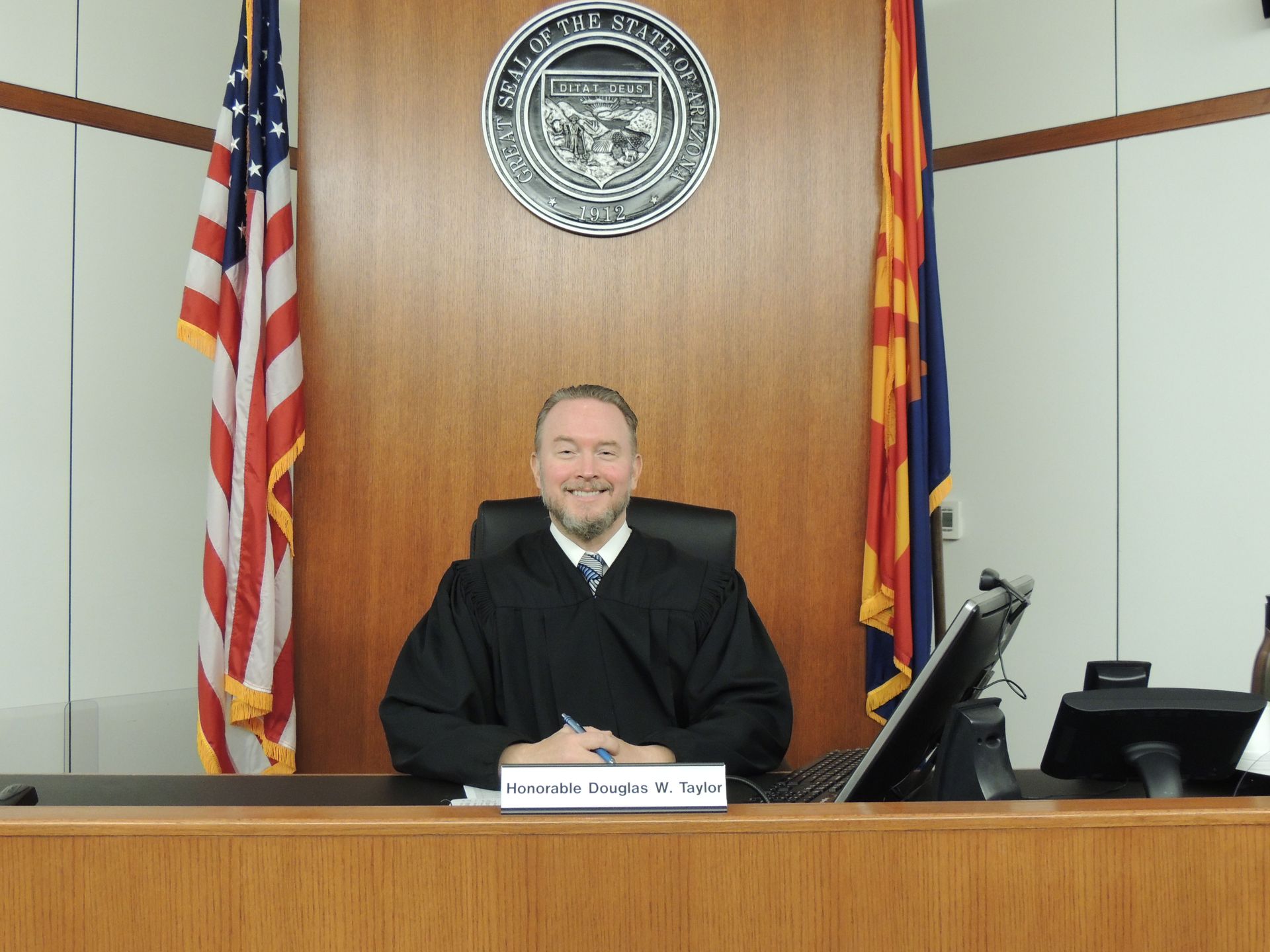
Douglas W. Taylor, Sr. is a former Pima County judge with more than 25 years of criminal-law experience. His courtroom experience informs how he evaluates the charge, the evidence, and the legal issues a court may need to decide.
If law enforcement has contacted you, do not ignore the contact or discuss the allegations before speaking with a lawyer. Preserve notices, registration paperwork, messages, receipts, and other records. Continue to follow your current reporting requirements while getting legal advice about the allegation.
Common Situations That Can Lead to a Failure-to-Register Charge
Depending on the person’s registration status and the duty at issue, an investigation may involve an allegation that someone:
- Did not complete an initial registration required by law or court order
- Did not report a move, change of county, name, or address as required
- Did not report a transition to a temporary residence or transient status
- Did not report multiple residences or complete required follow-up reporting
- Did not confirm registration information during the required annual reporting period
- Did not obtain or maintain the required Arizona identification credential
- Provided information that the State alleges was incomplete or inaccurate
- Was required to register because of a qualifying out-of-state conviction or registration requirement
The details matter. The registration requirement, reporting deadline, and information required can depend on the person’s judgment, registration status, location, and circumstances.
FAILURE TO REGISTER
Under Arizona Law
Arizona’s sex-offender registration requirements are primarily addressed in A.R.S. §§ 13-3821 and 13-3822. Section 13-3821 identifies offenses and circumstances that can require registration, including certain court-ordered and out-of-state registration situations. A person’s actual duty must be evaluated from the applicable conviction, court order, and registration records.
Section 13-3822 generally requires a person who is subject to registration to report certain moves or changes in person and in writing within 72 hours, excluding weekends and legal holidays. The statute also addresses multiple residences and transient status. Other registration duties have their own requirements and should not be treated as interchangeable.
A failure-to-register charge is prosecuted under A.R.S. § 13-3824. In general, a person who is subject to registration and fails to comply with the registration requirements is charged with a Class 4 felony. A separate provision applies when the allegation is a failure to comply with the annual requirements in A.R.S. § 13-3821(J): that offense is a Class 6 felony and carries a mandatory $250 assessment.
The charge and potential consequences depend on which duty the State alleges was violated. Arizona’s registration statute also lists violations of §§ 13-3822 and 13-3824 among offenses that can carry registration consequences. The specific effect in a case should be reviewed under the person’s circumstances and the applicable law.
What the State
Must Prove
The prosecution must prove every element of the specific charge beyond a reasonable doubt. The issues depend on the provision charged and the registration duty at issue.
A defense review may examine:
- Whether the person was legally required to register at the relevant time
- What specific reporting duty applied
- What deadline applied and how it was calculated
- Whether the State can prove that the required report or update was not completed
- What the person was told about the duty and deadline
- Whether registration forms, receipts, emails, or agency records show a report was made
- Whether a move, mailing address, physical residence, or transient status was classified correctly
- Whether the investigation, search, or questioning raises legal issues
A charge should be evaluated using the underlying judgment, registration documents, agency records, communications, and evidence—not assumptions about what a person knew or did.
Potential
Consequences
A conviction under A.R.S. § 13-3824 may be charged as a Class 4 or Class 6 felony, depending on the alleged violation. Sentencing depends on the specific charge, criminal history, and other legally relevant circumstances. A conviction can also affect probation, employment, housing, family relationships, and other parts of a person’s life.
Because registration duties can continue after a charge is filed, it is important to understand both the pending case and any current reporting obligations. Do not assume that resolving one allegation automatically changes the underlying registration requirements.
POSSIBLE DefenseS to A FAILURE-To-REGISTER Charge
Every case depends on its records and facts.
Potential issues may include:
- Registration status: Whether a conviction, court order, or out-of-state requirement legally required registration in Arizona.
- The specific duty: Whether the State has identified the correct reporting requirement under the statute.
- Deadline calculation: Whether the relevant deadline was calculated correctly, including any applicable exclusions.
- Notice and instructions: What information the person received about the duty, where to report, and when.
- Proof of compliance: Whether forms, receipts, sheriff’s records, emails, or other records show that a report was made.
- Residence or address issues: Whether the alleged change involved a physical residence, mailing address, temporary residence, multiple residences, or transient status.
- Agency records or processing: Whether an administrative error or incomplete record affected the State’s account of what happened.
- Identity and evidence: Whether the evidence reliably connects the person to the alleged failure.
- Statements and searches: Whether statements, searches, or evidence collection raise constitutional or reliability issues.
The applicable legal standard and available defenses depend on the exact subsection charged. No defense or outcome should be assumed before reviewing the case.
COURTROOM REALITY
Registration cases can depend on paperwork and timelines: the original judgment, registration forms, notices, address records, agency entries, and communications with law enforcement. A careful review compares those records against the exact duty and deadline the State claims were violated.
The distinction between a Class 4 allegation under A.R.S. § 13-3824(A) and a Class 6 allegation under § 13-3824(B) can also matter. The charge should be evaluated against the specific registration requirement, not just the general fact that a reporting problem is alleged.
Example: When Reporting Records Conflict
Hypothetical example: A person reports a change in residence and keeps a copy of the paperwork. Later, an agency record appears to show that the update was not completed by the deadline. The person’s copy, the date of the report, the information provided, and the agency’s records may help clarify what occurred.
A defense would need to compare the registration duty and deadline with the documents, communications, and agency records. This example is hypothetical and does not describe a client or case result.
Related Defense Areas
A failure-to-register allegation may arise alongside other criminal matters. Related pages include:
Each charge has its own elements and consequences. Related allegations should be reviewed together, while still evaluating the evidence and law for each individual charge.
Frequently Asked Questions
Is failure to register a felony in Arizona?
Generally, yes. A violation of A.R.S. § 13-3824(A) is a Class 4 felony. A failure to comply with the annual requirements in A.R.S. § 13-3821(J) is addressed separately as a Class 6 felony under § 13-3824(B), with a mandatory $250 assessment.
How long do I have to report a change of residence?
A.R.S. § 13-3822 generally requires a person subject to registration to report certain moves or changes in person and in writing within 72 hours, excluding weekends and legal holidays. The duty and deadline should be checked against the specific circumstances.
Can I be charged if I did not commit a new sex offense?
A failure-to-register allegation is a separate charge concerning compliance with registration requirements. It does not, by itself, accuse someone of committing a new sexual offense.
Can a paperwork or agency error matter?
It may. Registration forms, receipts, notices, emails, and sheriff’s office records can help establish what information was submitted and when. Their significance depends on the duty alleged and the evidence in the case.
Does the person have to intentionally fail to register?
The applicable legal requirements depend on the specific charge and subsection. The prosecution must prove the elements that apply to that charge. A lawyer should review the statute, the charging document, and the evidence before drawing conclusions about the required mental state.
Can I be charged if I was confused about the requirements?
Confusion does not automatically resolve a charge. What the person was told, what notices they received, the duty imposed, and what steps they took may all warrant review.
What should I do if law enforcement contacts me?
Do not ignore the contact, but do not try to explain the situation before getting legal advice. Preserve registration paperwork and communications, follow current reporting requirements, and speak with a defense lawyer promptly.
When should I contact a defense lawyer?
As soon as you learn of an investigation or charge. Early review can help identify the specific duty alleged, preserve records, and address the case without losing sight of ongoing registration obligations.
Speak With a Former Judge About Your Case
A failure-to-register allegation can place a person’s liberty and ongoing obligations at stake. Douglas W. Taylor, Sr. is a former Pima County judge with more than 25 years of criminal-law experience. He represents people accused of serious criminal offenses in Tucson and Southern Arizona.
Call Taylor Law Group, PLLC at (520) 440-5635 for a free and confidential consultation.